Humans have been telling stories for as long as we have had something to leave a mark on.
Cave walls, clay vessels, coins, jewellery. We used any surface that would listen and, perhaps, any surface that might outlive us. Proof that we were here. That we saw something, felt something, and imagined something worth passing on.
Today, we have more surfaces than ever. Stories appear as films, games, immersive worlds, Instagram reflections, fifteen-second videos and memes. A photograph can hold an entire emotional idea. A room can tell a story through sound, temperature, smell, or the feeling of the floor beneath your feet.
Perhaps a story doesn’t need a beginning, middle and end anymore; sometimes it just needs a door.
I recently came across a beautiful thought attributed to Yayoi Kusama. She spoke about continuing to create if there were even a chance that, a hundred years from now, one person might encounter her work and be touched by it.
There is something quietly profound about that idea. To make something for someone you will never meet. To leave a small opening in time.
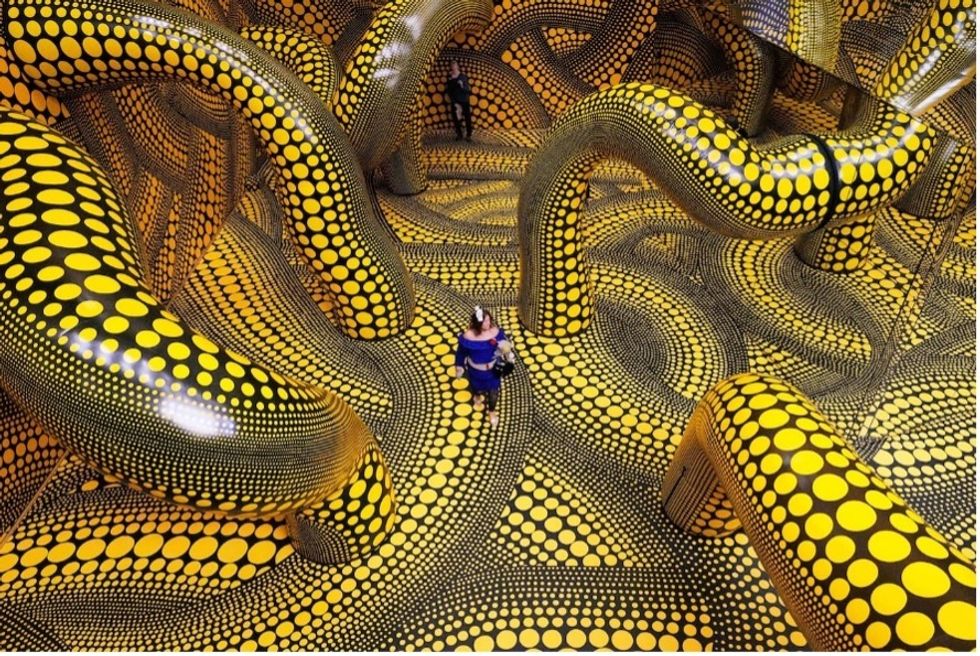 The Hope of the Polka Dots Buried in Infinity Will Eternally Cover the Universe, Yayoi Kusama, NGV International, Melbourne © YAYOI KUSAMA. Image credit Sean Fennessy
What fascinates me about Kusama is that she didn’t simply tell us her stories. She let us enter them. Her visions escaped the canvas and became rooms, mirrors, dots, light and entire environments. Something intensely personal became a world other people could physically occupy.
And once we stepped inside, something strange happened. Her story became partly ours.
From stories to storyworlds
Maybe that is where storytelling is heading. We are moving from stories to storyworlds. Worlds that can be entered from different directions, wandered through, touched, altered and discovered.
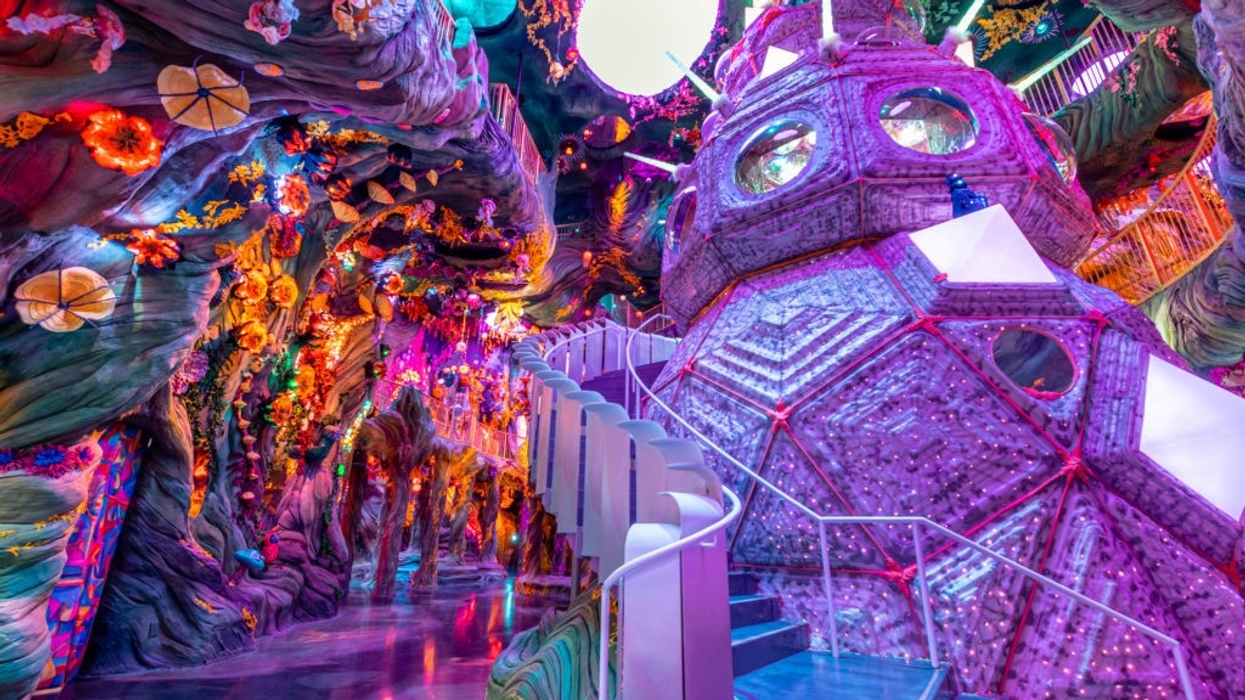
Places like Meow Wolf, Otherworld, Puy du Fou, and other immersive and interactive entertainment worlds don’t simply ask, “What happens next?” Increasingly, they ask, “What happens because I’m here?” The audience becomes a character.
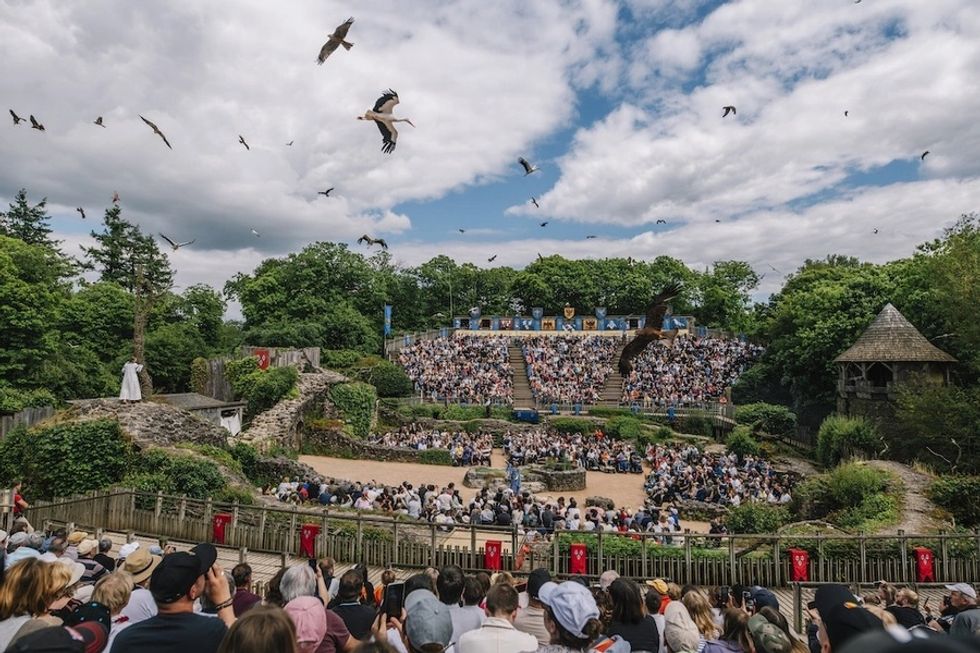 Puy du Fou, Les Epesses, France: a unique theme park featuring world-class shows and immersive experiences Image credit Apolline Cornuet
And perhaps that changes the storyteller too. The storyteller no longer controls every step of the journey. They create conditions. They plant clues. They build paths and hide things in the walls. Then, at some point, they have to let go. The audience finishes the story.
Technology is pushing this even further. Stories can now remember choices, respond to behaviour and change from one person to another.
AI can take one person’s strange little thought and help explode it into images, voices, characters, films and entire universes almost instantly.
This creates a contradiction I find fascinating. Technology is making storytelling infinitely easier to produce at exactly the moment audiences are becoming increasingly hungry for stories that feel genuinely human.
When everyone can make something polished, perhaps polish becomes less interesting. We see it already. A shaky fifteen-second video can move millions of people. An awkward Instagram confession can feel more powerful than a beautifully produced campaign.
The strangely specific, vulnerable and imperfect often feels more alive because somewhere inside it we recognize the fingerprint of another person. Perhaps authenticity is becoming its own medium.
Stories that grow
I was lucky enough to learn this early, although I didn’t know it at the time.
One summer, driving home from the lake, I told my family about snakes and lizards that had taken over our classroom. They were fascinated. Questions came flying from the front seat. How many snakes? Where did they come from? What happened next? Naturally, the reptiles eventually took over the entire school.
I remember bouncing around in the back seat, windows down, cicadas screaming through the summer air, my eight-year-old hair flying everywhere, my mouth going dry as my family devoured every increasingly ridiculous detail.
The truth was slightly less cinematic: I had kicked a rock and a skink ran out.
My family still brings up the Great Reptile Invasion. But what I remember most isn’t the exaggeration. It’s the audience. They listened. They asked questions. They participated. And because they did, the story grew.
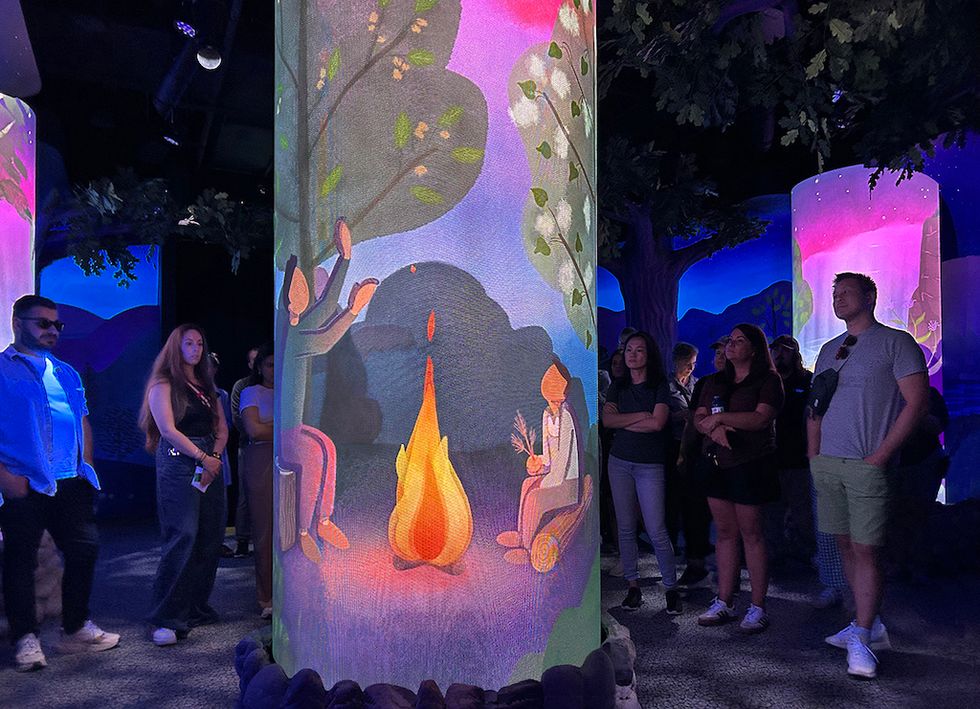 Niagara Takes Flight preshow - The Ancestors Room, Table Rock Visitor Centre: Immersive storytelling developed in collaboration with Niagara’s Indigenous communities. Guests gather around a trio of digital fires to experience an animated Indigenous creation story.Image credit FORREC
Maybe stories have always worked this way. We imagine that a storyteller creates something and hands it to an audience. But perhaps a story only becomes fully alive when someone else enters it.
The cave painting needed another pair of eyes. The song needed someone to hear it. The ridiculous reptile invasion needed someone in the front seat asking, “What happened next?" A story is something that happens between people.
Collaborative stories
In a funny way, that’s not so different from the kind of storytelling I work with today.
I collaborate with artists, designers and clients to create worlds other people can enter. Some clients arrive carrying legendary stories, characters and intellectual properties known by millions. Others arrive believing they don’t really have a story at all. I’m still not sure which is more exciting.
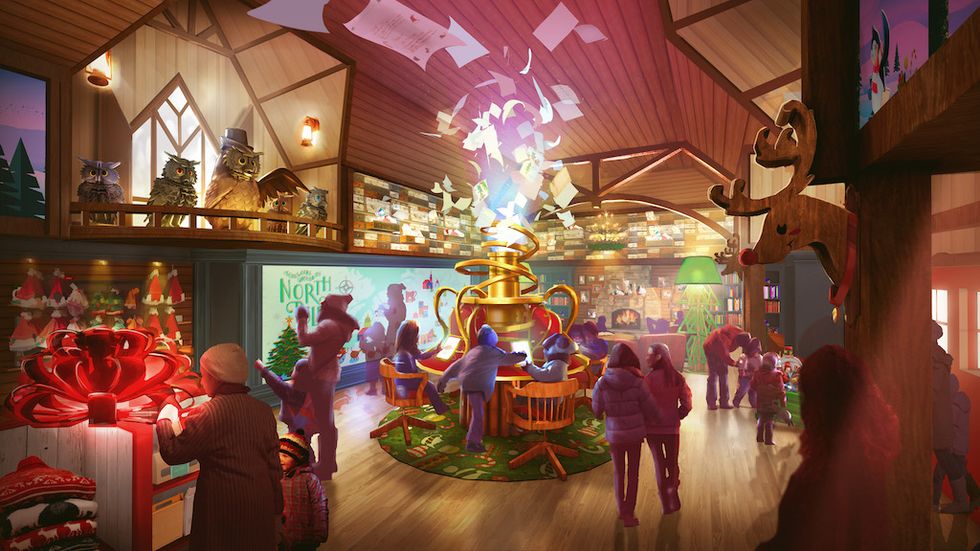 Santa’s Village Retail Experience, Bracebridge, Ontario: Inspired by the timeless ritual of writing a letter to Santa, guests move from creating a wish through story time to a playful world where oversized toys come to lifeImage credit FORREC
Somewhere between contracts, milestones, budgets, meetings and occasionally absurd deliverables, our job is essentially the same. Open a door. Except now the door might lead into a world that reacts to you.
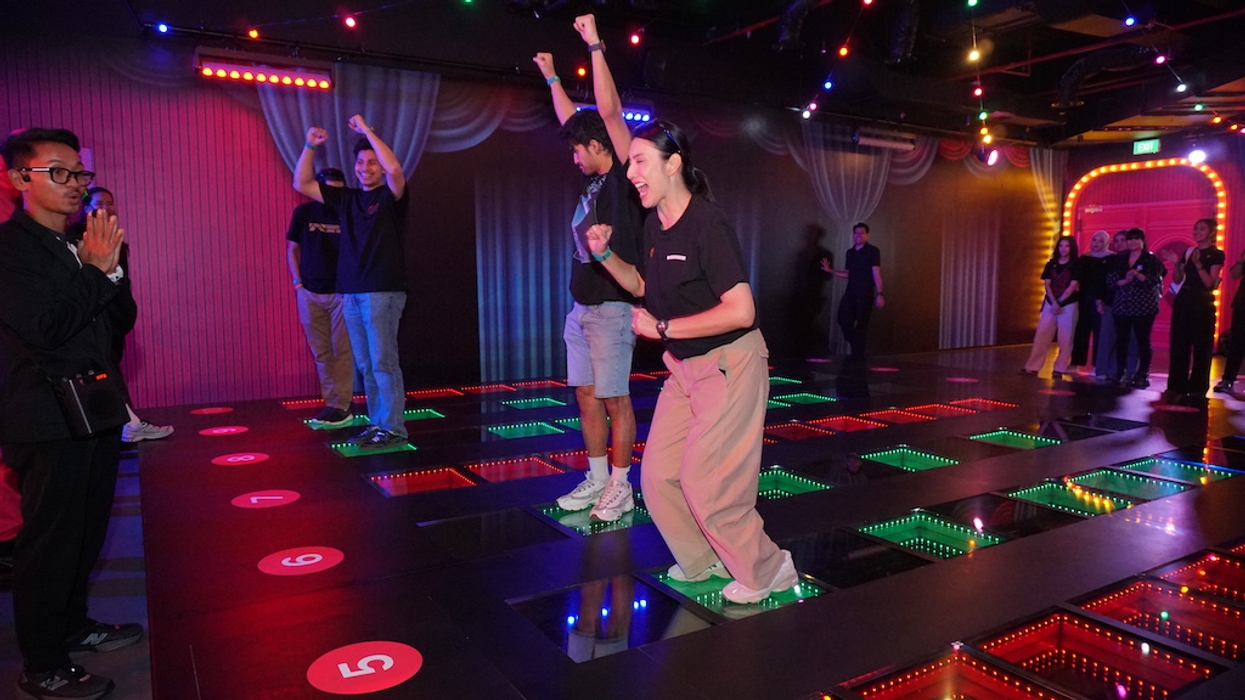
The floor might move beneath you. The air might change. Something you touch might trigger a memory. Your drawing, voice or decision might become part of the experience for the person who arrives tomorrow.
The story is no longer sitting patiently on the wall waiting to be understood. It is happening around you. Sometimes because of you.
And perhaps AI is simply another door.
I’m less interested in whether AI can become a great storyteller than in what happens when it becomes a collaborator. One person’s imagination can suddenly branch in a hundred directions. Someone who couldn’t draw can visualize a world. Someone who couldn’t make a film can begin directing one.
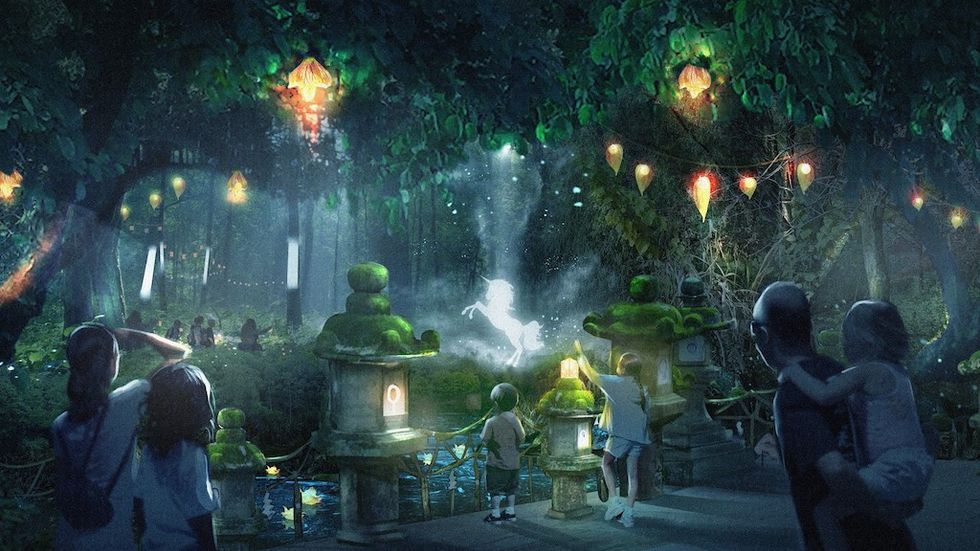 Xixi Wetlands,, Hangzhou, China: The VR Park incorporates media technology with land and water to tell the story of the Willow Weaver. Visitors’ interactions trigger kinetic and multisensory effects, overlaid with digital projections and lightingImage credit FORREC
A strange idea kicked out from beneath a rock can become an entire school full of reptiles before you’ve finished your coffee. But the machine still needs the rock. It needs the peculiar observation. The memory. The obsession. The tiny detail nobody else would have noticed.
The thing that happened to you that didn’t happen quite the same way to anyone else. Technology can multiply an idea. It cannot have your childhood.
Creating for possibility
And perhaps that is what becomes more valuable as our tools become more powerful: not perfection, but particularity. The small bits of evidence that somebody was here. Which takes us back to those first marks on the cave wall.
Maybe we haven’t changed as much as we think. The surfaces have changed. The tools have changed. The audience has changed. A handprint becomes a painting, becomes a photograph, becomes a film, becomes an immersive world, becomes something intelligent enough to respond when we enter it.
But beneath it all is still the same ancient impulse. I was here. I saw this. I felt this. Come closer.
Maybe that’s why Kusama’s thought stays with me. She wasn’t creating for everyone. She was creating for the possibility of someone. One person, perhaps a hundred years away, who might walk through a door she left open and feel something. I think that’s enough.
Life is serious enough, and eventually we’re all heading toward one final shared door. So, while we’re here, we might as well play. Tell the strange story. Make the ridiculous thing. Paint the dots. Invent the reptiles. Build the impossible staircase. Leave a mark.
Open the door. Someone might walk through.
FORREC are sponsoring the Storytelling category at the 2026 blooloop Innovation Awards. There's still time to enter before the 5th of October; find out more here.