Since 2019, PROJEKTIL has staged immersive productions in more than 100 cities across 20 countries, transforming churches, museums and other heritage spaces into ticketed attractions.
As the Zurich-based studio marks its tenth anniversary, creative director Roman Beranek and business director Philippe Trawnika reflect on the evolution of immersive entertainment, the balance between creativity and commercial growth, and where the sector is heading next.
Starting as an artist collective
PROJEKTIL's origins are rooted in curiosity about the intersection of art and space. Beranek says PROJEKTIL began as an informal collective experimenting with projection, music and architecture rather than a commercial business.
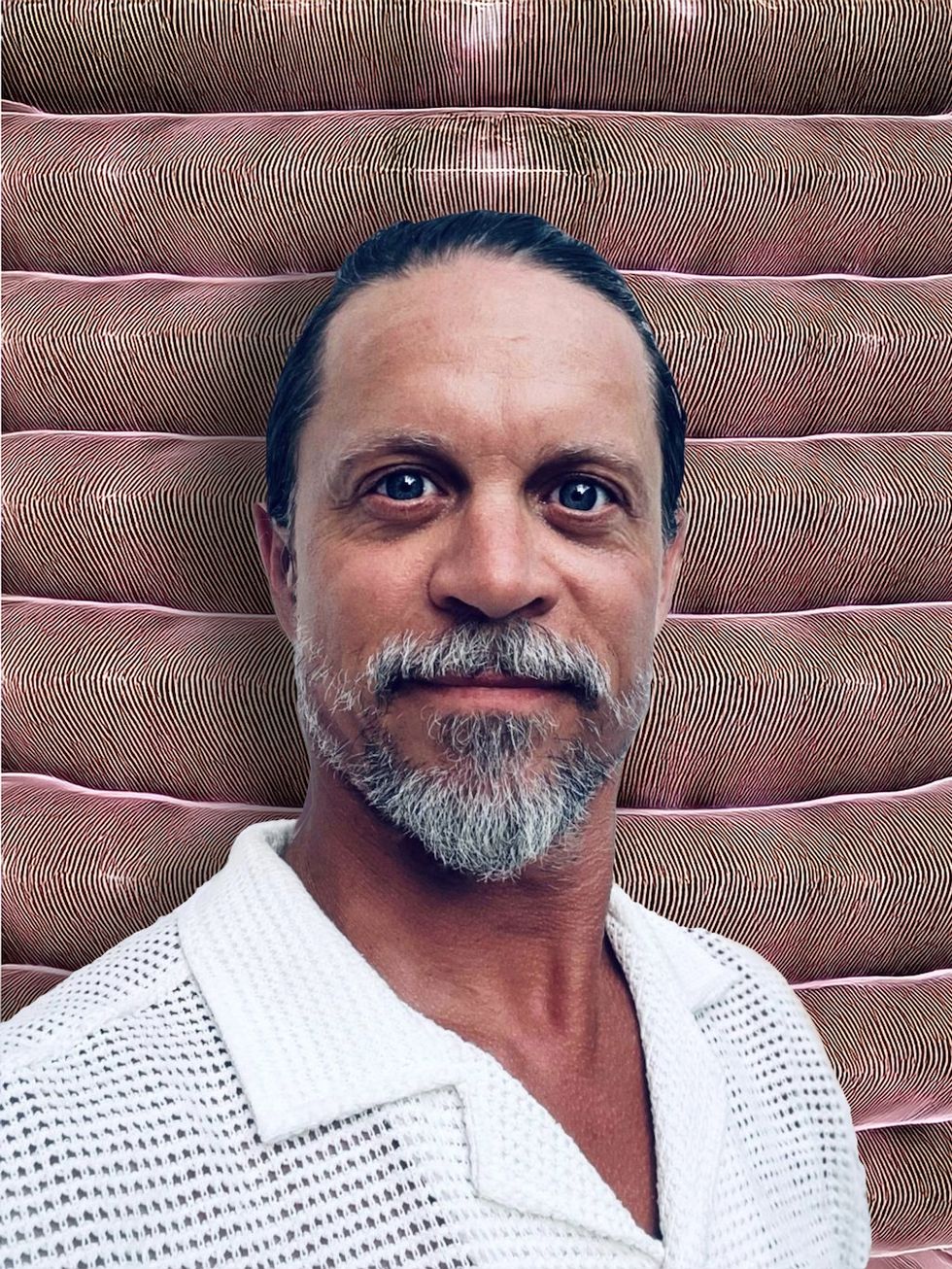
Roman Beranek, co-founder and creative director
"For years we were a group of artists driven purely by curiosity, experimenting with projection, music and space.”
That experimental mindset, he says, still shapes the company's creative approach today.
Trawnika joined this creative ecosystem in 2015, bringing a professional background in marketing and creating digital user experiences. His arrival brought a product perspective into the collective's operations.
It was a pivotal era for digital entertainment. As virtual reality gained momentum, Trawnika became convinced projection mapping offered a different path to immersion.
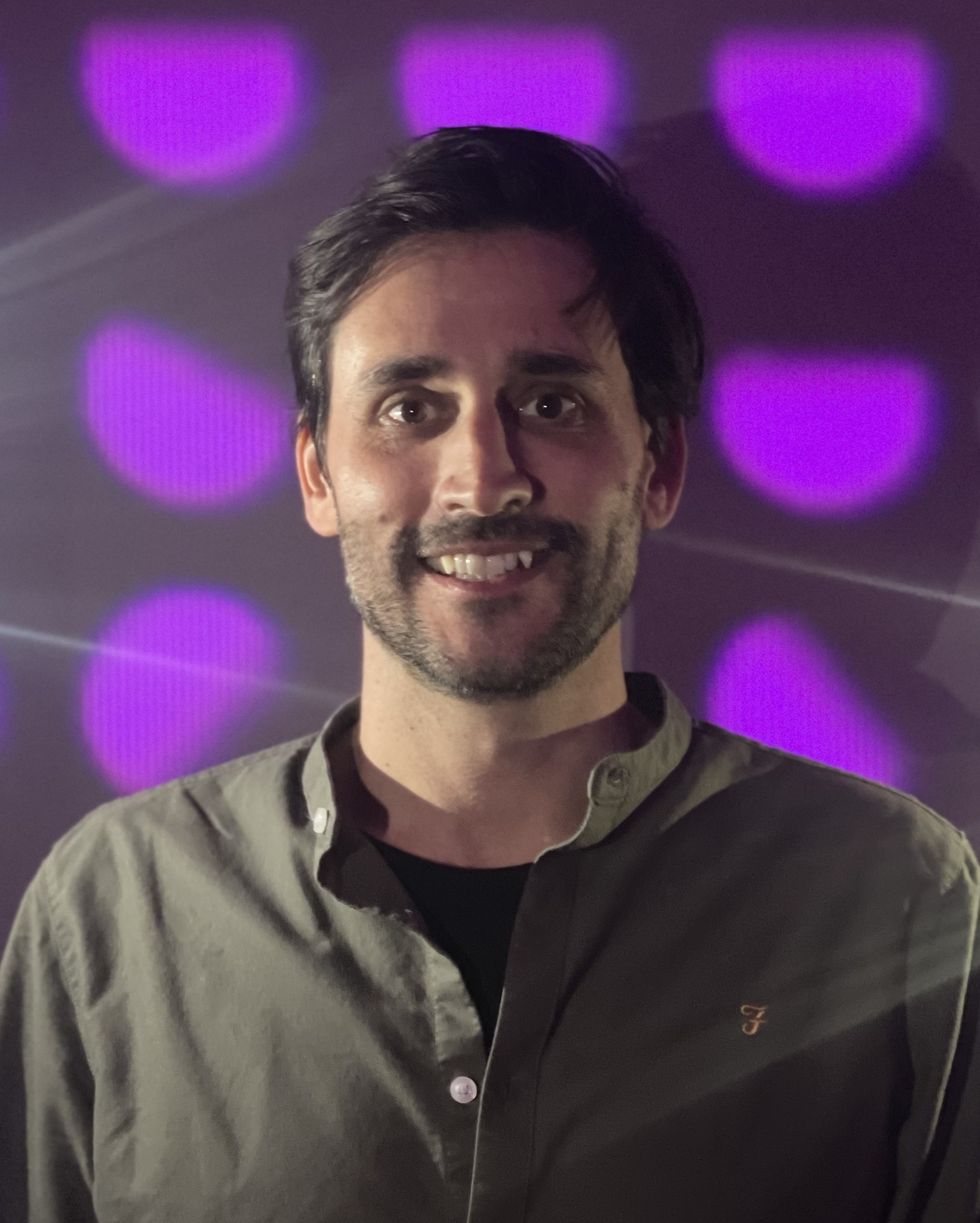
Philippe Trawnika, co-founder and business director
"What attracted me to projection mapping was that it offered a similar vision of immersion, but without putting people behind a headset or separating them from the world around them," Trawnika explains.
"Instead, it transformed real spaces into shared experiences, creating a unique connection between technology, architecture, and people. This is still what makes me such a strong believer in this medium today.”
In 2016, recognising the potential of this technology, Beranek and Trawnika, along with two additional partners, co-founded the company, formalised a professional corporate structure, and began developing their own proprietary products and IP.
At the time, projection mapping was still largely confined to live events. The turning point came a year later, in 2017, when, moving away from traditional commissioned projects, PROJEKTIL launched its first ticketed immersive experience.
This was an interactive installation set within a 900-metre-long natural gorge in the Swiss Alps.
"That moment became the foundation, leading to the creation of numerous entertainment formats and original IPs that are now presented in more than 15 countries worldwide," Trawnika says.
For Beranek, the project represented an artistic awakening. "The defining moment was an artistic one: realising that architecture is not a surface but an instrument.”
The immersive market comes of age
When PROJEKTIL first began a decade ago, the immersive industry was small.
"There were only a handful of studios working in this space, and we all knew each other," Trawnika says. Immersive installations were largely viewed as a niche art form, separate from mainstream entertainment.
The landscape today is unrecognisable from those early years, driven partly by the pandemic.
"What surprised me most was how much the industry accelerated during COVID," says Trawnika.
"Suddenly, venues and organisers recognised that digital, timed-entry experiences offered a unique solution. They provided something completely new for audiences while also allowing visitor flows to be managed very precisely.
“It was a format that matched the needs of that particular moment extremely well.”
This surge in global demand attracted new entrants to the sector. Professionals from traditional exhibitions, theatre, musicals, live music, and the digital arts arrived.
Trawnika views this influx as a benefit. "Each field brings its own expertise and perspective. This diversity is expanding the possibilities of what immersive storytelling can become and is helping the entire sector mature.”
Alongside the industry's growth, audience expectations have evolved. The days of easily impressed crowds have long passed.
“Ten years ago, a projected ceiling was enough to amaze people. Today they arrive with real emotional expectations," Beranek explains. "They don't want to look at something from a distance anymore; they want to enter a world, feel it, share it.”
Beranek attributes part of this cultural shift to a societal reaction against the modern, hyper-digitised lifestyle. "People are longing for physical, collective moments of wonder, and immersive experiences deliver exactly that.”
Social media has helped expose more audiences to immersive experiences, Beranek says. Still, he cautions against designing experiences primarily for online content: "The moment you start designing for the camera instead of the room, you lose the magic.
"For us, the shared, physical experience in the space must always come first — the photo is a souvenir, never the purpose.”
Balancing poetry and profit
Transforming from a small, inquisitive artist collective into an international touring firm required more than innovative visuals; it needed a careful balance between artistry and business. PROJEKTIL's leadership structure operates as a successful partnership between Beranek's creative ideas and Trawnika's commercial expertise.
"Philippe drives the business, I drive the creative vision," says Beranek. "For me, the creative idea always comes first. If an experience doesn't create an emotion, no business model will make it truly successful.”
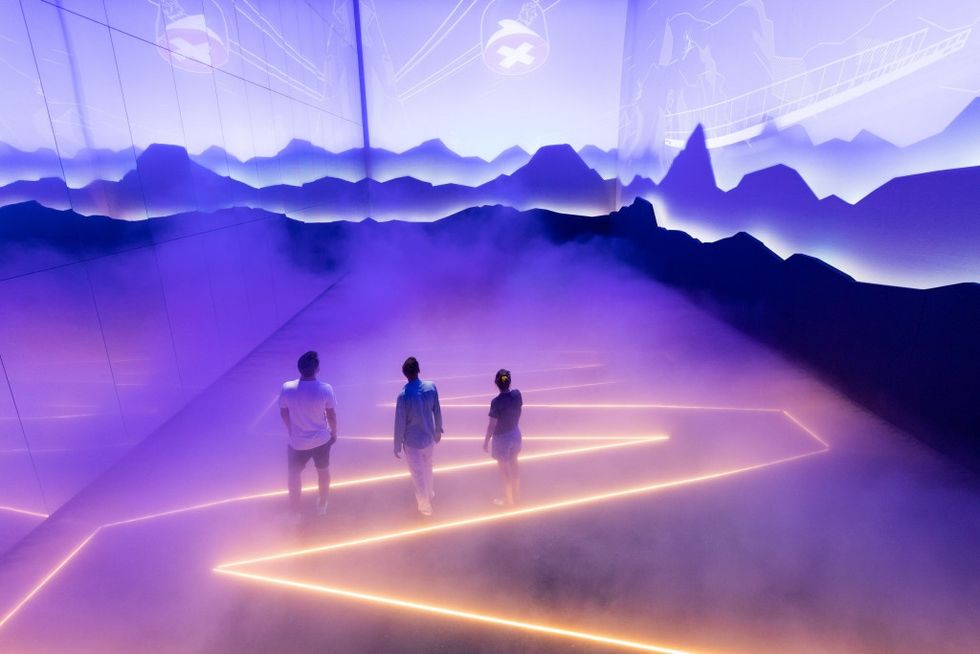
An immersive experience created for the Swiss Pavilion at Expo 2020 Dubai
Yet, he is aware of the economic realities of the location-based entertainment industry. "I've also learned the opposite: creative freedom only exists on top of a healthy company. Philippe builds the structures and partnerships that let our ideas travel internationally.
“My job is to protect the poetry: the artistic quality, the magic and the identity of the work.”
Trawnika's commercial perspective was the catalyst that enabled the studio's creations to reach audiences an isolated artist collective couldn't. Together, they navigate what Beranek describes as a "natural tension" between the two distinct disciplines.
"Creation needs freedom, time and sometimes irrational decisions; a business needs clarity, efficiency and repeatability.” PROJEKTIL deliberately harnesses this friction. The best projects happen when both perspectives meet early in the process.”
Scaling internationally also meant developing an operational framework that allowed its original IPs to run simultaneously in multiple cities while preserving their artistic identity.
Designing for architecture
PROJEKTIL's portfolio includes diverse offerings, from the celestial journeys of STAR DRIFT and INFINITY to the classical grandeur of MOZART MELODIES and the spiritual explorations of GENESIS Remastered and ENLIGHTENMENT.
The team have also captivated younger demographics and families with the PIXEL ZOO OCEAN and PIXEL ZOO JUNGLE installations.
All of these productions are built around PROJEKTIL EXPERIENCES, the studio's framework for combining projection, lighting, and sound with each venue's architecture.
For PROJEKTIL, the venue is never an afterthought or a blank canvas. "The foundation of a powerful immersive experience is a space that already has its own identity," Trawnika says.
"The best venues are not simply empty containers for technology. They have a sense of presence and emotion even before anything is projected onto them.
”Whether it stems from historical significance, the architecture, or simply an atmosphere guests feel when walking through the doors, the venue must forge an immediate connection with the visitor. The studio operates on a rigorous creative philosophy: "Understand the space first, then create the experience.”
Every venue brings its own architecture, acoustics and history. Rather than treating buildings as blank canvases, PROJEKTIL develops each production around those existing characteristics.
"The goal is never to overpower the venue, but to reveal something new about it,” Trawnika adds.
Beranek points to heritage spaces as prime examples of this philosophy in action. "Churches are the perfect example: they have height, rhythm, symmetry, acoustics and centuries of emotional charge — a natural dramaturgy," he explains.
"You don't need to invent everything from scratch; the architecture already carries emotion.
“We study the arches, the columns, the windows, the proportions, and then compose with the architecture, never on top of it. The building becomes part of the score.”
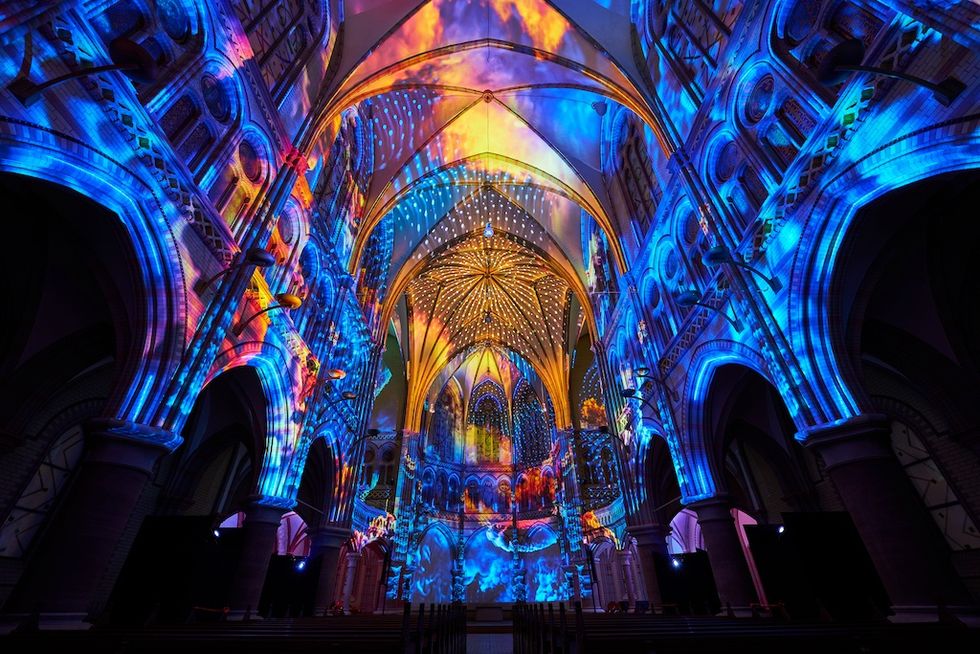
2025's ENLIGHTENMENT in Hamburg
Image © Andreas Kaiser
This adaptation process lets a touring IP like an EONARIUM show feel bespoke in every city it visits. "The real craft lies in balancing consistency and adaptation," Beranek says. "An EONARIUM show should remain recognisable, but it should also feel as if it belongs to that specific building.
“The best result is when visitors can no longer separate the content from the architecture; when the experience feels like it was created for exactly this room, even though the format tours internationally.
“That is where the illusion becomes complete.”
Technology as a tool
In an era when real-time rendering, massive media servers, and high-lumen projectors dominate the technical discourse in location-based entertainment, PROJEKTIL believes that "technology should disappear.”
Beranek says: "We use an enormous amount of it, including projectors, media servers, real-time systems, but if the audience is thinking about any of that, we've failed.
"They should be thinking about the music, the story, the atmosphere and how it makes them feel.”
The studio's mission is to create what they call "audiovisual poetry". This means every visual element must have a purpose, moving in harmony with the music and the space.
"Our work is essentially making music visible. Every visual movement needs a reason: it breathes with the sound, follows the architecture or the emotional arc of the piece.
“Nothing moves just because it can.”
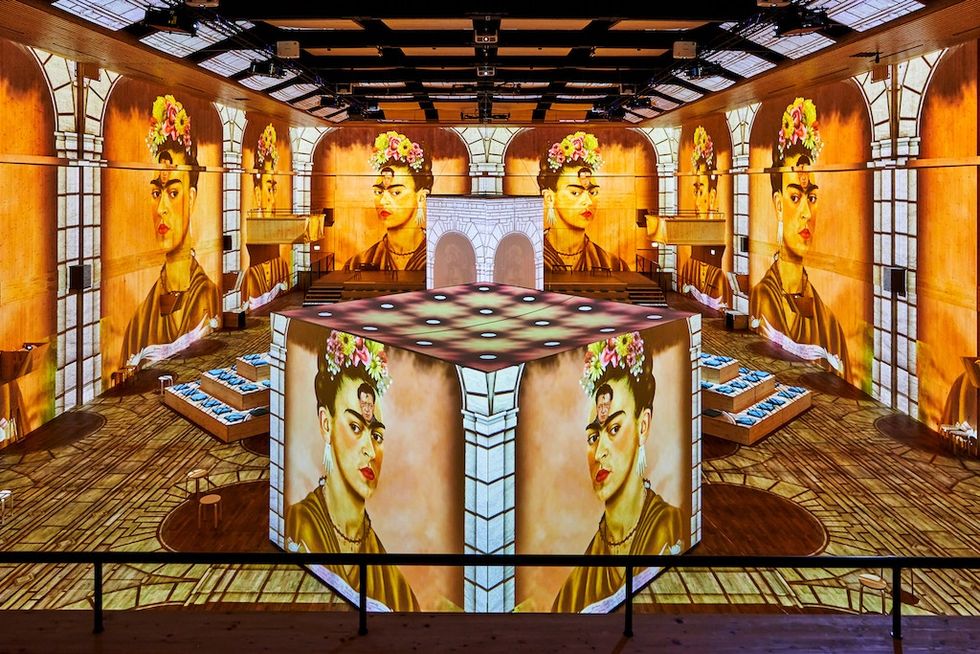
Viva Frida Kahlo immersive experience at Zurich Lichthalle in 2021
The goal is not just to dazzle the senses, but to offer audiences a genuine sense of calm. "A technically complex moment impresses for a few seconds; an emotionally precise moment stays with someone for years," Beranek says.
The focus is on creating moments of collective attention, stillness, curiosity, and awe that linger in memory long after the final light in the room fades.
When it comes to emerging technologies, PROJEKTIL remains focused on how these new tools can serve the story. Beranek anticipates that real-time rendering will make installations feel even more alive, allowing visuals to dynamically respond to the audience, the sound, and the room rather than relying on fixed, pre-rendered playback.
Artificial Intelligence (AI) is also making its presence felt in the studio's workflow. However, PROJEKTIL views AI strictly as a tool for exploration rather than a substitute for human creativity.
"Artificial intelligence is already changing our creative process. Not to generate more content, but to explore transitions, movements and visual worlds that used to be out of reach for a small artist team," Beranek explains.
"The artistic direction stays human — AI is a brush, not a painter.”
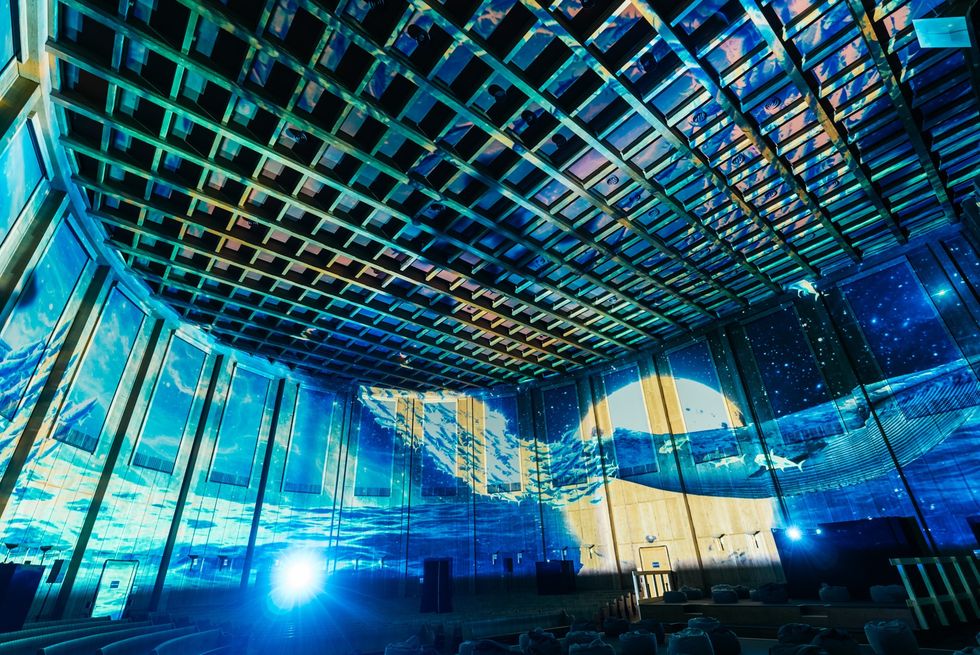
PROJEKTIL's PIXEL ZOO OCEAN in Zurich in 2023
Perhaps the most overlooked technological advancement, Beranek says, is spatial audio. "It is the most underrated technology in our field. Immersion is still discussed mainly in visual terms, but sound is often what creates the strongest physical and emotional response.
Interactivity, too, is expected to evolve into something much more nuanced. "It doesn't have to mean pressing buttons: a room can respond to the presence, movement and energy of its audience without turning the experience into a game".
Ultimately, for PROJEKTIL, the central question guiding their innovation remains unchanged: "Does the technology create meaning, or is it just another effect?"
Standing out in a crowded market
The ticketed experience market has become increasingly competitive in recent years. Standing out takes more than projecting large, colourful images onto walls.
Trawnika highlights that while novelty can drive initial ticket sales, it is a fleeting metric. “People are naturally attracted to something they have never experienced before.
"Your first immersive experience can be incredibly powerful simply because the format itself feels new and surprising," he says.
"However, that effect fades quickly. If an experience relies only on spectacle and visual effects, it becomes difficult to maintain long-term relevance.”
 PROKEKTIL's GENESIS immersive show at Hamburg's Kulturkirche Altona in 2023Image ©Jean-Christophe Dupasquier
Sustainable success relies on having a clear purpose behind the creation. "What is the story? What emotions do you want to create? What should people remember when they leave?" Trawnika asks.
"The strongest immersive experiences create a genuine emotional connection with their audience. When visitors leave having felt something meaningful, not just having seen something impressive, that is when an experience can build a lasting audience and a sustainable business.”
Beranek stresses the importance of artistic identity: "Many immersive shows today are technically competent but interchangeable. Big projections alone are no longer enough, because audiences have already seen a lot of spectacle.
“A successful experience needs a recognisable visual language, strong music and a clear artistic reason to exist. It has to feel composed, not assembled.”
Furthermore, the entire visitor journey must be curated. Everything from venue selection and pacing to the atmosphere upon arrival and the "silence between the moments" plays a crucial role in the guest experience.
"Spectacle gets people through the door once. Storytelling, genuine emotion and a touch of magic are what bring them back and make them tell others," Beranek says. "In the end, the strongest experiences combine artistic quality with operational discipline; one without the other is not enough.”
What’s next for PROJEKTIL?
After expanding across Europe, South America and Australia, PROJEKTIL is now targeting growth in the US, Asia and Eastern Europe.
These regions offer potential, but success in these new territories will hinge on cultivating strong, long-term relationships with local venues and promoters who understand their regional audiences and cultural contexts.
The company also sees opportunities to collaborate with brands through its touring network, which reaches more than 40 cities each year.
On the creative front, PROJEKTIL is pioneering new hybrid formats, with a growing emphasis on its dedicated music branch, PROJEKTIL MUSIC.
Beranek is particularly excited about exploring the "wide open" space between high culture and entertainment. "Creatively, I see huge potential in formats that sit between an exhibition, a concert and a live performance — electronic artists, classical musicians and immersive visuals coming together on one stage.
"Music is becoming ever more central to our work.”
The studio's vision extends beyond creating temporary installations; the team wants to build enduring cultural destinations. "A strong immersive experience can reactivate a historic venue, attract completely new audiences and give a city a new cultural habit," Beranek says.
"And I love the idea of experiences that return every year and become a ritual: when a family comes back for the third time, you haven't just sold tickets, you've become part of their story.”
For PROJEKTIL, true growth is defined as much by deepening a community's artistic quality and cultural life as by opening in new geographical markets.
Immersive experiences that truly connect
Looking ahead, both founders believe immersive storytelling is still in its early stages, with significant opportunities to combine cultural heritage, technology, and live entertainment.
Looking ahead, Trawnika believes the future lies in further bridging the gap between "cultural heritage, cutting-edge technology, and emotionally engaging storytelling—allowing extraordinary places to connect with new audiences in completely new ways".
Beranek adds that the focus remains on the art form itself. "Immersive storytelling is still a very young medium. Cinema had over a century to develop its grammar; we are just beginning to write ours.”