
When Iheanyi Onwuegbucha, then a student at Leeds University, returned to his homeland in Nigeria, he was excited to visit the National Museum in Lagos.
Having studied Museum and Gallery Studies abroad and having learned about the extraordinary historic artworks displayed in Lagos, he was excited to visit the treasure house he had been reading about. On arrival, he quickly understood that this colonial-era institution did not arouse the same passions in his native country.
His veteran taxi driver swore that no such museum existed, and they argued until they finally arrived. He was the sole visitor during his hours there.
For Onwuegbucha, this visit typified the low standing of museums amongst their public:
"I was able to draw a straight line between the way the museum is presented, the origin of the museum, the colonial legacy that the Museum represents, and the relevance of the museum today."
Many of Africa's colonial-era museums, though venerated abroad, are unloved at home.
The Living Object Foundation & a new future for Africa's museums
Established in 2024, the Living Object Foundation is set up to envision a new future for Africa's museums, where they engage with their audiences, connect with education in schools, and actively tell their own stories.
Bringing together many of the leading figures in African museums, Living Object's Lagos workshop, entitled Rethink, served as a forum for African museum leaders to tell their own stories and make their voices heard in contemporary debates around museology.
Africa's museums have often been silent partners in discussions around the continent's heritage; the Rethink conference was an opportunity for African leaders to address common themes.
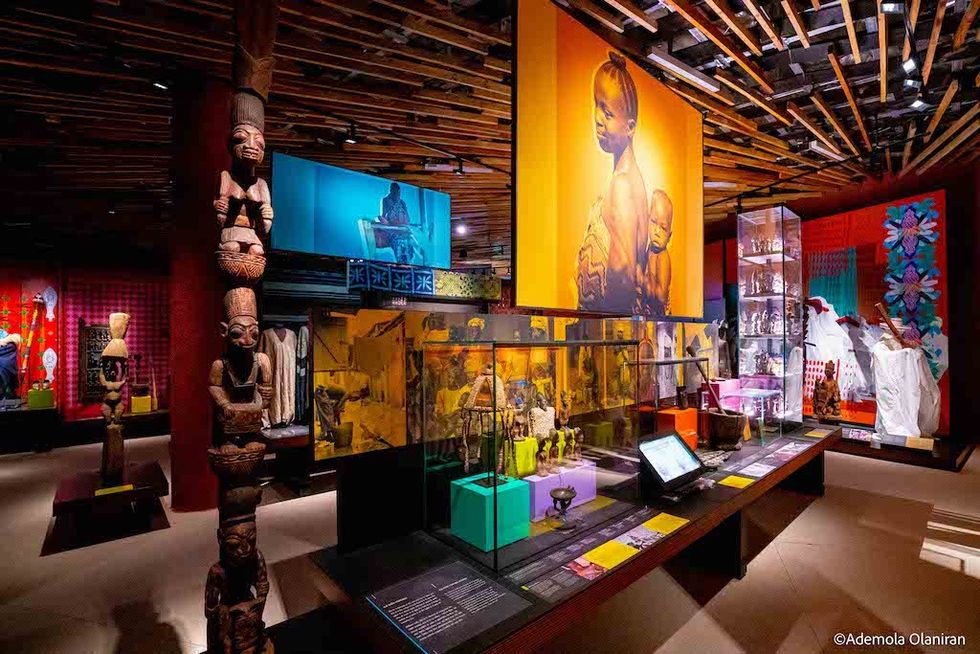 John Randle Centre for Yoruba Culture and History
A Professor of Archaeology at the University of Ghana, Kodzo Gavua, outlines some of the challenges:
"Early African museums were active agents in the collection and expropriation of African cultural materials, including human remains, plant specimens, and wildlife. Their recreational, educational, and scientific functions were primarily directed at European audiences rather than Africans themselves.
"Africans were rarely involved in knowledge production."
He went on to describe how this expropriation created a knowledge gap across Africa, one that was systematically filled with European representations and associated social values.
Even the concept of nationhood, he argued, is an external construct imposed by colonial powers, cutting across pre-colonial societies and arbitrarily dividing ancient civilisations.
Colonial-era museums, as a consequence, face an uphill battle to connect with local communities.
Insights from the Rethink conference
The director of the Palais de Lomé museum, Sonia Lawson, echoed these sentiments while describing the institution's origins. Togo has a particularly complex colonial history—first controlled by Germany, then by France and Britain, and finally returned to French rule.
The Palais itself long stood as a symbol of power and exclusion and was left to decay for two decades after independence. Leading its refurbishment and renewal, Lawson sought to embed the institution within the fabric of Togolese life by introducing co-creation into every aspect of exhibition-making.
Early exhibitions involved curators engaging directly with local communities, asking people to share stories—especially those suppressed during the colonial period.
The resulting displays of locally held treasures became, in Lawson's words, "a very rich exchange."
A reciprocal relationship emerged, enabling the museum to borrow ritual artefacts for exhibition and return them to communities for ceremonial use.
Later exhibitions, ranging from wax print textiles to contemporary art, fostered intergenerational dialogue and brought new audiences into the museum's orbit.
The return of artefacts
One of the most persistent arguments against the return of artefacts from Global North museums to African museums concerns conservation. Many of those museums possess state-of-the-art facilities, and the transfer of objects is often contingent on strict environmental controls.
These requirements are rarely relaxed and frequently become a major obstacle to long-term returns.
In Nigeria, for example, intermittent power supply, significant temperature fluctuations, and high humidity make it difficult and costly to maintain conditions comparable to those in European or North American institutions, particularly when reliant on diesel-powered air conditioning systems.
This creates a striking paradox: museums may refuse to return artefacts to the very regions where they were created on the grounds that the environment is unsuitable.
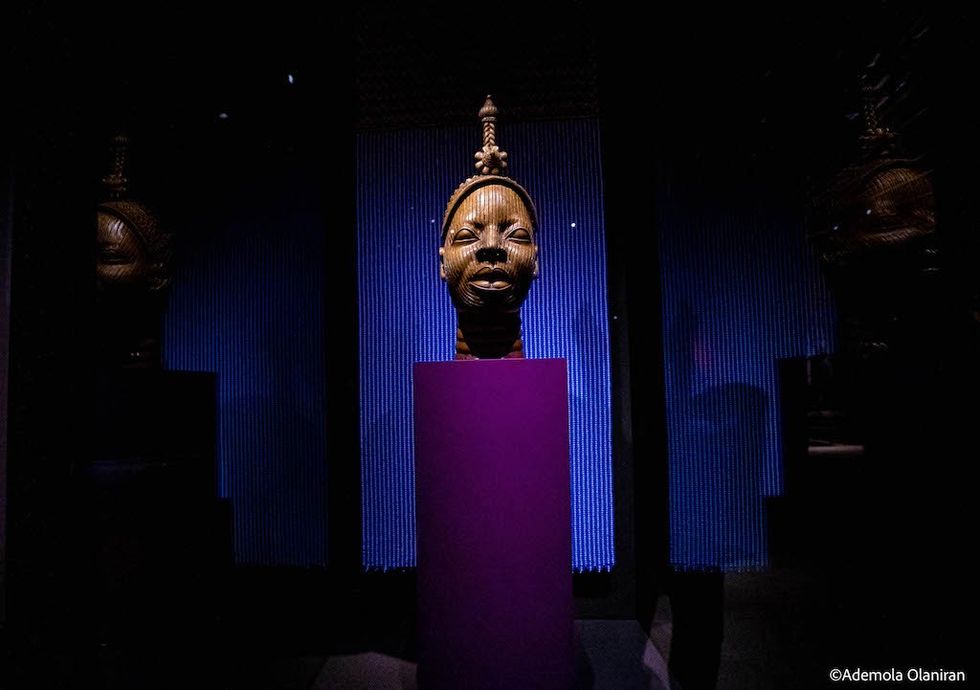 John Randle Centre for Yoruba Culture and History
Within the highly bureaucratic, risk-averse framework of international museum practice, where insurance and liability dominate, such barriers are easily reinforced. Consequently, even when returns are agreed in principle, they may be blocked by regulatory restrictions.
For many Africans, these restrictions are deeply frustrating. Claims that looted objects cannot be returned due to inadequate environmental conditions are widely perceived as dismissive and hurtful.
Onwuegbucha, programme director at the Living Object Foundation, emphasises that African societies have long-standing conservation traditions of their own.
Cultural objects, such as sculptures and masks, were often housed in communal spaces at the heart of village life, serving religious, social, and judicial functions. These spaces were collectively owned and accessible, acting as centres of artistic production and community gathering.
As he explains, custodians and families bore responsibility for maintaining these objects, commissioning new works as older ones deteriorated:
"It's a public space where everyone, irrespective of their status, has access to cultural objects. In other words, it's a museum—a proper public museum for everyone."
From this perspective, it becomes clear why objects removed from everyday circulation and placed in colonial museums often lose relevance for local communities. Their meanings are reshaped through a colonial lens, severing the relationship between people and their cultural heritage.
The John Randle Centre for Yoruba Culture and History
Seun Oduwole, the architect behind the John Randle Centre for Yoruba Culture and History, offers a compelling example of a new museological approach.
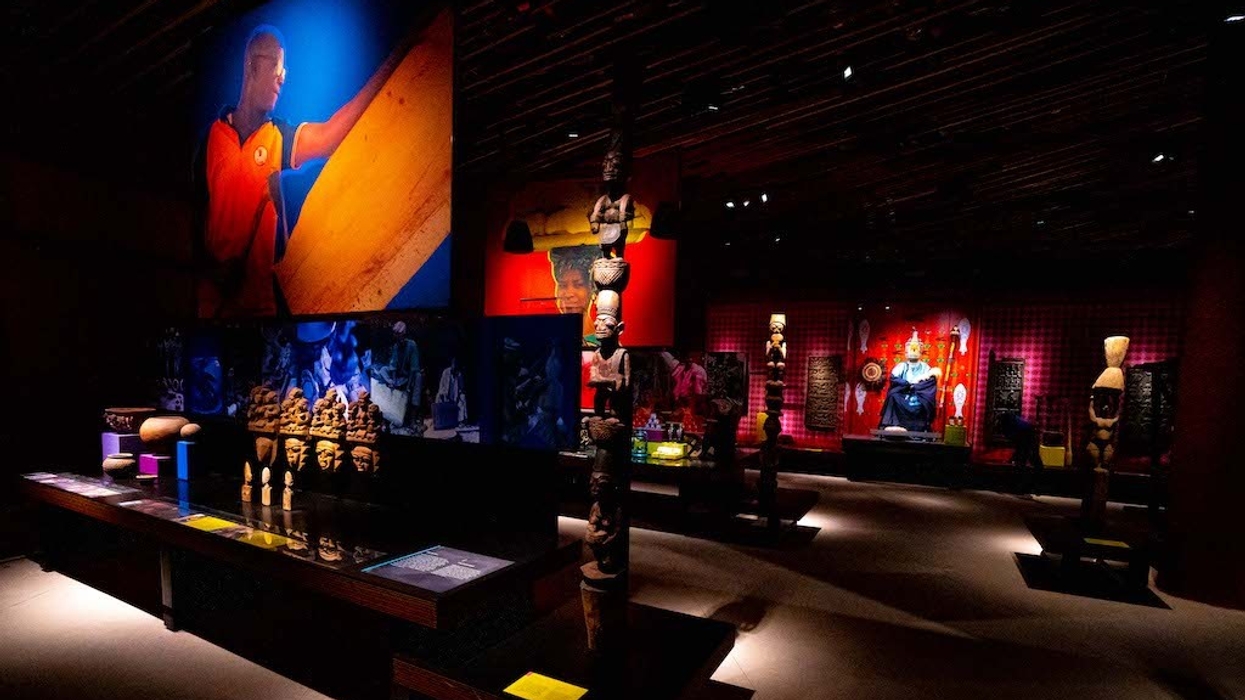
Often described as one of the first truly postcolonial African museums, the Centre prioritises narrative as the foundation of its design. Rather than beginning with a collection, curators first developed a coherent story of Yoruba culture, subsequently sourcing objects from multiple collections to support that narrative.
This approach enabled the creation of themes that resonate with contemporary Yoruba audiences. Ralph Appelbaum Associates (RAA), a multidisciplinary firm specialising in the planning and design of museums, exhibits, educational environments, and visitor attractions, was the lead designer for this project.
The public response to the Centre's opening was striking, reflecting a deep appetite for culturally grounded storytelling.
Oduwole also reflects on the marginalisation of Yoruba culture in the face of dominant global media, particularly US-produced animation.
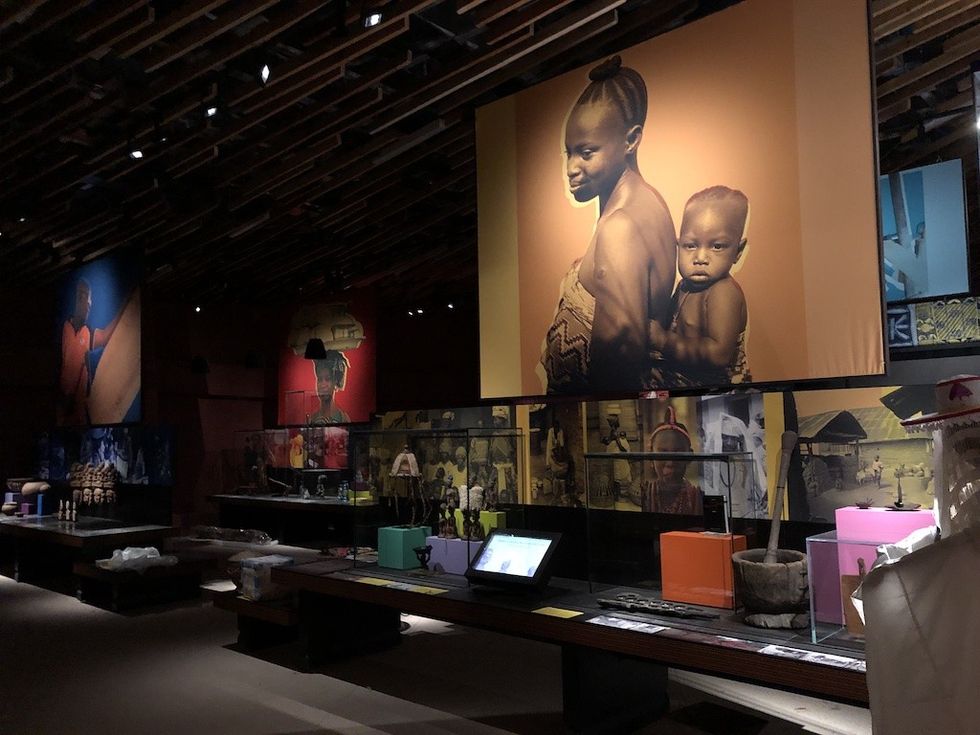 John Randle Centre for Yoruba Culture and HistoryImage credit Philip Hughes
He recalls growing up watching Tales by Moonlight, a television programme in which the storyteller Uncle Jimi shared Yoruba folktales with children. Today, by contrast, many African children consume little local cultural content, instead engaging with global franchises such as Pixar and Disney.
The Yoruba Centre responds directly to this cultural erosion, offering younger generations an immersive encounter with their heritage. Its exhibition design reflects local traditions through layered materials, music, recordings of oríkì poetry, and interactive installations.
Visitors are drawn into a multisensory world of performance, ceremony, and storytelling.
Repatriation as a catalyst
The repatriation debate, while often framed in terms of restitution and ownership, ultimately raises deeper questions about narrative, authority, and cultural continuity.
Across Africa, a new generation of museums and cultural practitioners is not simply waiting for the return of artefacts but actively reimagining what museums can be: spaces rooted in community, dialogue, and lived experience.
Repatriation, in this context, is not an endpoint but a catalyst: an opportunity to restore not only objects, but also the relationships, knowledge systems, and cultural practices that give them meaning.
As African institutions continue to evolve, they are reshaping the global museum landscape, asserting that the future of heritage lies not just in where objects are kept but in how their stories are told.