
How do we make history feel relevant? It’s a big question many museums ask. But, as with any creative ideation, the more specific we can be, the more exciting and relevant our solutions can be.
Here are some more targeted questions to consider when working with museum clients.
1. How do you recreate the excitement of a first-time ever occurrence?
History contains a lot of facts–and a lot of firsts. Giving visitors the experiential awareness of what it felt like to witness something for the very first time helps those facts stick in a meaningful way.
For example, today it’s a given that aircraft are part of military operations. But during WWI, rapidly developing aviation technology introduced aerial combat as a brand new capability.
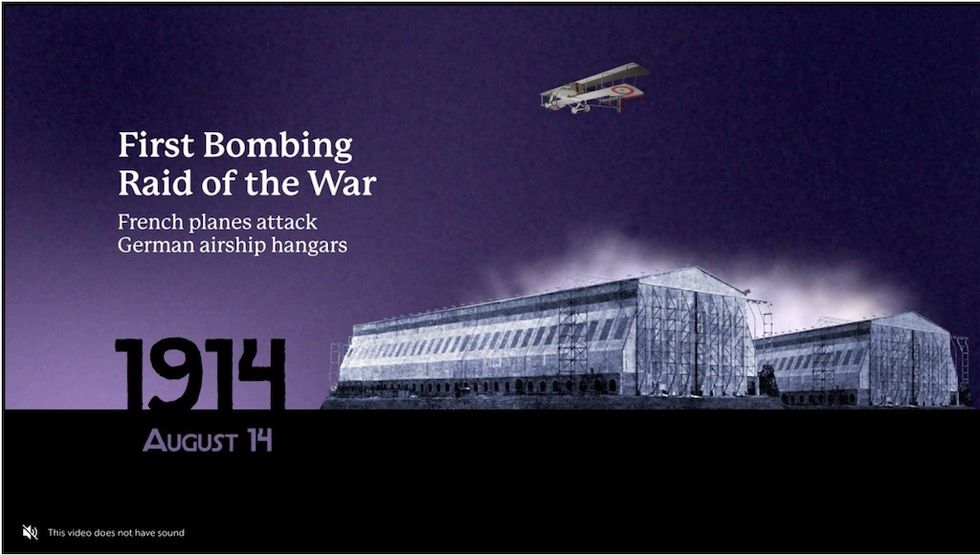
For our animated timeline of aviation firsts in the newly opened WWI Gallery at the Smithsonian Air and Space Museum, we leaned into the breathtaking speed of innovation as well as the previously unimaginable scale of wartime loss to communicate the never-before-seen scale and impact of these firsts.
2. How do you invite audiences to take a closer look at histories they are already familiar with?
Often, the challenge is presenting new or little-known information to visitors. But it’s equally important to figure out how to entice those who consider themselves well-versed on a topic.
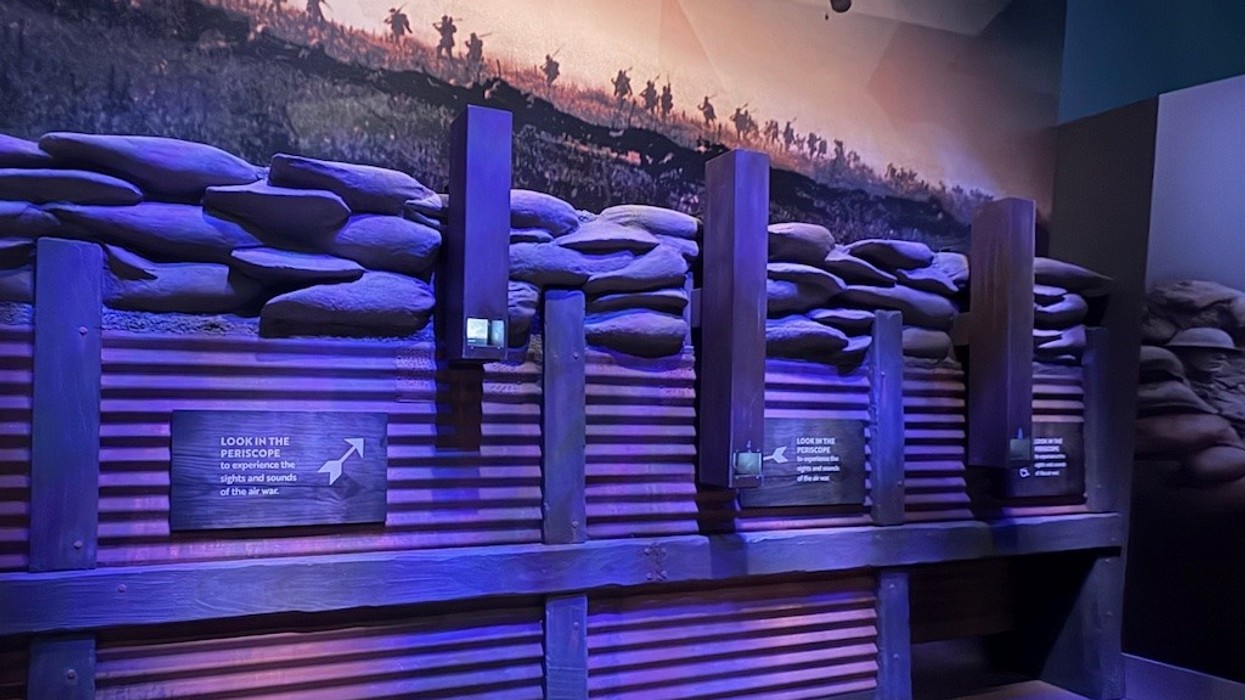
In our Trench Wall Periscopes experience at the National Air and Space Museum, an airplane flies toward you, your trenchmates react in colorful period slang, and an aerial dogfight unfolds through the lens of your periscope as the sound of gunfire approaches and a zeppelin is spike-dozzled out of the sky.
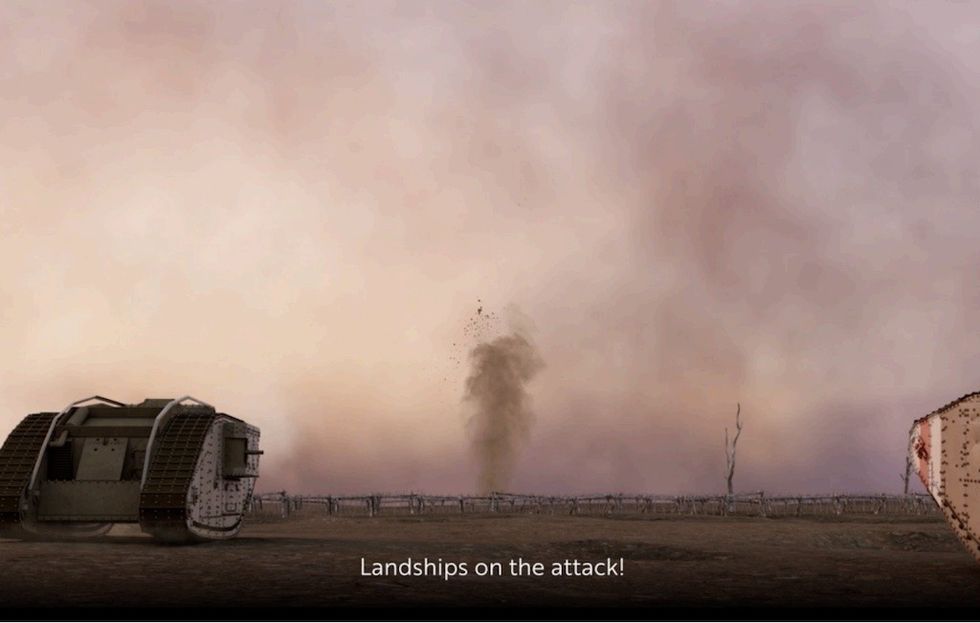
Multi-sensory immersion grabs and rewards attention while creating an emotional buy-in that enriches a well-known history.
3. How do you enliven surrounding artifacts?
Interactive media does a good job of grabbing people’s attention. When deployed correctly, it also adds dimension to and piques interest in surrounding artifacts.
General Motors founder Billy Durant put Flint, Michigan, on the map as the birthplace of the automobile industry, and the Sloan Museum of Discovery’s History Gallery holds many artifacts from this era.
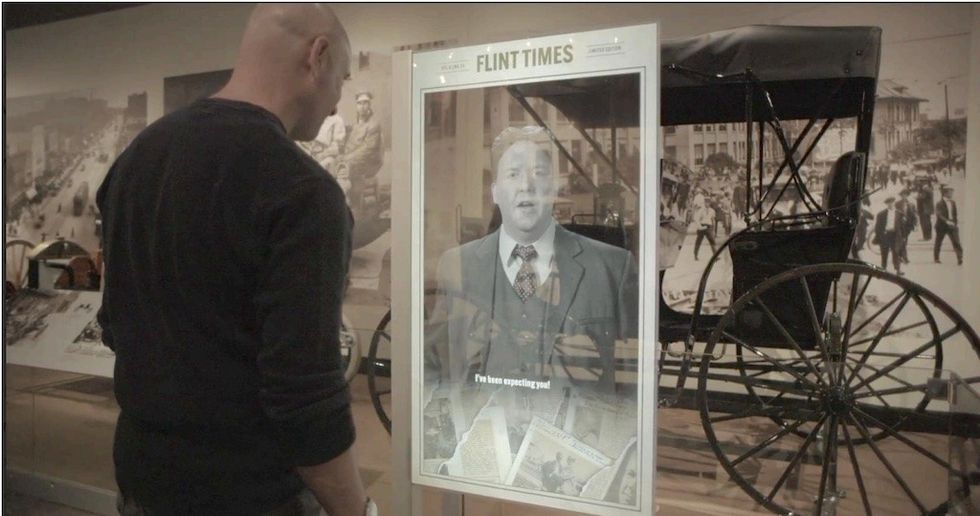
In our augmented reality experience, visitors step into the role of a Flint Journal reporter to interview Durant for a first-person account of this transformative time.
This interaction brings the cars and carriages in this gallery to life by connecting them to the real-life story of a larger-than-life personality, while the AR interface gives visitors a direct way to engage with objects they can’t physically touch.
In today’s fast-changing, future-forward world, making history feel relevant can seem like a challenge.
Asking sharper, more intentional questions helps creative teams and their clients uncover the specific details that spark curiosity, develop emotional buy-in and create unique, memorable experiences.