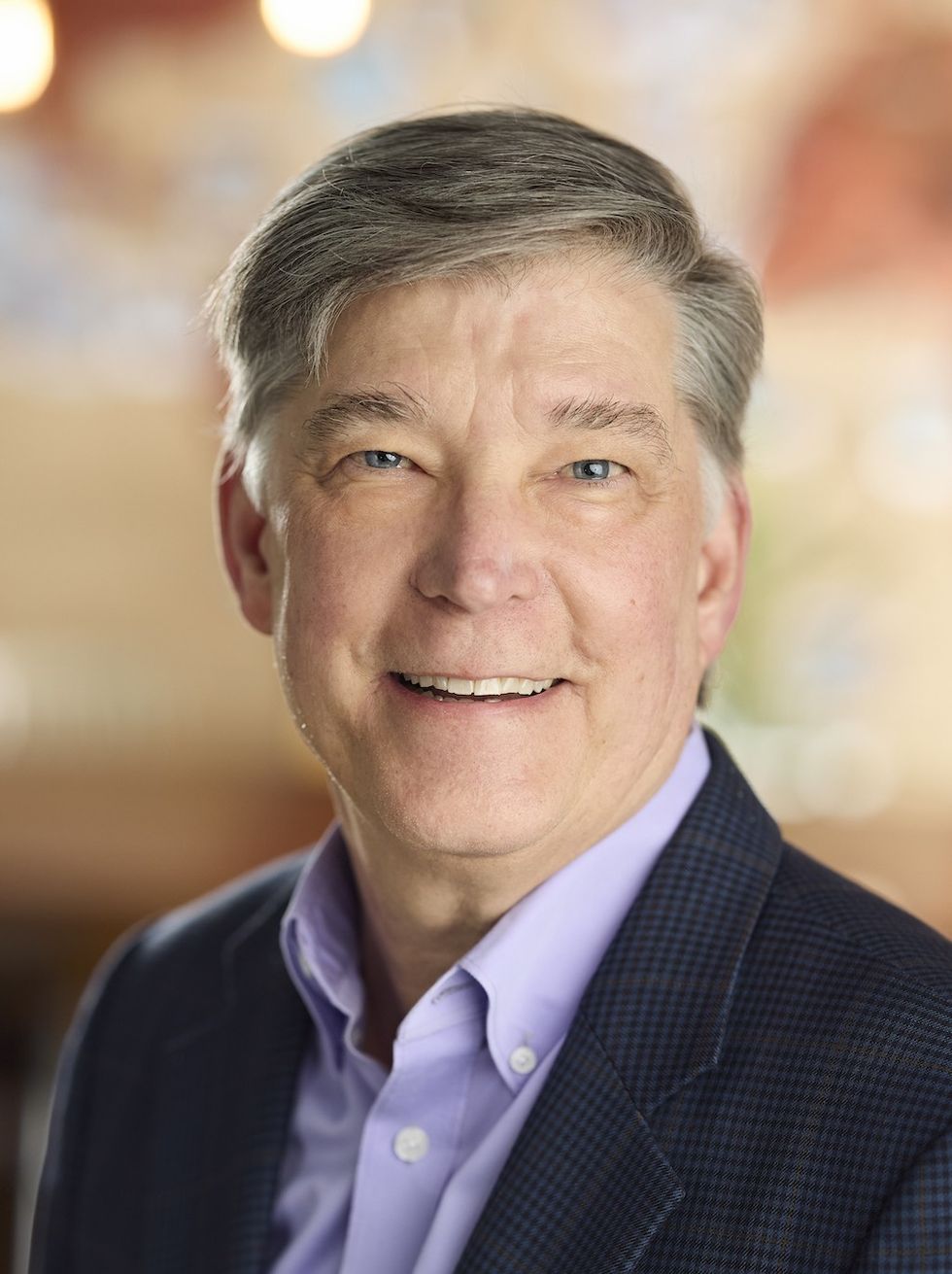
In January 2026, John Kemper, former vice president at PGAV Destinations, retired, leaving behind a legacy that has significantly influenced zoological design and themed entertainment.
Over more than 40 years, Kemper has played a key role in transforming how people engage with the natural world, advancing the industry from basic observation to immersive storytelling and, importantly, promoting animal autonomy.
Speaking with blooloop and reflecting on his tenure, Kemper shares insights into the evolution of attraction design and the ‘secret sauce’ required to balance guest gratification with genuine animal welfare.
When passion meets profession
For many in the attractions industry, the journey is often winding, but for Kemper, the meeting point of his personal interests and professional path occurred early.
"I was interested in plants and animals as a child," he says. "Then, when I turned 16, I worked at a theme park in the operations department. In high school, I was offered engineering and architectural drawing classes. My dad liked to build things. My uncle was a carpentry contractor. So, I chose architecture for college at the University of Kansas."
During his university years, a fortunate connection paved the way for his lifelong career at PGAV. While working in the summers at Six Flags, fate brought about a networking opportunity.
"A coworker’s father owned an MEP engineering firm, and I took an internship there. They had a client named PGAV who had a project at a zoo. That’s where the light bulb went on that this was something out there in the world."
Following that revelation, Kemper secured internships with the firm for the next two summers. "The rest is history! It’s the only place I have ever worked professionally."
Staying inspired at PGAV
Remaining with a single company for over four decades is unusual in today's professional world. However, for Kemper, the changing nature of work at PGAV Destinations offered a continuous flow of new challenges and ideas.
It was never about repeating the same task; it was about ongoing reinvention and exploration.
"I’ve stayed there because the work is so interesting," Kemper says. "It is something different with each new project. The opportunities kept unfolding, so I never left. Each project exposed me to a new and interesting client."
A significant part of his career was dedicated to a particular group of high-profile clients, enabling him to build specialised expertise.
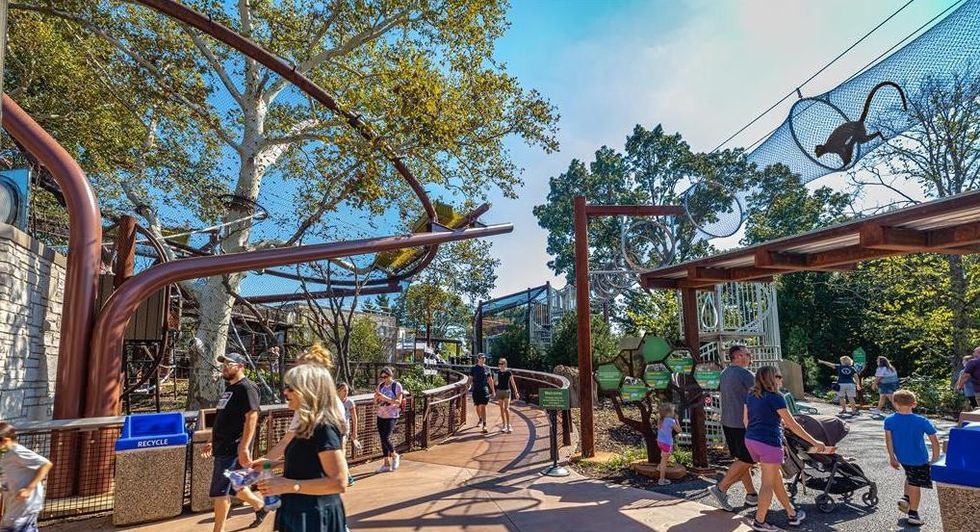
Primate Canopy Trails at the Saint Louis Zoo
"For 10 years or so, I worked mainly with the former Busch Entertainment Corporation at its Busch Gardens, SeaWorld, and PortAventura parks.
“In that time, I became totally immersed in how theme parks and animal exhibits are planned, designed and executed in a for-profit situation."
This served as a foundation for his later work, influencing projects worldwide.
His portfolio features an impressive range of clients, including the Saint Louis Zoo, the Louisville Zoo, Columbus Zoo and Aquarium, and San Antonio Zoo, as well as key projects such as the PortAventura Gold River Hotel, Ferrari Land, and Busch Gardens Tampa’s Edge of Africa.
Building attractions and building relationships
Kemper’s approach to architecture goes well beyond blueprints and schematics. He sees the architectural process as a deeply relational endeavour.
His involvement in projects from conception to completion has given him a unique perspective on how trust fosters successful design.
"Those go hand in hand: project success and client relationships. Having the opportunity to be involved from start to finish is a luxury that doesn’t always happen, but it breeds longevity of knowledge, lessons learned, and the opportunity to build trust and friendship in a professional setting, which begets follow-up projects.
“That is the key to company success."
For Kemper, the line between service provider and partner is blurred. He stresses that the most successful projects happen when the designer genuinely immerses themselves in the client’s world.
"Like many at PGAV, I took it upon myself to learn my client’s business and become their friend while providing outstanding design and management services," he says.
"Digging in to solve problems shows commitment and dedication, which leads to more opportunities."
This philosophy has resulted in a career marked not only by buildings but also by lasting partnerships. "I’ve made lots of friends along the way. That’s what happens when you build those relationships," he notes regarding PGAV’s high volume of repeat clients.
A Spanish adventure
Among the numerous projects Kemper has overseen, his management of the PortAventura construction in Spain stands out as a significant chapter. It was an experience that tested his management skills and broadened his personal horizons.
Living in Spain while directing a major international project provided lessons that could not be gained in a domestic office.
"It was a transformative experience in my work career," Kemper says. "And more than just professionally! I went into it open-minded with the building culture, language, the people, the gastronomy, and the exotic location for this Midwest boy."
The challenges were considerable. At that time, the local industry was not used to the particular requirements of themed entertainment construction.
"It was PGAV’s job to teach them how to approach it, from the architects and engineers involved, to the individual craftsmen.
"My biggest lesson was to be patient and tolerant, and persistent in preserving the vision for the project, down to the millions of detail decisions of a large-scale construction project like that."
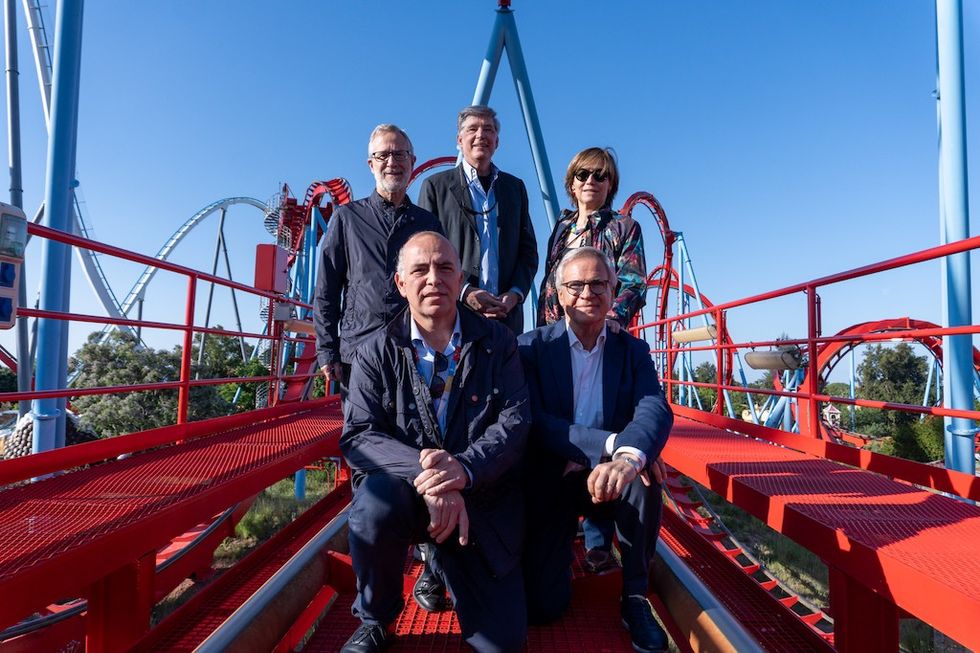
Kemper with colleagues at PortAventura
However, the cultural exchange was the most rewarding part of the project. Kemper’s dedication to integrating with the local team created bonds that have lasted decades.
"My wife helped me adjust because she already spoke the language as a student in Madrid. I worked hard to learn the language quickly and became an integral part of construction management meetings and interacting with individual craftsmen," he says.
"Again, building relationships with my coworkers made them want to understand what was needed, and to do it to the best of their abilities."
The personal impact was profound:
"From a personal point of view, my biggest lesson was to embrace the people, their passion for life, hospitality, friendship, and food. I still speak fluent Spanish, and we vacation with 30-year friendships created during the construction of PortAventura."
The evolution of zoo design
Perhaps the most significant professional shift Kemper has noticed and helped shape is the development of zoological design philosophy. When his career began, the industry's focus was quite different from today’s standards.
"During the course of my 41-year career, priorities in the animal world first shifted to immersive landscape design for the animals and the guests. In the latter part of my career, they have shifted further to provide greater wellbeing and bona fide actions of conservation of individual species."
The modern gold standard, according to Kemper, goes beyond immersion. It emphasises agency. It involves designing environments that respect the animal not just as a display but as a living being with psychological needs.
"Building on the constant of safety for animals, keepers, and guests, we now want design exhibits give animals Choice & Control," he explains.
"Choice of what they want to do, where they want to rest, where they want to interact, sleep, eat, forage, run, play, fight, or nuzzle. And the ability for them to control when, where, and how they do it."
This shift requires a more nuanced approach to architecture, with flexibility incorporated into the hardscape.
"As designers, our job is to create an environment that can be flexible and changeable by keepers; and through this inherent and added enrichment, their lives are nearly as diverse as their counterparts in the wild.
“That ability to have natural behaviours through social interaction and psychological stimulation is a guiding trend for the future of this industry."
Kemper points to recent projects as evidence of this philosophy in action. "Our Congo Falls project that just opened in San Antonio is a great example of that.
“We’ve created sizable traditional habitats and a 75-foot tower for the great apes to climb, explore, hide from each other, be together, or get a better view. All at their own choosing."
Balancing experience and welfare
Creating these complex environments involves a delicate balancing act. The architecture must accommodate the animals' need for autonomy while also meeting the expectations of a public that has become increasingly used to on-demand entertainment.
"That is the secret sauce," Kemper says. "Balancing animal wellbeing with a great guest experience, good keeper husbandry, enrichment, and conservation."
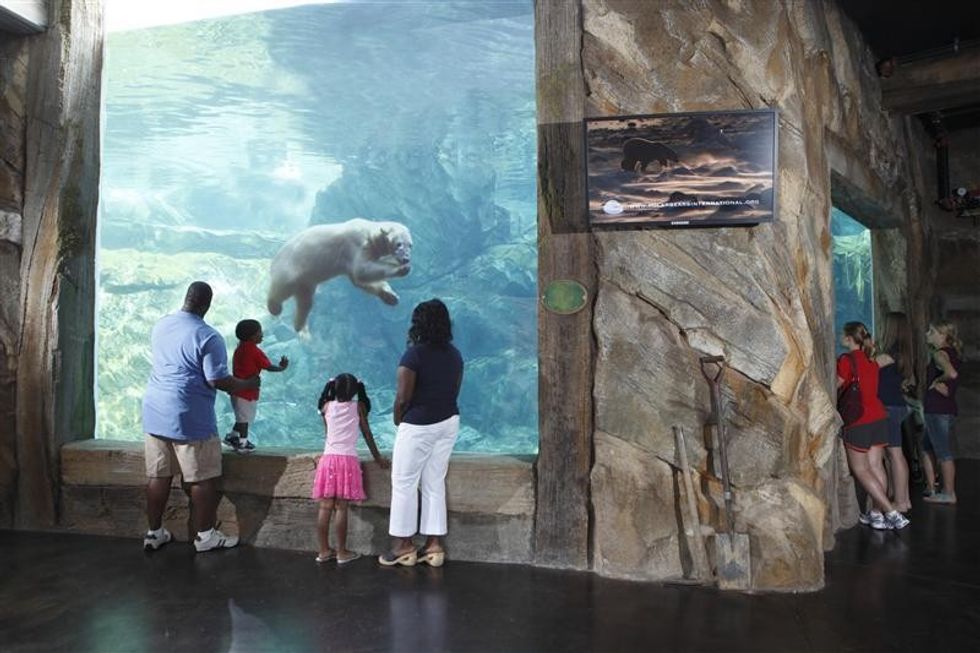
Glacier Run at the Louisville Zoo
He recognises that the modern guest poses a particular challenge for designers. "From a purely human-nature perspective, guests have become more demanding of instant gratification.
“So, we must always be mindful of how to craft the storytelling, the physical experience, and the emotional experience in a way that keeps them engaged and wanting more. It’s not easy."
Success stems from diligent collaboration and historical understanding:
"It comes from intentional planning and actions during the design phases, through close interaction with keepers and curators, and the collective experience of our team over the years of doing this with all types of animals and clients.
"It takes careful experimentation with ideas to create innovative solutions that have a high probability of working."
The crucial work of zoos and aquariums
A sincere, personal dedication to conservation drives Kemper’s work.
"My love for animals as a kid grew as I did when I entered the workforce. PGAV gave me the opportunity to work with professionals who cared for animals.
"The more I learned, the more I was able to combine that passion with the architecture and design skills I learned at University, and they just snowballed together."
This passion led him to actively participate in conservation efforts outside the office.
"I am a 20-year member of the Board of Directors of a nature-based non-profit called the World Bird Sanctuary in St. Louis," he says.
"I’ve even had the occasion to manually release a rehabilitated American Bald Eagle into the wild, by literally throwing it into the air. It was such a thrill!
"To know that my work with nature-based institutions helps our planet, that's what keeps me going."
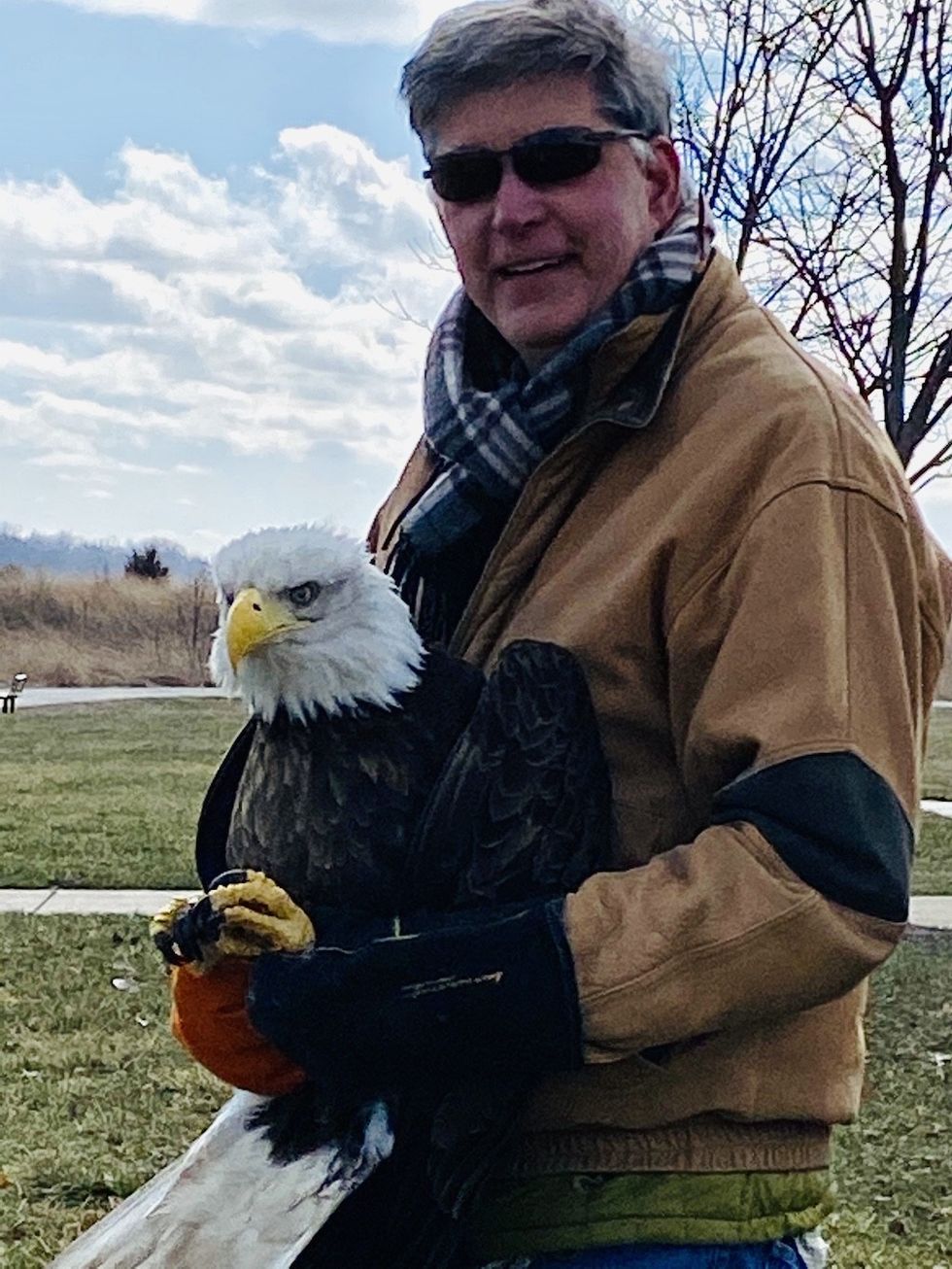
Kemper sees modern zoos and aquariums as essential institutions in the fight to save the planet, provided they effectively integrate their missions into the guest experience.
"For me, the most exciting thing is that zoo and aquarium experiences are moving toward integrating awareness, education, and conservation into a cohesive guest experience.
“It used to be that you had the animals in utilitarian spaces that were adequate for keepers to give good care. The public's view of the animal was basic. Education and interpretation were additional, if at all. Some conservation took place, but it was not presented to the public."
Today, the narrative has changed. "Besides giving the public a chance to see animals that they are not likely to see in their lifetime, conservation is the reason for existing as institutions.
"No one else is leading a charge that regularly includes the public as constituents. I feel that we need these zoo-animal experiences to understand why we need to preserve our natural world."
Sustainability and global trends
As the industry looks ahead, sustainability has become a vital part of design, although Kemper recognises the practical realities involved.
"High-level sustainability costs money, and sometimes institutions must balance sustainability features with guest experience. Our job is to help them navigate what’s feasible.”
However, his personal stance is clear: " I have solar panels, drive a hybrid, and compost everything. I believe in walking the walk."
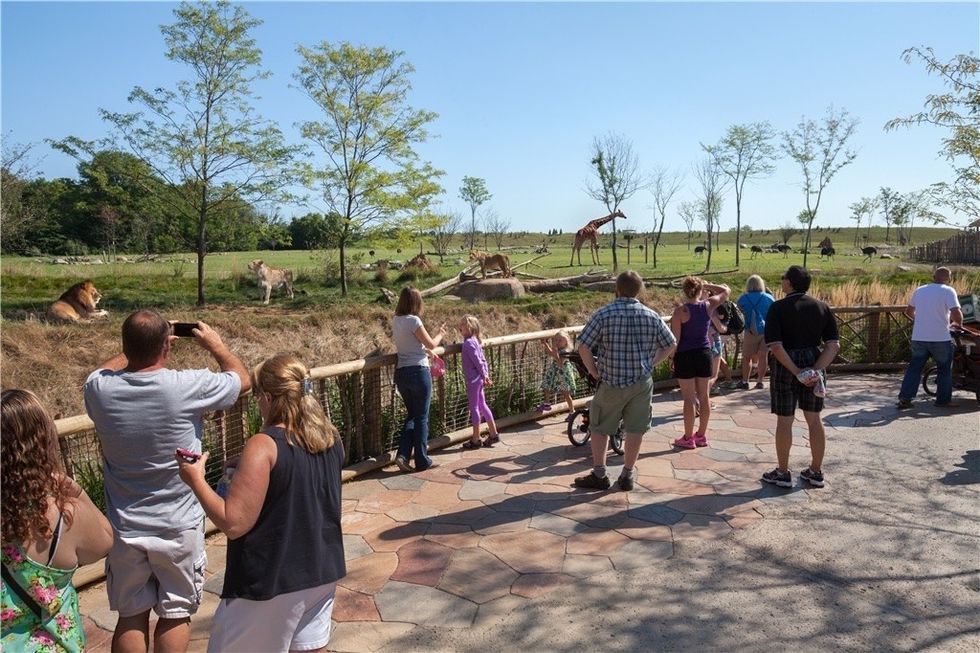
Heart of Africa at the Columbus Zoo and Aquarium
As he retires from the industry, Kemper considers the sector's future with a mix of realism and optimism. He believes the main challenge is maintaining the relevance of the natural world in a society overwhelmed by digital distractions.
“There is constant competition for our time and focus. We must continue to concentrate on novelty and authenticity in the experiences we create."
However, he views technology not as an enemy but as a potential ally in fostering a connection with nature.
"Technology is an opportunity, because it can support actual experiences with plants and live creatures. The pace of technology will only increase, so we must harness the good parts of technology to be good for us as a species."
Advice for the next generation
For those entering the industry today, Kemper offers advice based on four decades of experience.
He encourages new professionals to stay open to unexpected opportunities: "Be open-minded. Don’t believe anyone owes you anything. Look for opportunities to do what you like. Volunteer. Shift your path toward what enriches you personally.
"That’s what kept me at PGAV for 40 years, being near animals and continuing to learn. Look for the positive, explore the edges, and grow in that direction. It will come back and inform your work."
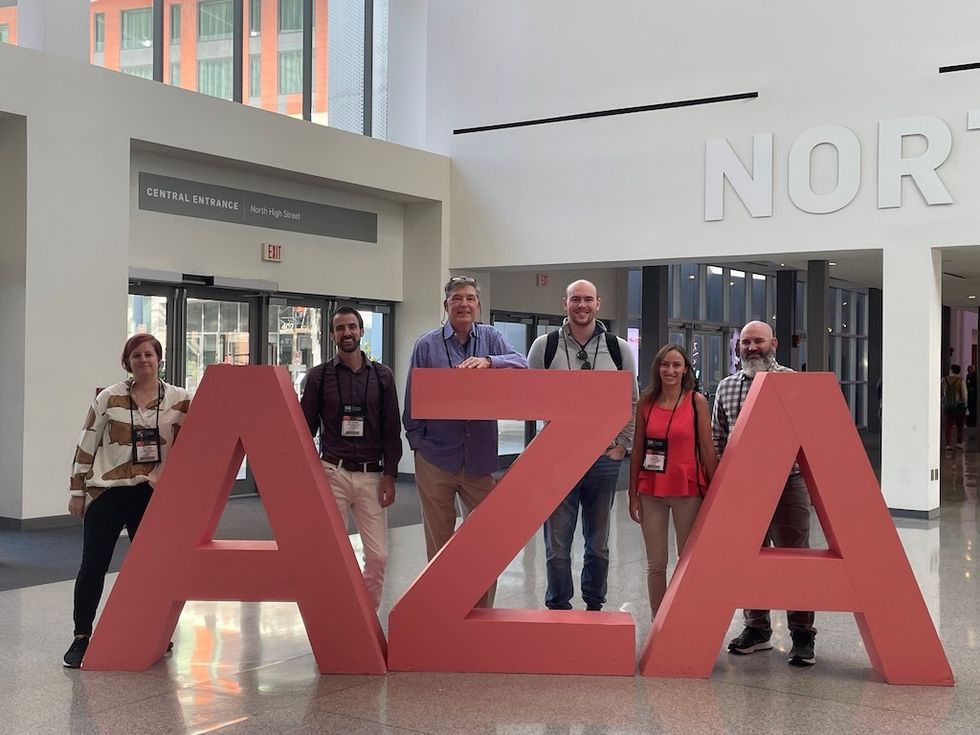
Kemper with colleagues at an AZA Annual Meeting
Reflecting on the relationships that have shaped his career, he offers a final thought on the importance of kindness and networking.
"I’ve always been a positive person, and that’s benefited me in my career. Look for the good in people and build relationships. You never know who you meet today who will be a decision-maker later. Familiarity makes decisions easier, and relationships matter."
As John Kemper steps away from PGAV Destinations, his impact will continue to be felt in the immersive landscapes he helped develop and the animal lives he helped improve.
From the coasts of Spain to the heart of America’s zoos, his work has proven that, with the right combination of passion, patience, and design excellence, we can create a world where both humans and animals thrive.