The attractions business is entering a new era, one in which technology is not only enhancing the guest experience but also redefining it entirely. Digital innovation in theme parks, museums, zoos, and more is shaping faster, smarter and more personalised experiences.
AI is powering operations and guest experiences, while mixed reality and immersive visual technologies are blurring the lines between physical and digital worlds.
Robots and autonomous technologies are being used for guest services and visitor experiences, and smart infrastructure is enhancing operational efficiency and safety.
Simultaneously, operators are turning to technology to advance their sustainability efforts, and others are investing in innovative wellness experiences amid a burgeoning trend for wellbeing.
Keep reading to discover blooloop’s top technology trends for 2026.
AI everywhere
The varied use of artificial intelligence (AI) in the attractions industry looks set to grow in the year ahead, whether it’s for enhanced personalisation, operations and safety upgrades, or as attractions in their own right, like Dataland.
Museums are investing in AI-driven experiences and characters, such as the Dalí Museum’s AI version of Salvador Dalí, or the Rijksmuseum’s AI-powered art tool.
Elsewhere, the National Archives Museum in Washington, D.C., houses a gallery where guests can engage with American history, with the experience customised and personalised to their interests through AI.
Within the theme park field, Six Flags is undergoing an AI-driven digital transformation. Features include a new digital concierge powered by generative AI and named Missi Six and an AI drowning prevention system at Six Flags water parks.
Six Flags is also adding a new layer of spatial AI and extended reality in partnership with Illumix, a technology company specialising in the creation of augmented reality (AR) and interactive immersive storytelling.
Disney, meanwhile, is working with AI-driven 3D printing pioneer Haddy to create large-scale objects for its theme parks.
Haddy founder and CEO, Jay Rogers, said Haddy's technology can "make things that are reliable, less expensive, faster developed, and replicable in any Disney park all over the world".
Mixed reality experiences
Another burgeoning trend in the attractions business is mixed reality (XR), with predictions for 2026 including rides and queues with AR overlays, digital characters interacting with guests, hologram experiences, and spatial computing features.
Immersive art company Meow Wolf, for instance, has teamed up with Pokémon Go makers Niantic Spatial to expand its universe through AR. Another concept, 'Ghosts in the Machine: The Old Zoo', transformed the remains of the old Griffith Park Zoo in Los Angeles into a spooky AR game.
XR developer DreamPark has plans to create the world's largest XR theme park simply by transforming ordinary spaces into immersive experiences.
“DreamPark bridges the digital and physical worlds, creating a new category of play where the magic of virtual worlds enhances real-life connections.
"We're reimagining what's possible when the spaces around us become canvases for shared adventure and imagination," said Aidan Wolf, co-founder and CEO, DreamPark.
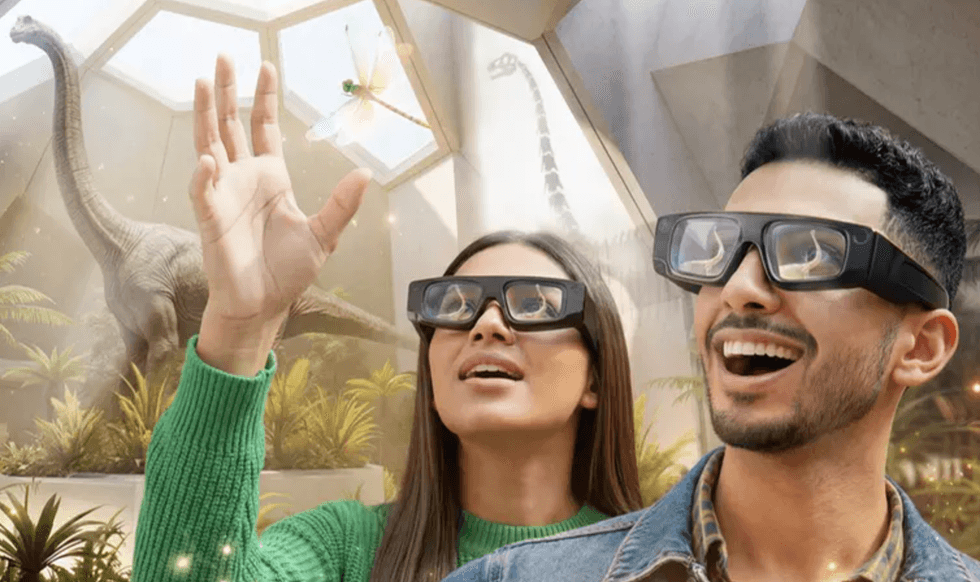
In the museum world, Abu Dhabi’s Natural History Museum is collaborating with Snapchat to bring prehistoric environments, ancient creatures, and immense species to life via AR technology.
"By merging world-class science with cutting-edge AR, we’re enabling visitors to understand the universe and planet’s past in deeper, more intuitive ways,” said Peter C. Kjærgaard, director of the Natural History Museum Abu Dhabi.
Robots and autonomous tech

Attractions industry operators are progressively adopting robots and other autonomous tech like drones, from deploying them as performance tools and animatronics to employing them in service positions.
When it comes to the guest experience, today’s visitors can expect roaming robots with autonomous features, like the bipedal robotic BDX droids at Disneyland, or AI-powered robots in museums, for example, Ameca.
"The BDX droids are a big leap forward – not just for robotics, but for how we bring beloved characters to life in the real world," said Kyle Laughlin, SVP at Walt Disney Imagineering's research and development arm.
"But beyond the tech, what really sets them apart is that spark of personality — they’re full of life, and they make people smile. That’s what we’re really after: emotional connection through technology."
Among Disney Research’s current projects are moonwalking robots, aquatic robotics, and the integration of Meta’s Ray-Ban smart glasses into theme park operations. The Imagineering teams are also already making use of an AI ecosystem.
Another innovation is a new generation of autonomous aquatic drones that synchronise with aerial drones, developed for Disney by Dronisos, a leading drone light show specialist.
Smart infrastructure

Another key trend to watch in the coming year is the adoption of smart infrastructure and Internet of Things (IoT) technologies to enhance the guest experience, operational performance, efficiency, and safety.
Smart technologies in theme parks and museums can include connected sensors to track guest flows and ride usage, real-time data analytics to improve operations, and wearable devices for ticketing, payments and personalised experiences.
Super Nintendo World at Universal theme parks, for example, is an innovative land providing interactive experiences via wearable wristbands called Power Up Bands.
As if they were competing in a video game, visitors can physically hit the land's Question Blocks to collect coins and digital keys and unlock gameplay opportunities.
"Think of Super Nintendo World as a life-size, living video game where you become one of the characters. You’re not just playing the game; you’re living the game, you’re living the adventure," said Thierry Coup, former senior vice president and chief creative officer, Universal Creative.
At Disney parks, MagicBands act as connected devices that grant park entry, handle payments, link to ride photos, and interact with sensors, effectively creating an IoT ecosystem.
In the UK, Scotland’s Landmark Forest Adventure Park is using IoT technology to optimise operations and enhance the visitor experience.
Sensors installed throughout the site – including food and beverage areas and the entry and exit points of its 23 attractions – track real-time visitor flow and enable data-driven decisions.
Checkout-free and cashless venues
Checkout-free and cashless experiences are on the up in the attractions industry, with parks and attractions adopting RFID wristband systems for payments and access, mobile wallet ticketing and self-service kiosks.
Some Six Flags Hurricane Harbor water parks have been equipped with RFID-based cashless systems via the SixPay programme, developed in partnership with Connect&GO, a leading global provider of integrated technology and RFID solutions for the attractions industry.
Via My San Antonio, the San Antonio Zoo has also moved to a cashless payment system, offering "card-to-cash" kiosks, or reverse ATMs, near the entrance and in other areas.
Other visitor attractions are utilising AI, like the first-ever checkout-free shop in a European theme park, opened at Legoland Windsor in 2024. The Zippin AI-powered venue lets visitors buy sandwiches, snacks, coffee and other drinks without queuing.
Amazon's 'Just Walk Out' technology has also been introduced to Six Flags parks.
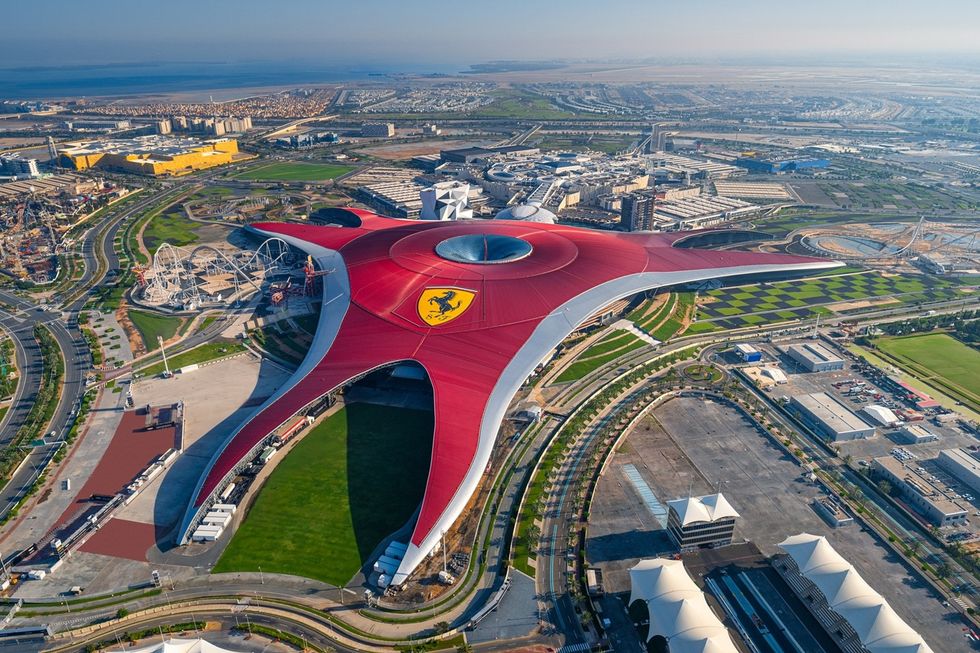
Over in Abu Dhabi on Yas Island, the FacePass facial recognition technology is allowing guests to make payments and enter destinations – including Ferrari World, SeaWorld, Yas Waterworld, Warner Bros. World, and soon Disneyland Abu Dhabi – without physical interaction or tickets.
Immersive visual technologies
Immersive visual technologies like holograms, projection-mapping experiences, and high-res LED environments are also gaining momentum in the attractions business, with operators merging physical spaces with digital artistry.
ABBA Voyage, for example, puts the band on the stage in a whole new way via cutting-edge technology, immersive lighting, and ABBA’s iconic songs.
The band members' digital avatars, or holograms, were created by Industrial Light & Magic (ILM), the visual effects company founded by Star Wars creator George Lucas.
Meanwhile, in the museum sector, BASE Xperiential has introduced the HoloTheater. This purpose-built immersive theatre blends giant-screen cinema, panoramic films, and cinematic special effects with larger-than-life holograms that step off the screen and appear right in front of audiences - all without the need for glasses or goggles.
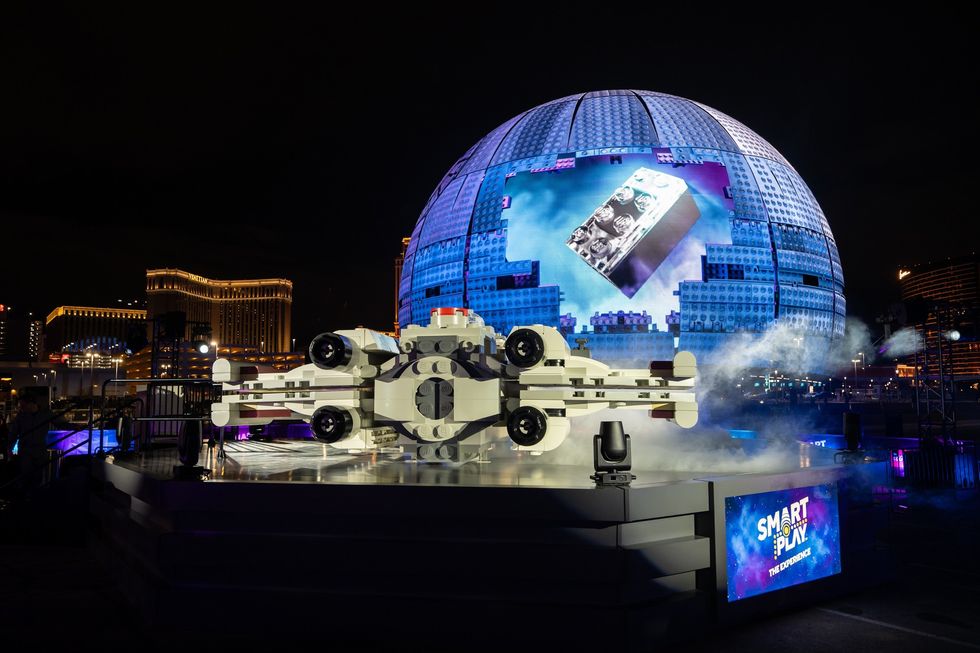
A different immersive concept is the €2.3bn Sphere entertainment venue in Las Vegas, which boasts the world’s largest and highest-resolution LED screen, as well as an exterior with 580,000 square feet of LED lighting.
Known as the Exosphere, the venue’s outside has even been transformed into a Lego Star Wars-themed interactive game experience.
Sphere Entertainment aims to create a global network of Spheres in various sizes, including a planned attraction in Abu Dhabi and a second US Sphere in Maryland.
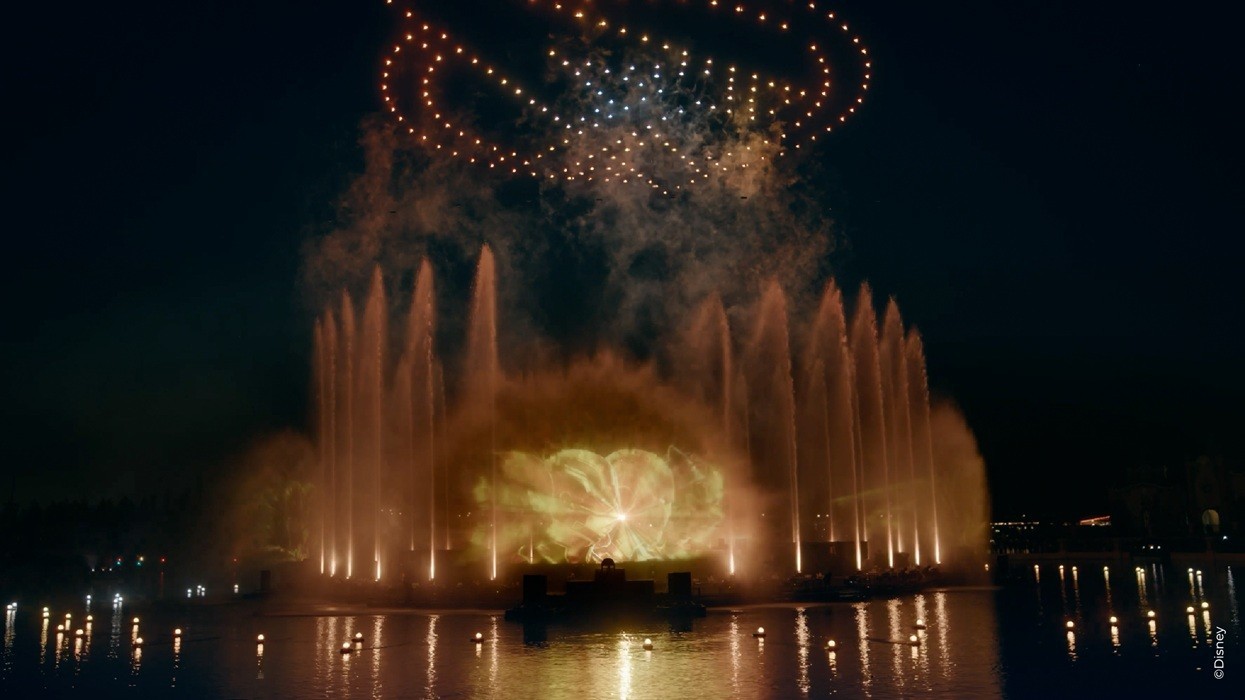
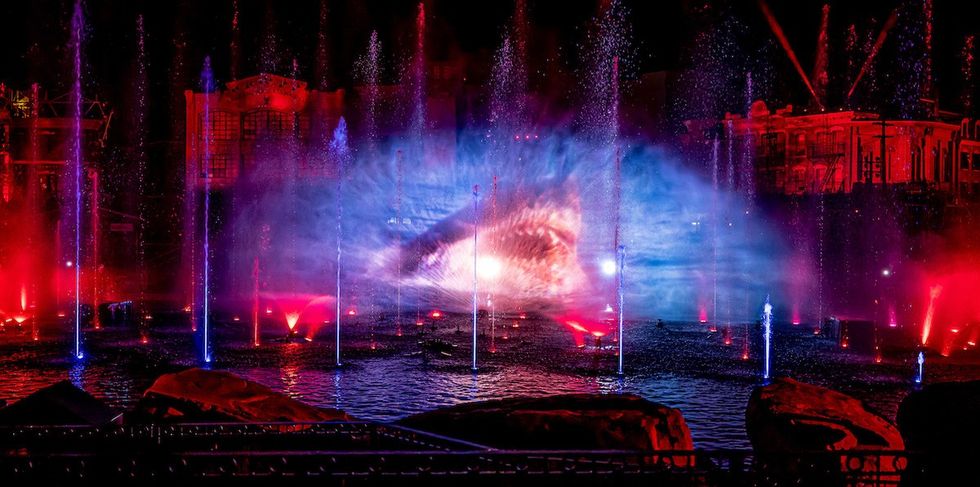
At Universal Orlando in Florida, the reimagined CineSational: A Symphonic Spectacular nighttime show reflects the trend for innovation in this space.
It integrates various disciplines, including choreographed fountains, synchronised drones, projection mapping, custom animations, media, coordinated drones, and pyrotechnics, all managed through a custom adaptive control system that adjusts to conditions in real time.
“We worked hand in hand to develop a product that was not just great in terms of storytelling and its ability to capture the audience, but that pushed the boundaries of what was possible from a technical standpoint,” TAIT principal Jason McManus, also CineSational’s executive creative director, told blooloop.
Tech-driven sustainability
To advance sustainability, AI and green technologies are being employed by theme parks, zoos, museums and more.
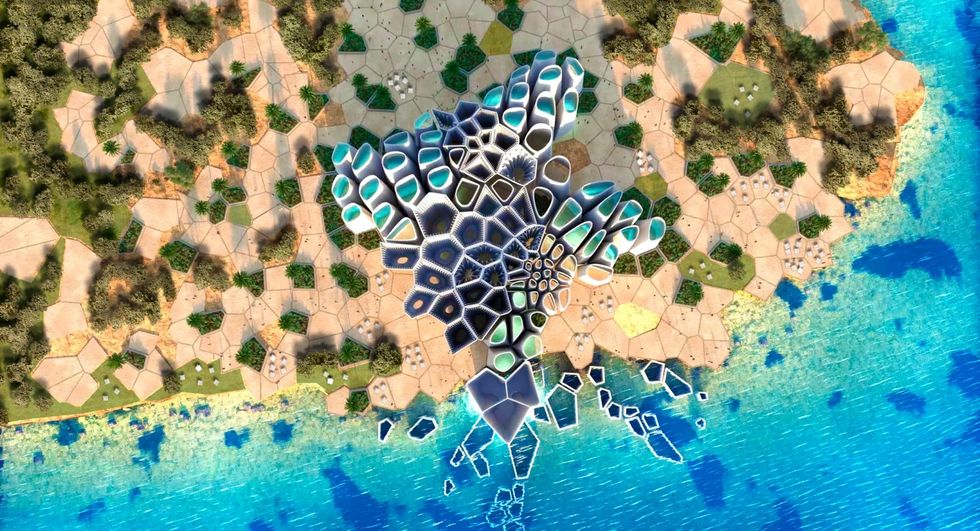
At Amaala, Saudi Arabia’s regenerative wellness destination, and Red Sea Global’s projects generally, innovative solutions range from greener aviation fuel to AI-powered coral gardening.
Other smart technologies, like the Internet of Things, play a key role in meeting climate commitments at Amaala.
Robots can also contribute to sustainability efforts. In Saudi Arabia, Red Sea Global has a state-of-the-art robot to clean its beaches, and in the UK, Blenheim Palace has been testing a robot dog monitoring the impact of climate change.
As for drones, Ocean Park Hong Kong’s conservation foundation is working with scientists to protect local horseshoe crabs using unmanned aerial vehicles and AI.
Chen Xi, a research assistant professor at the Chinese University of Hong Kong and part of the project team, said: “What used to be an hour of collecting data by eye and counting the crabs one by one can easily be done in a few minutes with unmanned drones.”
Back in England, UK zoo Marwell Wildlife is developing drones to monitor endangered species in the wild in partnership with the University of Southampton.
This drone technology uses thermal imaging, high-definition cameras, and AI to keep track of animals such as snow leopards in Kazakhstan and Grévy’s zebra in Kenya.
“The potential applications of existing technologies for wildlife conservation are already huge and largely untapped,” said Philip Riordan, conservation director at Marwell Wildlife.
Innovative wellness
Wellness in the attractions industry has evolved from a passive offering into an immersive, interactive, and sensory-driven experience. As operators invest in immersive elements and innovative technologies, wellness is expanding as a lifestyle trend worldwide.
The wellness economy is projected to grow from $5.6 trillion to $8.5 trillion by 2027.
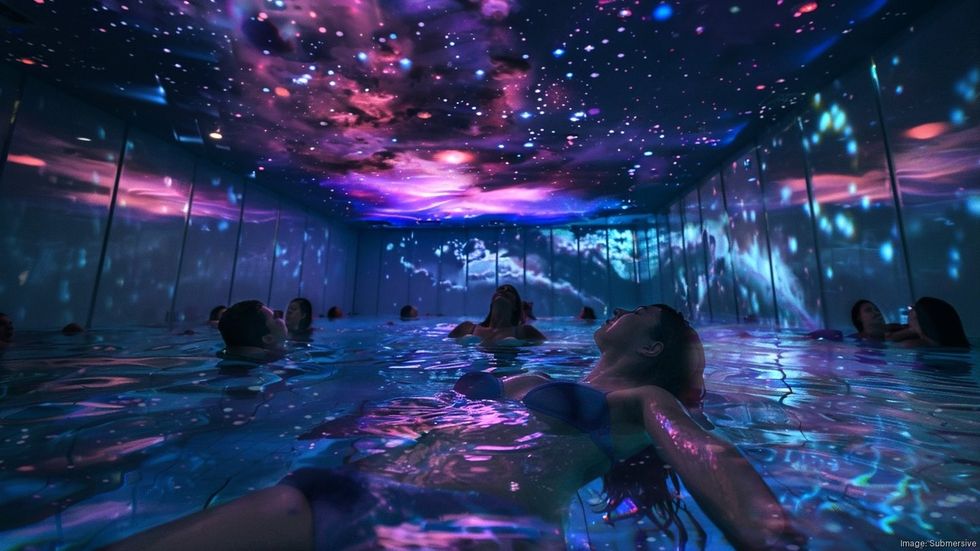
Some of our recent top picks include the Submersive spa concept, art and sauna exhibitions by teamLab, and psychedelic breathwork sessions at Area15.
And, in the Chromasonic Field environment, light and sound are used to promote states of relaxation, increased mindfulness, and a heightened sense of wellbeing.
Therme Group has introduced two new immersive experiences that use visuals, sound, scent and water to reduce stress and promote wellness.
And then there’s wellness in destination development, such as Saudi Arabia’s Amaala, billed as an ultra-luxury destination focusing on wellbeing and healthy living.
A highlight of Amaala is the Clinique La Prairie longevity resort, which will provide wellbeing services including a cryochamber, hyperbaric suites, and IV infusions.
“Wellness tourism around the world is growing tremendously. It's an exponential growth at the moment.
"There are more informed travelers today. They want to go to the places that are giving them the best, healthiest options, ” Melisa Pezuk, head of development at Amaala, told blooloop.
At greenloop 2024, blooloop’s conference focusing on sustainability in visitor attractions, Red Sea Global’s senior director of wellness strategy, Lindsay Madden-Nadeau, revealed more about the potential use of technology and AI in the wellbeing business, including AI-driven virtual wellness assistants and robotic massage.