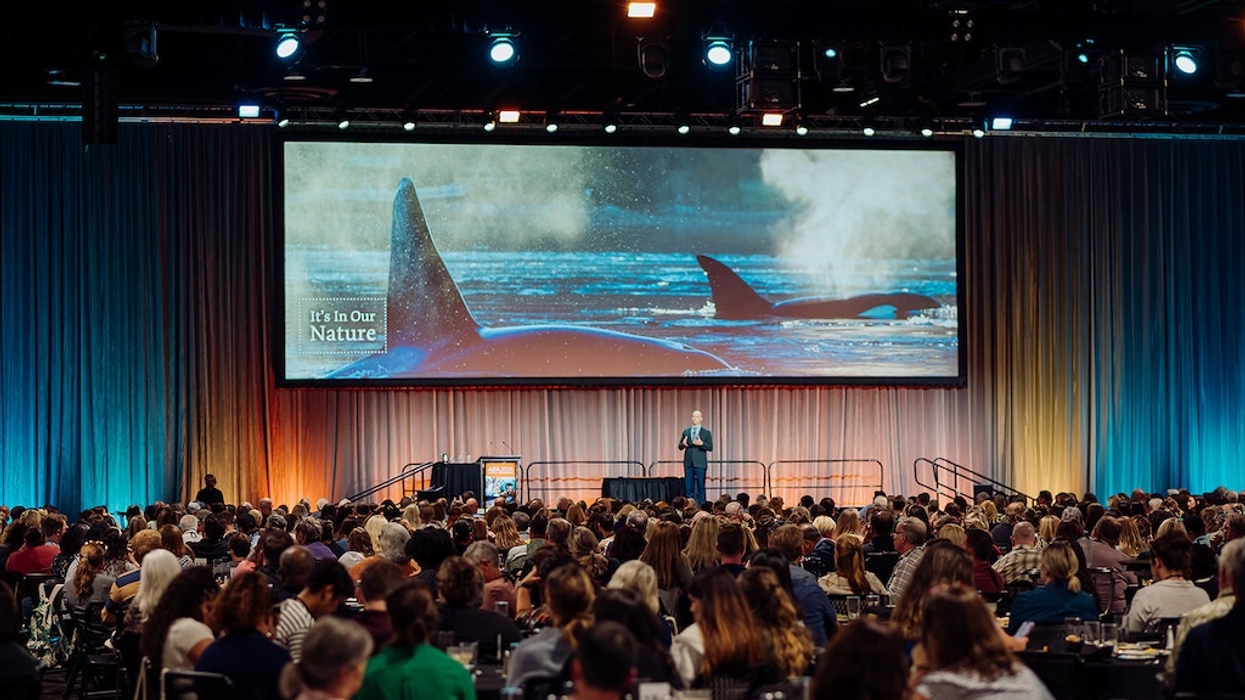
ICOM UK, the UK’s only museum alliance with an international focus, hosted its annual conference in Oxford, bringing together delegates from over 20 different countries to explore the theme of Museum Diplomacy.
The conference posed a timely question: what role can museums play when the democratic frameworks they operate in are breaking down?
A shifting world order
Dr Christian Baars, co-chair of ICOM UK, gave an opening address that set the tone for the conference, emphasising the situation that the museum and heritage sector finds itself in.
"In many cases, diplomacy happens behind closed doors," he said, adding, "trust does not necessarily develop through media stories". He explained that the conference was an opportunity for open and honest conversations and the sharing of best practises and lived experiences.
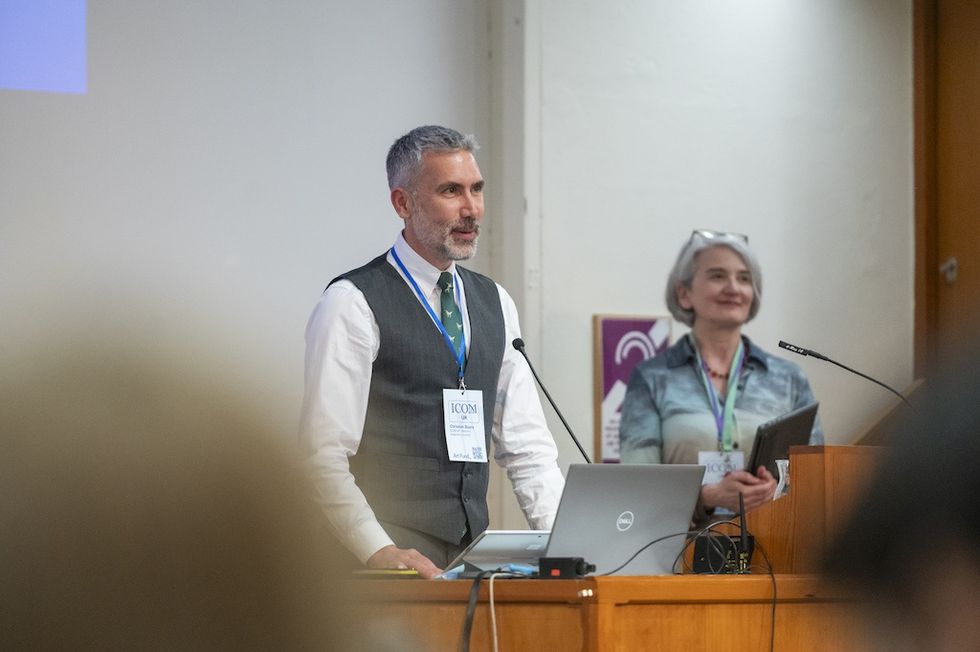 Dr Christian Baars gives the opening address at ICOM UK 2026
The opening keynote was delivered by Dr Sascha Priewe, director of collections & public programs at the Aga Khan Museum and president of ICOM Canada.
He gave an assessment of the state of global politics and its implications for the sector.
Framing the current moment around the disruption caused by the US withdrawal from international alliances and Trump’s tariffs, Priewe argued that we have entered a “GZERO World”, a situation in which no country is willing or able to lead globally.
The implications of this shift for the museum sector are significant. Previously, in an era of soft power, free trade enabled the exchange of objects, expertise, and money, but today it is increasingly difficult to continue working in the same ways.
“Sanctions, export controls, and other geoeconomic interdependencies might put stress on collaboration. And some collaborations that we might have taken for granted or leaned into in previous years might now come under crossfire.”
He presented five key takeaways to help navigate these challenges: remain literate in global affairs, rethink how we are all connected at the local-global level, strengthen your networks, create your own agenda for change rather than relying on direction, and be prepared to face uncomfortable truths about how the sector has operated.
“Diplomacy happens everywhere,” he said, “and is no longer confined to the club of nation-states. It happens through networks.”
Advancing global partnerships
The first session of the day explored how museums are establishing these networks in practice, with three examples from different contexts that all arrived at a similar conclusion: trust, not grand gestures, is key to enduring partnerships.
Laura Frampton, associate director of global engagement at the Science Museum Group (SMG), spoke about the evolving relationship between cultural and science diplomacy, highlighting the group’s continued exchange with US institutions.
One example is a long-running partnership with the Library of Congress, centred on a cultural exchange with the museum.
Despite a change in leadership following political changes in Washington, the partnership has continued to prosper, with a collaborative exhibition launching at the Library last year and an upcoming exhibition at London’s Science Museum.
To this end, SMG loaned objects and sent senior figures to send a clear signal of the value of these partnerships.
“We know these projects bring joy to our audiences, and we know that they also bolster diplomatic relations,” said Frampton.
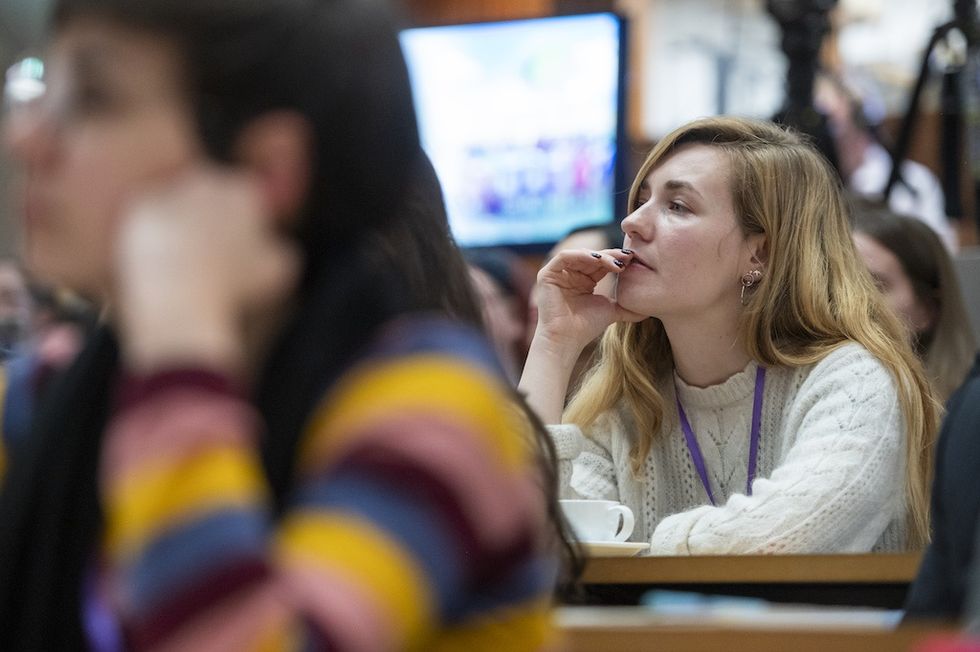 ICOM UK audience member listening
Gregory Houston, president of International Arts & Artists, spoke about how the US’s lack of a centralised Ministry of Culture enables stronger networks to be established across its museum sector. What, on the surface, appears to be a fragmented system lacking a unified voice has proven durable.
“Most nations have a ministry of culture. The US has a network,” said Houston, emphasising that in a changing climate, this has allowed US museums to act quickly in the face of funding cuts and political shifts.
Sunghee Cho, curator of the culture and education division at the National Asian Culture Center, Ministry of Culture, Sports and Tourism of Korea, gave an overview of the ACC’s International Education Cooperation.
The project, founded in 2022, didn’t start with the aim of cultural diplomacy; instead, it began with a simple question: "How can cultural institutions from different countries collaborate in a sustainable way?"
Through this, the ACC established an extensive network of museums across the region, supporting international exchange and shared growth through partnerships.
This showed how “museums can contribute to international relations, not through grand diplomatic gestures, but through the continued collaboration and then through a trust-based network,” said Cho.
Equitable exchange and marginalised voices
The second session explored how marginalised voices and groups are reclaiming control of certain narratives and practices.
At Leighton House, the annual Nowruz celebration has become an example of this shift. Now in its second year at the site, Nowruz is a 3,000-year-old tradition celebrating the Persian spring equinox.
Since its launch, the event's focus has shifted from making the celebration visible to becoming a living tradition within the museum.
With recent world events casting a shadow over this year’s celebrations, Shabnam Balouch, preventative conservation officer at Leighton House Museum, explained the shift in tone towards a quieter, more reflective mood, highlighting traditions of loss and coming together in solidarity.
“Bringing Nowruz into this space creates a dialogue between historic material culture and living tradition, shifting the museum from showing culture to hosting it,” said Balouch
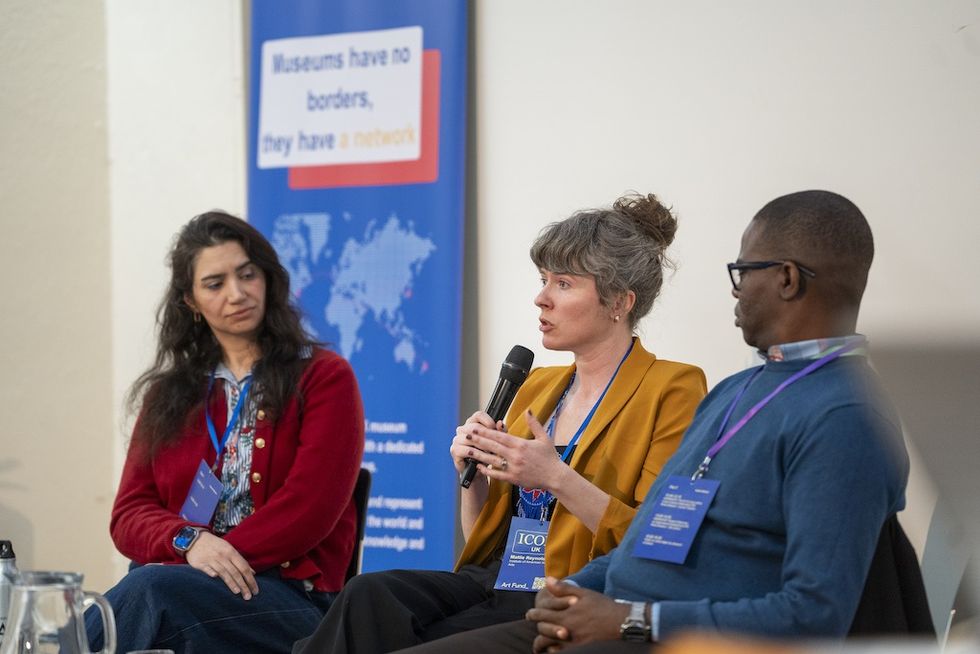 Shabnam Balouch, Mattie Reynolds, and Gabriel Matesun at ICOM UK 2026
The tension between representation and presence ran through the session. Gabriel Matesun, curator at the University of Ibadan, Nigeria’s Department of Archaeology and Anthropology, described a three-year project at the institution to decolonise the collection using digital methods.
This involved local Indigenous custodians, elders, and knowledge holders helping to reshape narratives around objects by recording layered meanings, stories, and contexts missing from colonial-era records.
Through this, communities also contributed metadata and tags to objects that had previously lost their cultural meaning.
For example, an object previously labelled “Pot” in the old system was updated in the local language to Ikoko Agbo, restoring the meaning stripped away by colonial-era records.
The practice of co-creation and community engagement is key to shaping narratives around marginalised cultures, but as Mattie Reynolds, chair and associate professor of museum studies at the Institute of American Indian Arts, highlighted, this must never be extractive.
Demonstrating what reciprocal exchange can look like in practice, Reynolds shared her work on a collaborative project between Outer Space Gallery in Brisbane and the Institute of American Indian Arts.
“The Indigenous experience translated via art deserves a global platform to raise understanding and prioritise the work that's being done in our communities,” she said.
With a minimal budget, both museums demonstrated the power of collaborative networks to facilitate meaningful exchange and present exhibitions to be shown at both sites next year.
Diplomacy or solidarity?
Reflecting on the current state of global geopolitics raised questions about whether ‘museum diplomacy’ is the right framework for the sector to address its challenges, or whether a different approach is needed.
For the second keynote, Professor Laura Van Broekhoven, director of the Pitt Rivers Museum, argued that museum diplomacy carries connotations of state involvement, polite exchange, and gestures, which she contended are not enough.
Since their origins, museums have been building international relations, and over time, this has shifted so that they no longer act as instruments of the state but also operate across public and civic domains.
“They are seen as beneficial to society, and that they can positively influence how nations perceive each other,” said Van Broekhoven, highlighting the soft power that museums have, but also calling into question what this is built on.
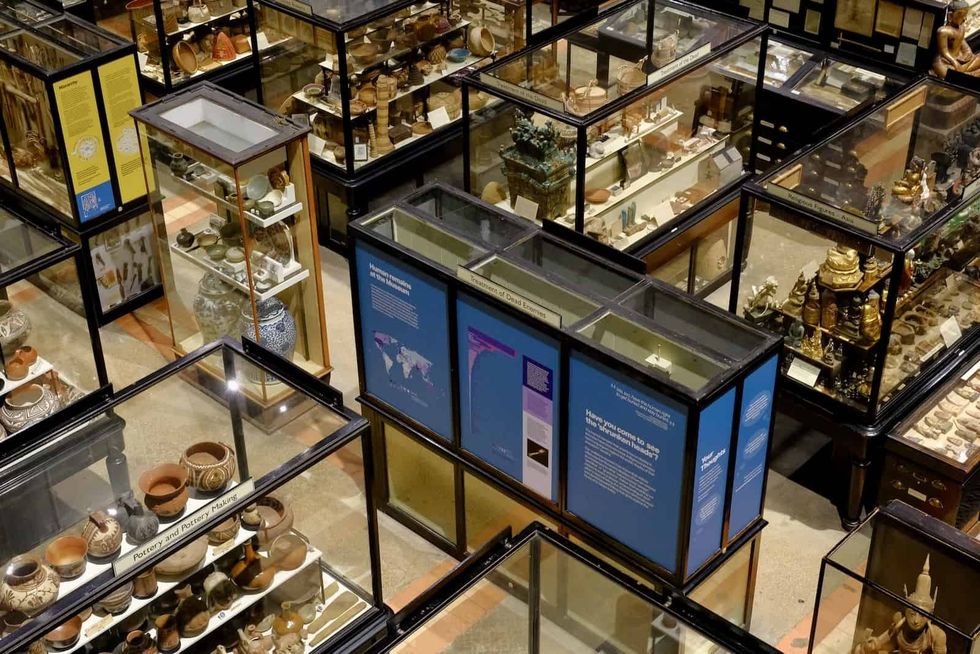 The Pitt Rivers Museum
Many museums were founded during the same era of colonial extraction that they are now being asked to reckon with, and they descend from practices of imperial showcase and spectacle established through the likes of the Great Exhibition of 1851.
Van Broekhoven highlighted that the museum industry cannot rely on the same methods of museum diplomacy that have emerged through this pipeline to address the injustice we see in the world today.
“As a practitioner, this much is clear. We cannot use the tools of the Crystal Palace to heal the wounds of the Crystal Palace”
She asked the audience whether, in the face of unrest and power imbalances, the sector can take a different approach. Not a polite and friendly exchange, but something more profound that establishes long-term regenerative partnerships. For Van Broekhoven, that approach is solidarity.
She quoted Astra Taylor and Hunt Hendrix: "Despite all the past and present conflict, we have the ability to change the world for the better when we acknowledge our interdependency."
Van Broekhoven highlighted the need for museums to make a radical shift, going beyond repatriation to mend relationships with Indigenous communities rather than just returning objects, and to act in true solidarity.
Sustaining relationships in a rapidly changing world
The afternoon opened with a session focusing on the practical challenges of sustaining networks and collaborative practices in an increasingly unstable world.
From youth climate exchanges to protecting heritage in conflict zones, it highlighted the many fronts on which the museum and heritage industry is working worldwide.
Jamie Allan Brown, a research fellow at the University of St Andrews, shared how a cultural exchange between the Hebrides and Barbados is empowering young people to help shape a more sustainable future.
The programme highlighted that, in many cases, conversations about environmental change don’t include the perspectives of those who will be most affected.
“The issue is not about a lack of participation, it is participation without power,” said Allan Brown “It could be argued that museums have been successful at participation, but far less successful at redistributing power to our audiences.”
The initiative positions young people not as passive learners but as knowledge holders and contributors working alongside curators and community leaders. This enables action grounded in lived experience.
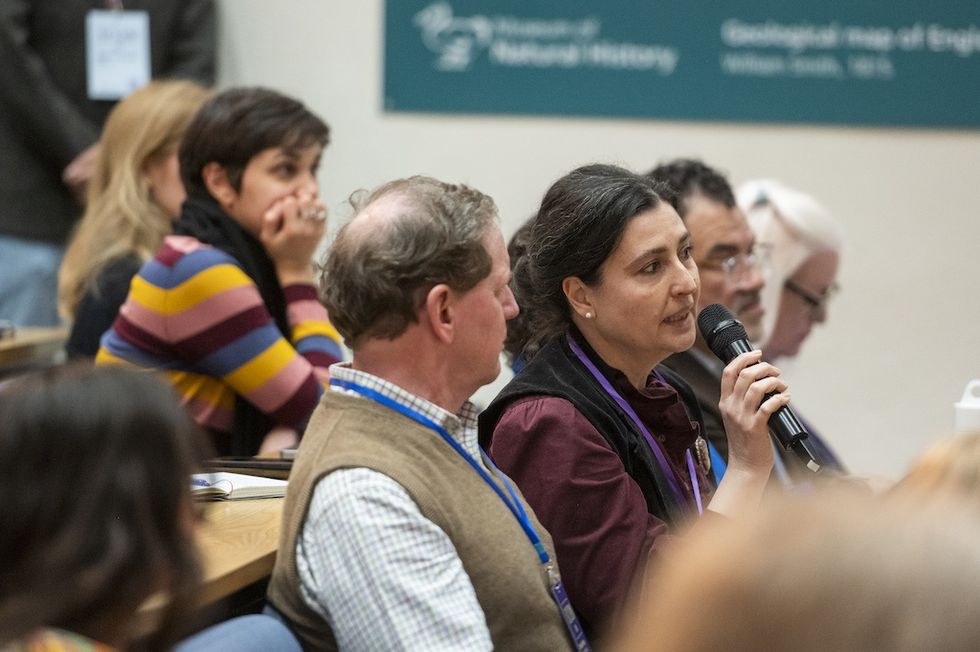 Audience member asks a question during an ICOM UK 2026 session
“Museums, especially in island contexts, must become more than repositories of the past. They must become spaces where young people shape the stories we tell about the future,” said Allan Brown
Stephanie Grant, director of the cultural protection fund at the British Council, shared a similar sense of urgency about the importance of collaborative processes in safeguarding the future of the museum and heritage industries.
Launched in 2016 in response to the deliberate destruction of heritage infrastructure in Iraq and Syria, the scheme focuses on protecting cultural heritage from the impacts of war and climate change.
The fund has supported projects in more than 20 countries, placing local voices and community expertise at the centre of its work.
Whilst the project enters a new three-year programme, Grant highlighted the challenges of operating amid budget cuts. This served as a reminder of the gap between project goals and available resources, which often affects the sector.
Whilst budget constraints pose a challenge, technology is opening new doors for how museums present and preserve their collections worldwide.
Dr Shreen Amin, curator and head of the scientific office and the children’s museum at the Egyptian Museum, shared how the museum is using AI to catalogue and reconstruct fragile objects and bring exhibitions to life.
For Amin, museums are not only places of memory; they are a bridge for diplomacy and dialogue. These new technologies are giving the teams more tools to enable that.
From conflict to recovery
For some institutions, the challenges of operating in an unstable world are not abstract.
Yuliia Hnat, ecosystem projects and development director and co-founder of the NGO Museum of Contemporary Art in Ukraine, and Roshan Mishra, director and curator of Taragaon Next, both spoke about what it means to protect culture and heritage when conflict arrives at your door.
Despite the loss of both tangible and intangible heritage, they shared a determination to keep moving forward and to plan for the future, even in the most difficult circumstances.
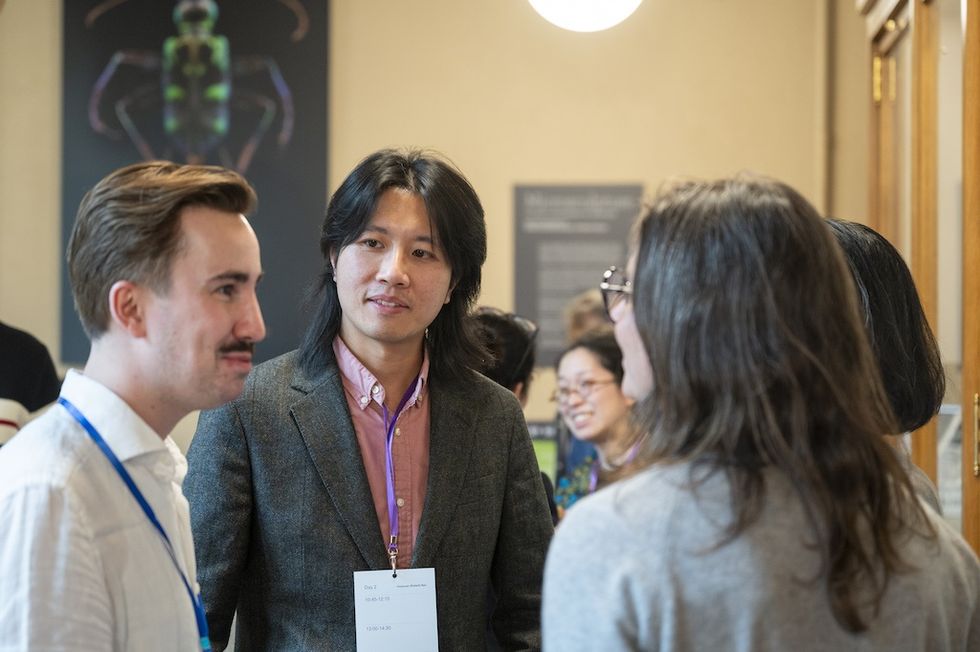 Networking at ICOM UK 2026
Mishra spoke about the decades of instability in Nepal, highlighting the 2015 earthquake and the 2025 protest.
He also shared details of objects stolen in the 1970s that made their way into collections around the world, some even in Oxford’s Ashmolean, and of the processes Nepalese museums are going through to have the objects repatriated.
For Hnat, the current circumstances are more immediate, as she explained how the NGO Museum of Contemporary Art was established in direct response to Russia’s invasion of Ukraine.
The organisation functions as a new type of museum network, supporting artists and museum professionals affected by the war.
Despite facing insurmountable challenges, the museum has continued to adapt, actively evolving and identifying community needs as they arise, helping to empower people and plan for the future beyond the conflict, whilst pushing back against those who would seek to weaponise history as a means of cultural warfare.
Soft power and democratising museums
This threat was addressed by Sir Tristram Hunt, director at V&A, who brought day-one proceedings to a close with the final keynote.
At moments like these, “Museums matter,” said Hunt. “Not in spite of geopolitics, but because of it.” It is vital that museums not view themselves as peripheral institutions but as part of the operating environment.
Hunt made a case for the importance of soft power in today’s world and for museums’ critical role in this. The UK has long benefited from its soft power assets, but this can no longer be taken for granted.
With other nations investing heavily in their cultural influence, from the global Hallyu wave in South Korea to the growing presence of state-backed cultural programmes around the world, there is increasing pressure for nations and institutions to demonstrate that their influence is growing.
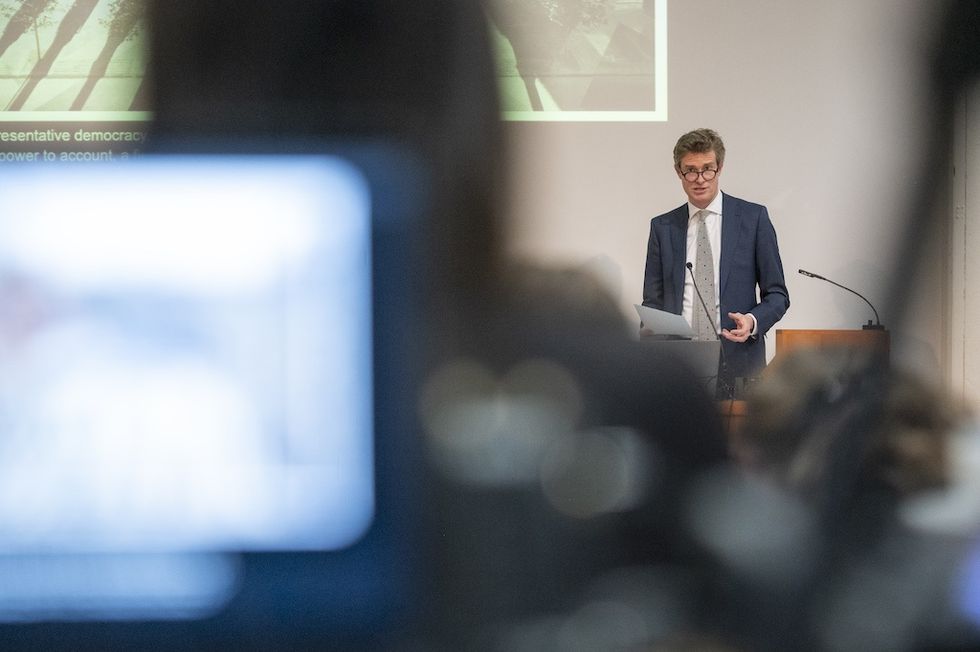 Sir Tristram Hunt speaking at ICOM UK 2026
The UK government is taking an active approach, with Deputy Prime Minister David Lammy launching a new soft power advisory council to advance Britain’s global influence.
For Hunt, museums also play an important role in nurturing the engaged citizenship that democracy depends on and in restoring trust in democratic institutions.
This is reflected in the V&A’s recent work to connect with previously underserved communities, most recently opening V&A East, designed specifically for younger audiences.
The third role of museums is to maintain a high standard of research and archival conservation. “Museums are seen as trusted sites, places of inquiry and debate,” said Hunt. These don’t come easily, but once trust is established, it will have a lasting impact on society.
The day’s session closed with ICOM UK’s co-chairs, Maria Blyzinsky and Christian Baars, who drew together the threads of the conference and reflected on the big questions explored throughout the day.
Blyzinsky summarised what the sector can do as best practice moving forward: “Museum diplomacy is rarely about grand gestures. It’s more about trust, patience and open-mindedness.”
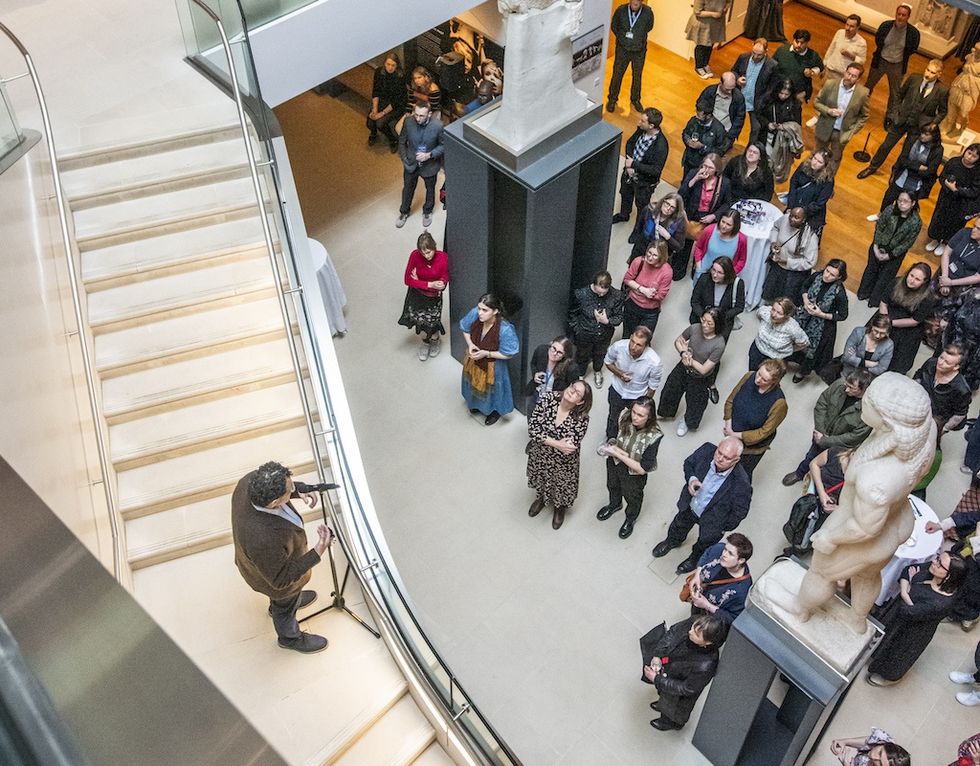 Antonio Rodriguez addressing ICOM UK attendees at the Ashmolean
The day's sessions closed with an evening reception at the Ashmolean, providing attendees with a great opportunity to network and reflect on the day's proceedings.
ICOM’s president, Antonio Rodriguez, gave an address, highlighting that in 2026, ICOM will turn 80 and celebrate the global network it has built over that time.
Exploring Oxford and putting museum diplomacy into practice
Day two of the conference allowed attendees to explore Oxford’s museums and join workshops on themes from previous sessions. Tours included the Ashmolean, the History of Science Museum, the Pitt Rivers Museum, and a walk highlighting Elizabethan and Jacobean aspects.
Among the sessions was a workshop at Oxford University Gardens, Libraries and Museums, led by Anna Sanders, programme director of Oxford cultural leaders, and Jahnvi Singh, assistant programme director of Oxford cultural leaders, focused on building practical skills for long-lasting, trust-based cross-collaboration.
The workshop explored how museum professionals can create effective communities of practice that outlast any single project or one-off collaboration.
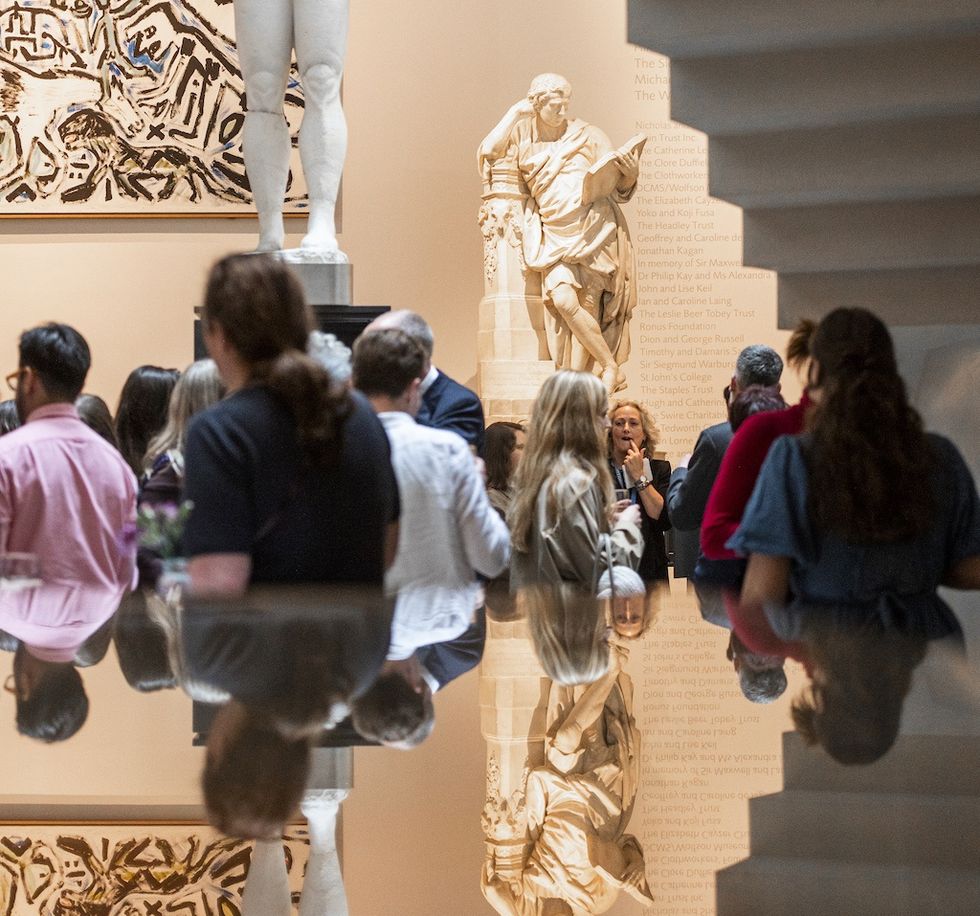 ICOM UK 2026 attendees at the Ashmolean
A highlight was a session from Meliha Hussain-Marchbank, community engagement manager at The Roman Baths & Pump Room, who shared how the museum developed a sustainable, community-led programme for refugees.
Built through consultation and collaboration with local services, it fosters connection across cultures via social events, workshops, and activities.
“As a museum, we look after objects in perpetuity,” said Hussain-Marchbank. “So how can we look after people in perpetuity?” The scheme has so far been a success at the Roman Baths as it moves towards its long-term goal of becoming a ‘Museum of Sanctuary’.
Hussain-Marchbank was also candid about the sustainability of projects such as these, raising the question of what happens if key individuals move on.
A solution, as demonstrated at the Roman Baths, is to involve teams across the institution, from collections management to operations, ensuring that programmes are embedded in the everyday running of the museum.
Dr Tom Pinfold, trustee of Blue Shield UK, Professor Lisa Mol, co-director of the Centre for Environment, Society and Resilience at the University of the West of England, and Iona Volynets, committee coordinator for the Conflict and Military Activities Working Group at Blue Shield UK, led one of the final sessions of the conference.
Together, they explored how museums can prepare not only for individual crises but also for compounded threats, including cyber attacks, civil unrest, natural disasters, and conflict.
Blue Shield UK is part of an international body of volunteers helping museums to do just that. The session focused on how museums can be better prepared, especially as the world becomes increasingly unpredictable.
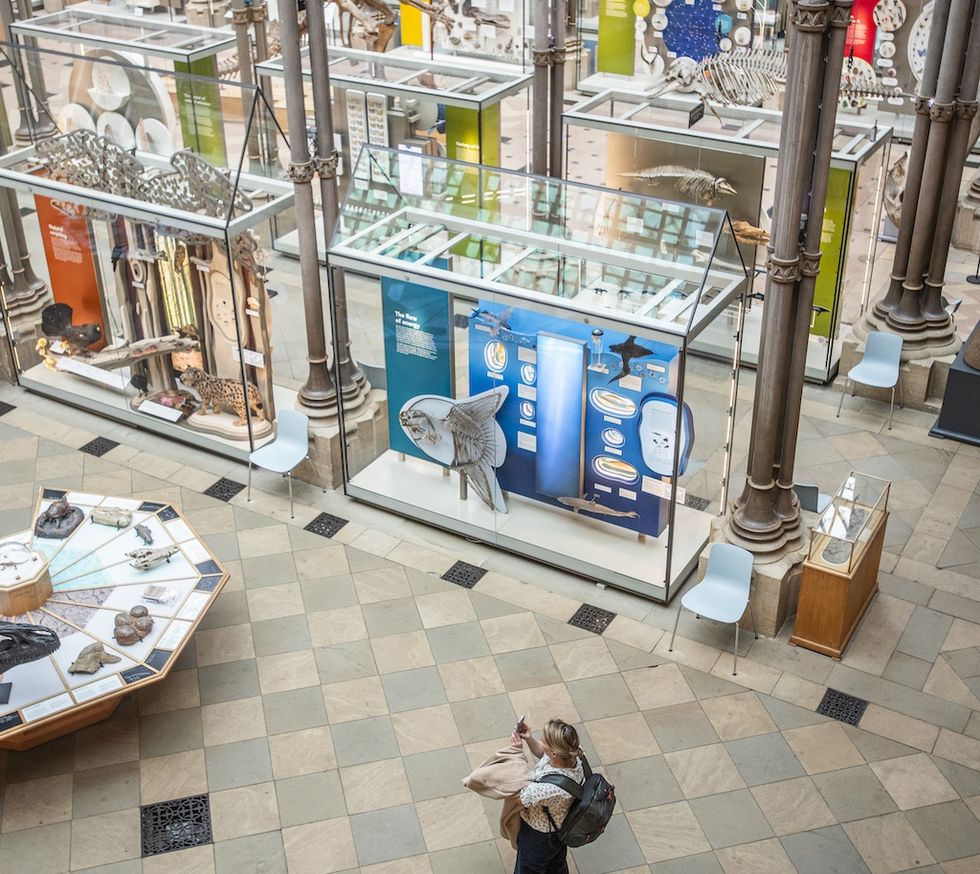 Natural History Museum Oxford
The ICOM UK Student and Emerging Professionals Working Group delivered The Right to Disagree: Radical Listening and Intercultural Dialogue, led by Hsiao-Chiang (Hope) Wang, Gregor Wittrick, Freya Shi and Huaiyuan (Robert) Ren.
Framed by the idea that conflict is a structural condition of museum practice, the session explored how institutions both create and risk destroying value as they navigate contested histories, public expectations and ethical responsibilities.
Rather than positioning diplomacy as consensus-building, the workshop reframed it as an ongoing process of negotiation shaped by disagreement, discomfort and uncertainty.
Participants engaged in role-playing exercises based on real-world case studies, including the Hunterian’s Curating Discomfort project, debates around Japan Tobacco International’s sponsorship of the British Museum, and the Museum of the Home’s contested Robert Geffrye statue.
These scenarios invited attendees to step into the perspectives of stakeholders and confront the complexities of decision-making.
Key reflections emphasised that disagreement is not a failure of dialogue but a necessary starting point for understanding. The session highlighted radical listening, shared authority, and the ability to coexist with conflicting values and interpretations.
It concluded with a provocation: should museums embrace disagreement radically, or seek common ground while preserving difference?
Looking ahead
ICOM UK 2026 didn’t offer any easy answers. Amid the geopolitical urgency of the current global situation, it was inspiring to hear stories of community partnerships, international networks, and equitable exchanges being built around the world.
Yet the conference also painted a picture of a sector that is asking itself harder questions than ever before.
What is clear is that the museum industry is not content to sit with that uncertainty. From grassroots community initiatives to diplomatic partnerships on a global scale, institutions are finding new ways to act, engage, and lead, rewriting the rulebook for what museum diplomacy looks like in a rapidly changing world.