In May, Lee Cowie was named the new CEO of accesso following an 18-month tenure as COO. He brings a vision for the future informed by his experiences working within four different industries as they reached their technological turning points.
Today, he argues, technology is no longer simply a support function but is fundamental to the success of attractions in a rapidly changing landscape.
- Technology as a transformational force. Cowie emphasises that technology, particularly AI, is fundamentally reshaping the attractions industry, requiring operators to view digital experiences as equally important to physical ones.
- Empathy and operational context. Drawing from his background as an operator, Cowie highlights empathy as a key differentiator, providing a deep understanding of the unique pressures and capital-intensive nature of visitor attractions.
- The critical role of context in AI. He argues that generic AI is insufficient for the industry; successful deployment requires context, which accesso provides by integrating its 20 years of sector-specific knowledge with venue-proprietary data.
- Operational backbone vs. insight. Cowie insists that operational platforms are "load-bearing"; insight is wasted without the ability to act on it rapidly, making robust, connected systems essential for business success.
- Human-centric AI. Rather than replacing humans, Cowie believes AI should be used to automate mundane tasks, freeing up staff to focus on creating emotional connections and managing the guest experience—which remains the industry's most valuable use of human time.

Lee Cowie was named as the new CEO of accesso in May 2026
Image courtesy of accesso
As a leading technology provider for attractions worldwide, accesso is uniquely positioned to support attractions in this critical moment by leveraging its 20 years of sector-specific data to create actionable insights, ensuring venues can navigate complex operational challenges.
As Cowie takes the reins, he speaks to blooloop about the next steps for accesso, and advocates for a human-centric approach to AI.
At the vanguard
Cowie has worked across four industries, each at a critical point at which technology reshaped the sector.
His first role at Aviva coincided with the dot-com boom and the rush to get online.
“That was the first time I really saw that tech can absolutely, fundamentally transform how an entire industry works,” he says.
“Then, I was fortunate enough to see that pattern repeat.”
Cowie moved into broadcast media just as the industry was being disrupted by Netflix, Amazon Prime, and BBC iPlayer, then to Nando's as F&B embraced new technologies.
Before joining accesso, he served as CTO at Merlin Entertainments and has deep operational experience in the sector.
“The same is playing out now in the attractions space.
“For the longest time in attractions, it was all about the physical experience, about the quality of being on site and present in that attraction.
accesso serves over 1,200 venues in 34 countries from its headquarters in Lake Mary, Florida
Image courtesy of accesso
“Now it's equally as important to consider the digital experience, the bit that gets you up to the attraction in the first place and then the bit that curates your experience.”
Across all four industries, he has seen that the companies that kept investing through disruption defined the era that followed. The ones that waited came out behind.
“If I've learned anything,” he adds, “it's to assume that everything will change very rapidly.”
Operational empathy
Many technology leaders have spent their careers on the vendor side. However, while at Merlin, Cowie was responsible for technology used by tens of millions of guests every year.
This operational background is echoed throughout the wider accesso team, giving the company a distinctive approach.
“It's been a very deliberate policy,” says Cowie. “Whether you're talking about our ski division, where most people have grown up and lived on the slopes and then have come to join us, or attractions and theme parks.
“I think the thing it gives us is empathy; a unique understanding that location-based entertainment and attractions operate differently from many other sectors.
“We know how critical timing is. It's the difference between hitting or missing a complete season. If you don't get your tech enabled, you've got to wait another 12 months for that to come around.”
The combination of deep knowledge and technical capabilities means the accesso team has an intricate understanding of context across roles, domains, systems, and attributes, and ultimately how these impact the visitor experience.
accesso's product suite includes online ticketing, point-of-sale, virtual queuing, distribution, and more
Image courtesy of accesso
“Attractions are capital-intensive businesses and most of the spare cash goes into making the physical experience as good as it can be, which leaves breadcrumbs normally for technology.
"And operators are under unique pressures to service their guests.
“Because there is a lot of competition for people's time and attention now, it's critical that people deliver a really good experience in the moment. Otherwise they may lose that visitor forever.”
Context is critical
AI, Cowie says, is set to be the key to delivering these experiences.
“I suspect it will change everything,” he says. “It gives venues capabilities that were beyond their means, beyond their reach even two years ago.”
However, this transformation depends on a sophisticated use of the technology that surpasses generic AI.
“ChatGPT is not going to give you the answers. It will give you an answer and express it very confidently, and you might be tempted to believe it. But it will actually be based on a set of really poor assumptions and will end up delivering you down the wrong track.
“The important thing about AI is to be able to feed it context.”
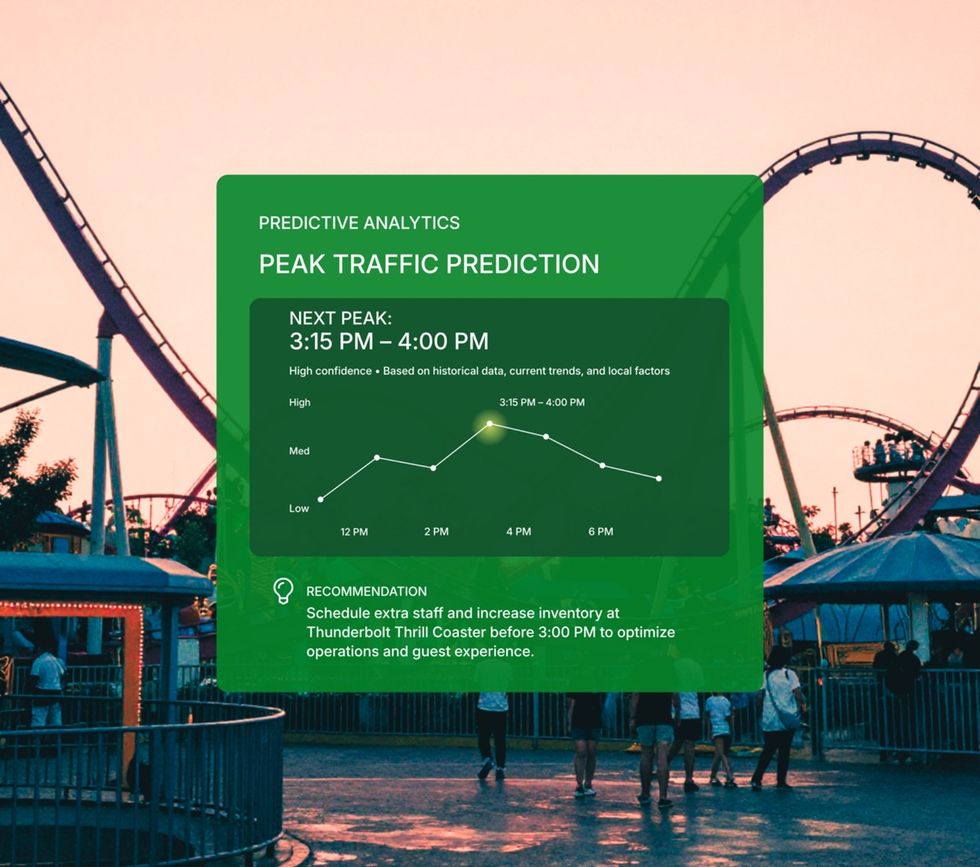
accesso Intelligence combines powerful analytics with extensive industry knowledge
Image courtesy of accesso
Last year, accesso acquired Dexibit, an industry analytics and intelligence platform that has analysed millions of visitor reviews across hundreds of attractions globally over a full decade.
It has used this as a platform to develop accesso Intelligence.
“This allows us to embed our 20 years of sector-specific knowledge into a platform that then feeds AI,” says Cowie.
“It changes AI from being a guessing machine to being something that can act on data that is only available to your venue. That is proprietary to you and can only be accessed by you.
“It changes from being guesswork to being a genuinely useful tool. And the deployment opportunities for that are endless. There is no part of an operation that will be unaffected by AI.”
The Voice of the Visitor
Drawing from accesso Intelligence, the company has published The Voice of the Visitor 2026 Industry Benchmark Report.
This represents the largest AI-analysed body of visitor-attraction sentiment ever assembled and underscores Cowie’s belief that the sector is now experiencing its own inflection point.
“We covered two and a half million data points across a decade of guest feedback in 500 attractions, 37 countries,” says Cowie. “It was huge, and sobering to read.”
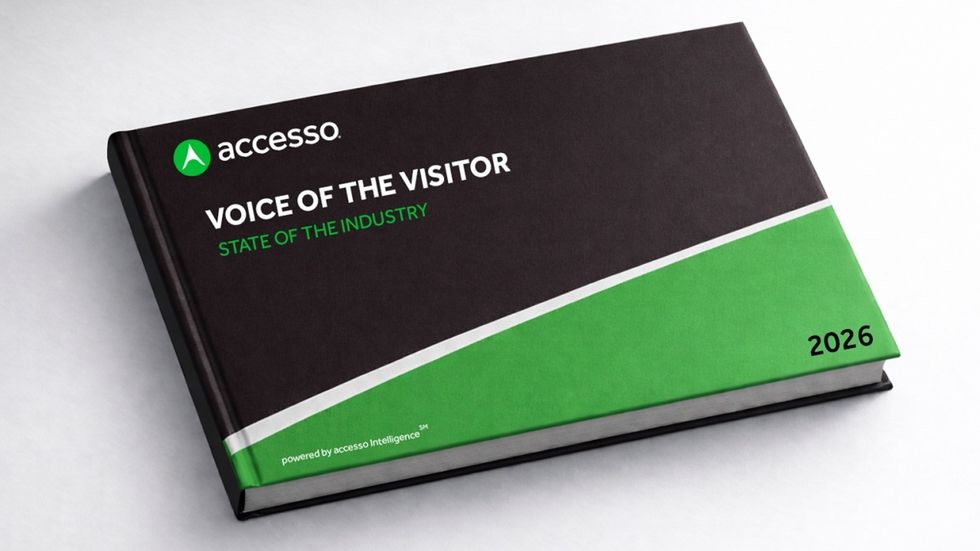
accesso's Voice of the Visitor report is one of the largest studies of visitor experience ever conducted
Image courtesy of accesso
The sector, the report found, has not recovered from COVID-19. Rather, as the cost of living and expectations rise, disappointment is at its highest level since the pandemic.
Another key finding is that the difference between the best and worst attractions in the world lies in operations and technology, while staff friendliness remains constant.
“It is much harder for attractions to stand out from the crowd, and it is a very crowded marketplace,” says Cowie.
“Feedback across the board has been that guests expect much more. The bar is much higher for what counts as a good attraction or experience.
“And trust is fragile. It's easy to lose an advocate through a bad experience. Attractions will have to work much harder, and I think technology can help make that happen.
“A visitor is one person in a crowd of, say, 50,000 on any particular day. The trick will be to make that one person feel like they are alone on the attraction and deliver the experience they want.
“That's where technology will help deliver personalisation at scale.”
Preparing for the AI era
So, as Cowie takes the helm of accesso, AI arrives in the sector at a particularly pressured, demanding, and technically consequential moment, and operators need their infrastructure to be ready. Yet knowing where to begin is half the battle.
“This is one of the great quandaries with AI,” says Cowie. “You’ve got the extreme viewpoint: what's the point of humans? That sounds like a horrible world to live in.
“I take a more optimistic view; I don't think AI will replace humans. I think it will augment them.
“We're a long way off from having conviction that everything AI tells us is true. So there'll always need to be a human in the loop.
“What will shift is our understanding of what people need to be.

The accesso ecosystem can be deployed across sectors, from water parks to museums
Image courtesy of accesso
“In the attraction space, I think we've got a huge opportunity. The most valuable use of human time at any attraction is to engage with other people. To visit guests, see how their day is going, and create an emotional connection.
“Humans excel at that. AI is rubbish at it.
“AI will free up people's time, so that attractions can think long and hard about where the human beings have most value. And I believe it will be in managing the guest experience.”
Introducing agentic booking
Another key question that operators need to address is what happens to ecommerce when AI agents start booking tickets?
According to Edgar, Dunn and Company, AI agents are set to account for 37% of UK ticket sales by 2028.
“There's no real one definition of agentic commerce at the minute,” says Cowie. “It'll take some time before that forms a standard that everybody can adopt.
“But one of the great things an agent could do is learn your preferences and understanding, then search for experiences you might be interested in. And eventually, negotiate your ideal day with other people's agents.”
This is most likely to affect OTAs, travel agents, and content aggregators first, he adds.
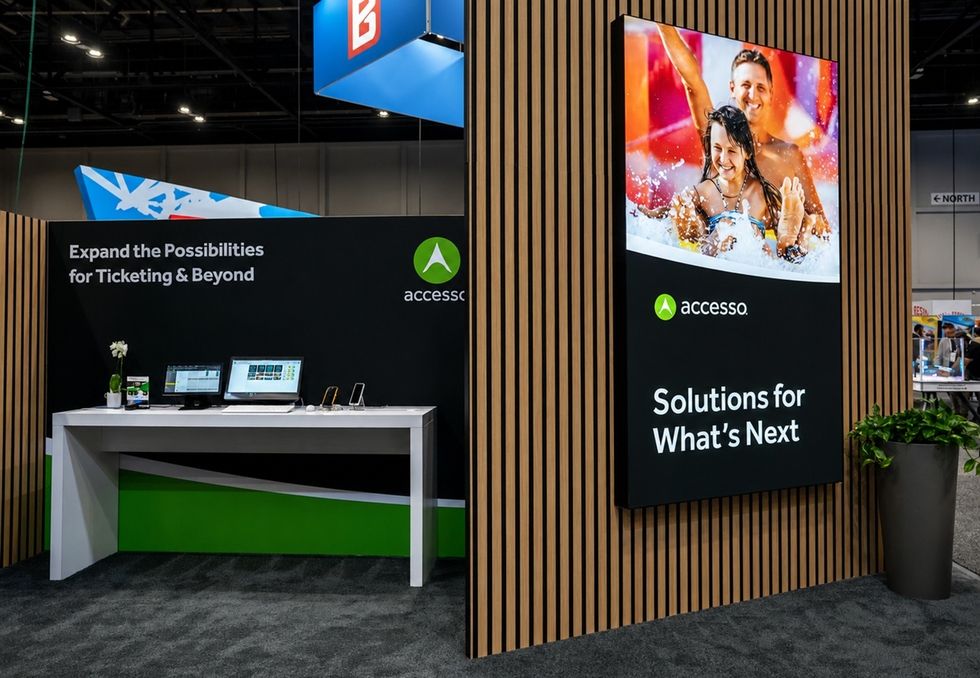
accesso's patented, acclaimed solutions increase revenue for attraction operators while improving the visitor experience
Image courtesy of accesso
“We'll see a cascade of impact as it transforms our industry, starting at the point closest to the consumer and then working down.”
To succeed in this new landscape, operators will need to understand new terminology.
“We've spent a decade talking about SEO or search engine optimisation. We're going to spend the next decade talking about GEO, generative engine optimisation.
“It's the same discipline, just with a different audience. It's something that we are watching very closely because it's a rapidly evolving space.”
Insight to action
This rapid evolution fuels fears about the trustworthiness of AI.
“I don't think AI really gives you more risk; it will get you into trouble much more quickly than previous approaches would,” says Cowie, and heeds caution.
“It all comes down to good data governance, having the appropriate controls, making sure that your context window is PII-free (personally identifiable information).
“We've got an obligation to society and to individuals. We have an obligation to the legislation to treat people's data with the respect it deserves.
“We certainly build all our systems with that in mind. And venues will need to do the same.”
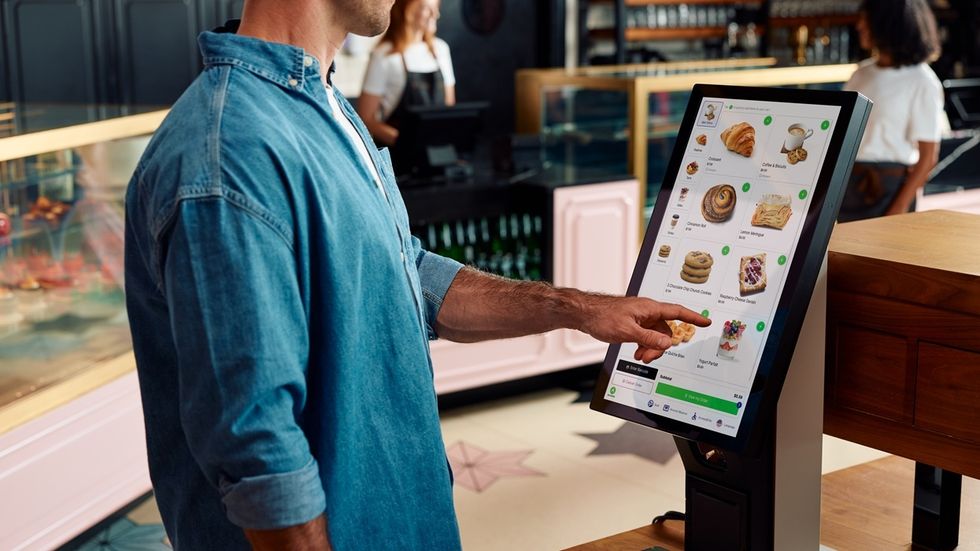
 accesso Freedom brings together restaurant and retail in one unified systemImage courtesy of accesso
Establishing such tight data governance requires operators to refocus on their operational backbone. This, Cowie says, is the "load-bearing" part of a business that often gets pushed to the bottom of the pile but underpins AI adoption.
“If you follow the hyperbole that exists around AI, there’s a view that your entire business model is going to be broken; you've got to find something new. That's just not true.
“AI is currently awesome at surfacing insight if you give it good context. But insight alone is not useful unless you can actually act on it.”
“If you've uncovered a nugget, but you've got no way to actually do something about it, it's wasted.
“So having good operational platforms to act on insight in a timely manner is going to be increasingly important.”
Building an integrated, powerful platform
Since Cowie first joined accesso as COO in 2025, the company has made three major moves.
In addition to launching accesso Intelligence, it has implemented a new payments strategy and is now integrating all of its technologies.
“The integration effort is about strengthening that operational backbone and making sure that our systems connect in the right way to support an AI world,” says Cowie.
“The accesso Intelligence platform is evolving at a phenomenal rate. And then the payments piece is really interesting.
“Payments is a complex world. There are so many intermediaries.
“It's as easy as pie to get your Apple Wallet out and tap on a device. But behind that, there are handoffs among your bank, credit card companies, intermediary processes, and eventually the venue's bank.
“Each of those wants to be paid. And so, as a consumer may not see the cost, the operator has to pay their bank, Visa card fees, other banks in the chain, and it adds up.

accessoPay offers a streamlined and more cost-effective payment process
Image courtesy of accesso
“With accessoPay, we take all that away from a venue, and we manage it on their behalf.
“We process 5 billion in payments on our platforms each year. Because of our scale, we can buy at wholesale prices. We can negotiate really good prices and pass those savings on to our customers.
“So, they get a simpler relationship. They've only got to manage us, and we'll also save them some money on the way. So, it's genuinely win-win.”
Driving value
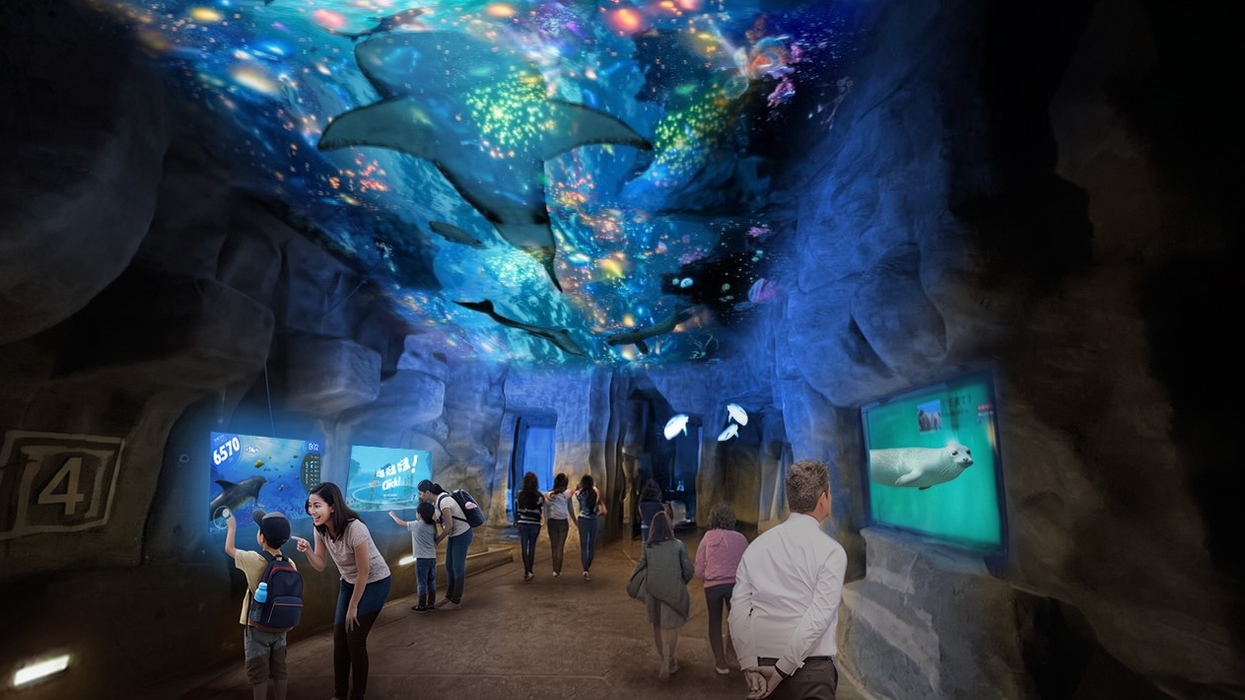
As a result, the accesso ecosystem can curate the visitor experience, from the digital journey to buy a ticket to the venue.
“We can manage queue times, the food and beverage counters, and the retail counters. We can do targeted marketing messages to individuals through mobile apps,” says Cowie.
“Then we can connect all of those data sources to the accesso Intelligence platform, which allows an operator to understand what is going on in their venue.
“And this is sector-agnostic. It works brilliantly in ski. It works brilliantly in cultural attractions, zoos, aquariums, and theme parks.
“It's a pretty exciting vision, and I hope our customers can see the value.”

accesso’s solutions offer a connected experience for attractions, hospitality, ski and live entertainment
Image courtesy of accesso
In addition to his aims for accesso, Cowie considers the shape of the sector as we approach a new decade.
“2030 is three and a half years away. Three and a half years ago, ChatGPT wasn't a thing.
“So anybody who can confidently predict what will happen in the next three and a half years is pretty foolish, I would say.
“But we have some sense of what will matter.
“AI is useless to you unless you give a good context. Operators that understand this sooner, and start aggregating their data and making it available to AI, will have a head start.
“The accesso Intelligence platform will help with that, as we augment it with our 20 years of context. But without context, AI will give you an answer that is worse than not having it at all.”
Power in people
People, Cowie stresses, are key to success in the AI era.
“It is genuinely scary to people; the dystopian view some people have predicted is a horrible place to be. I'm certain it won't come to that.
“But I think it's important to acknowledge that, because ultimately humans are important,” says Cowie.
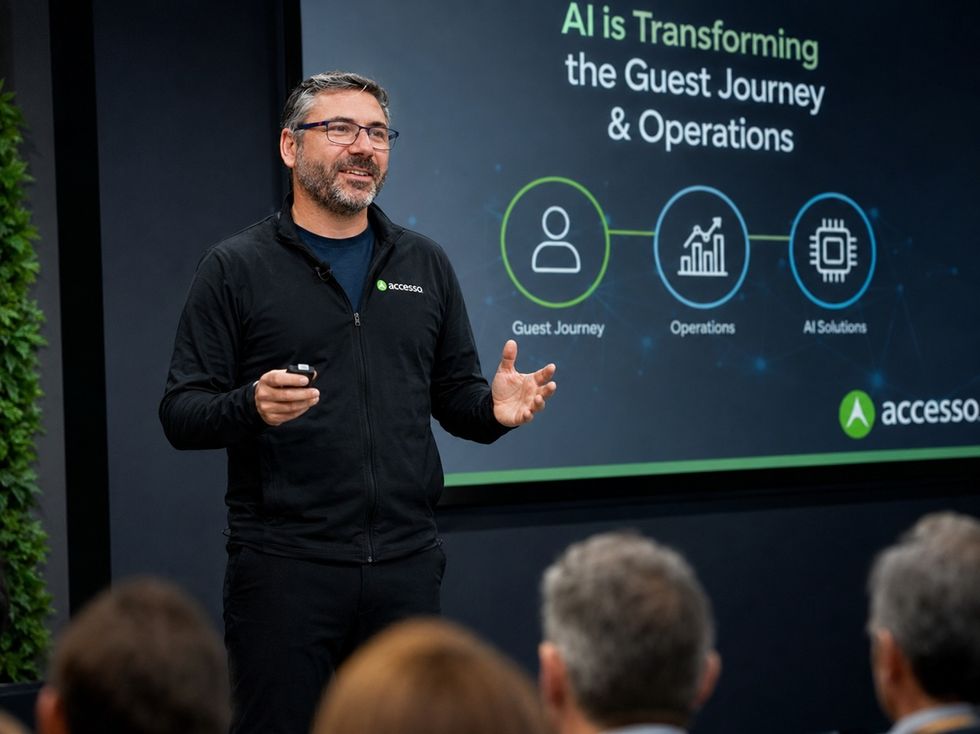
Cowie presenting on AI in guest journey and operations at a conference
Image courtesy of accesso
“They need to be treated as human beings, not just as people who turn a handle.
“Particularly in our sector. The reason attractions exist is to attract people and to give them an emotional and physical experience.
“The operators that succeed will not view AI as an opportunity to cut costs; that would be a dangerous path to go down.
“Those who succeed will realise that AI enables them to free people from the mundane and routine, and reinvest that time in the guest experience and in treating their visitors as human beings.”