State of Play Hospitality is a creator and operator of technology-enabled experiential leisure concepts. Since launching its first concept, Bounce, in London in 2012, the team has spent a decade creating, launching, and managing several other industry-leading experiential brands.
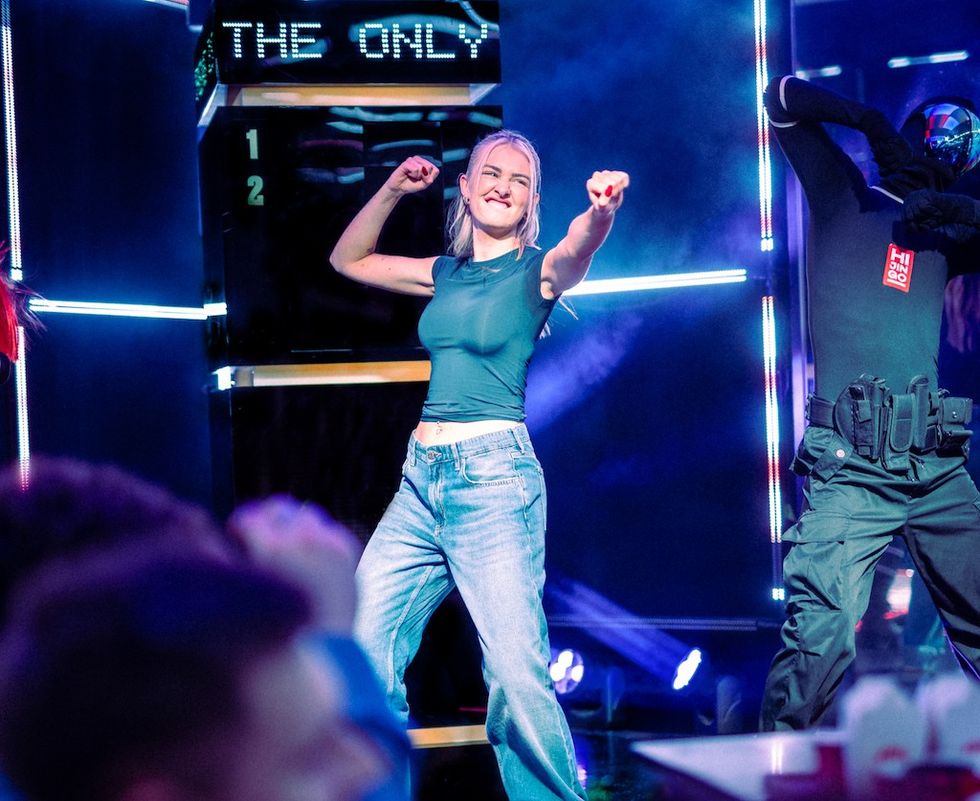
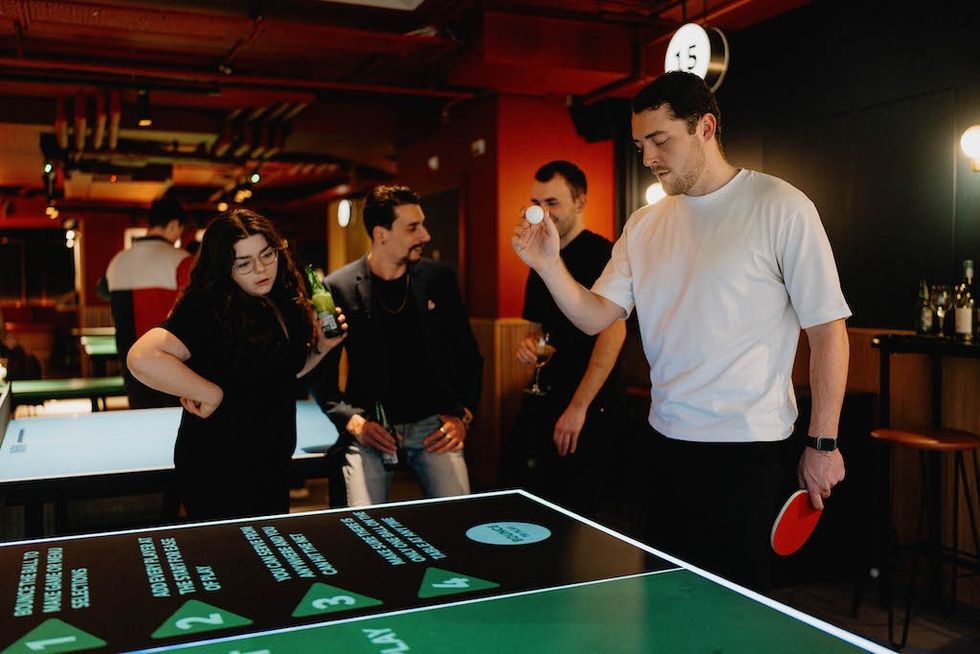
Currently, its concepts include the social ping-pong brand Bounce and Hijingo, which combines the traditional game of bingo with advanced, high-quality production and theatre visuals. It also operates the popular Flight Club venues under license in North America.
Operating across the UK and US, State of Play Hospitality offers immersive, technology-enhanced twists on classic, beloved activities. The engaging gameplay and high-quality venues work together to create fun, memorable social experiences.
We speak to CEO Toby Harris about what has driven the company so far, and where he sees the competitive socialising trend heading.
The right concept is key
The key to State of Play Hospitality’s success in scaling social entertainment concepts to date, says Harris, is getting the concept right.
“And by ‘right’ I mean both the guest experience and the financial model,” he adds.
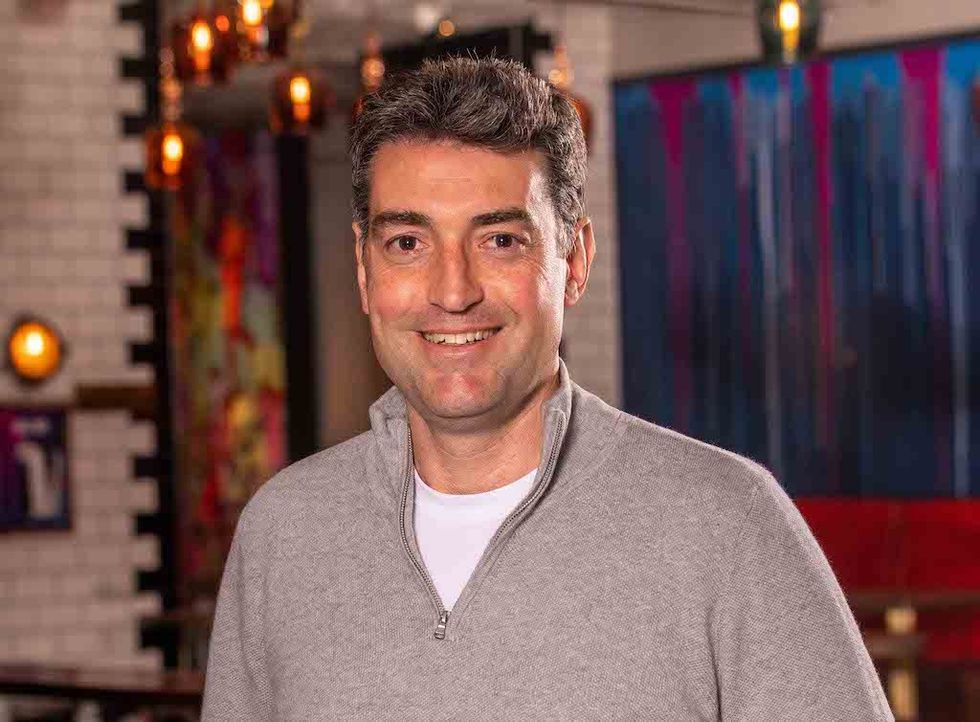 Toby Harris
During his eight years in the role, the firm launched Flight Club in the United States, co-founded Puttshack in the UK, divested from that business, and launched Hijingo in the summer of 2021.
“My reflection over all these years is that you can think you’ve hit on a winning formula and get excited, and perhaps others have rushed to open multiple venues.
“But until you’ve traded for two to three years, you’re not able to really understand what unlocks repeat business, which is such a key driver of long-term sustainable success, and a financial model that works given the capital intensity of our business.”
While it has grown more slowly than others in the sector, Harris says: “We’ve tried to be thoughtful. Given the build costs for each venue, we’ve sought to ensure we choose the right locations.
“We would love to grow Hijingo as we still have just the one venue, which works brilliantly. But opening in the wrong location or market, or with real estate that doesn’t work for the concept, would be a cardinal sin.”
Flight Club has perhaps been the biggest success story, with State of Play leading its expansion in North America from a single venue in Chicago to multiple locations across the US, including the latest opening in Cincinnati.
More venues are set to come next year in New York, Dallas, Seattle, and Minneapolis.
10+ locations for Flight Club in the US
The company, he explains, has a clear strategy: to grow the North American Flight Club estate and to build the Hijingo pipeline in Europe and, ideally, in North America. As a licensed gaming concept, the restrictions on growing Hijingo in North America are stricter than in the UK or parts of Europe.
Flight Club has been around for 10 years and, having just opened its 10th US location, he says: “We see significant runway.”
Meanwhile, Hijingo, he describes as “A phenomenal concept.”
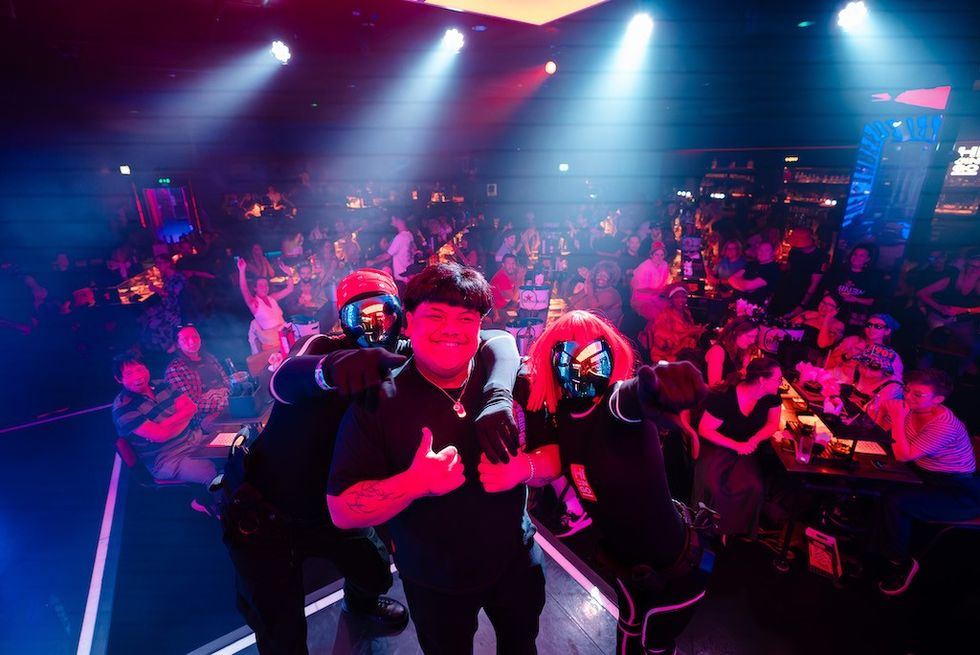 Hijingo
He continues: “It’s highly differentiated, and feedback, engagement and financial performance all point to scalability.
“We’ve been engaged with casino operators in Las Vegas for a couple of years because we’re excited about opening Hijingo there. In that market, licensing is handled through the casino partner, and we think the model will perform exceptionally well and introduce the brand to a broader international audience.”
What makes State of Play unique?
Speaking about what sets State of Play and its concepts apart in a fiercely competitive market, Harris points to three factors core to the company’s DNA across all three brands.
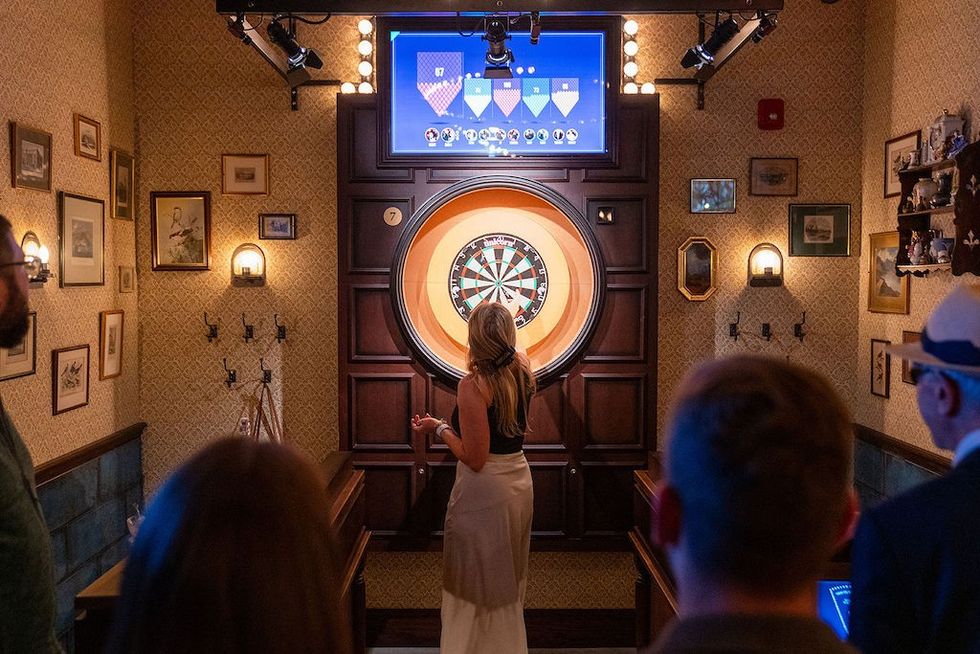
“Firstly, there is the quality and immersiveness of the physical design. We have beautiful, bespoke, engaging fit-outs with high-quality fixtures and finishes.”
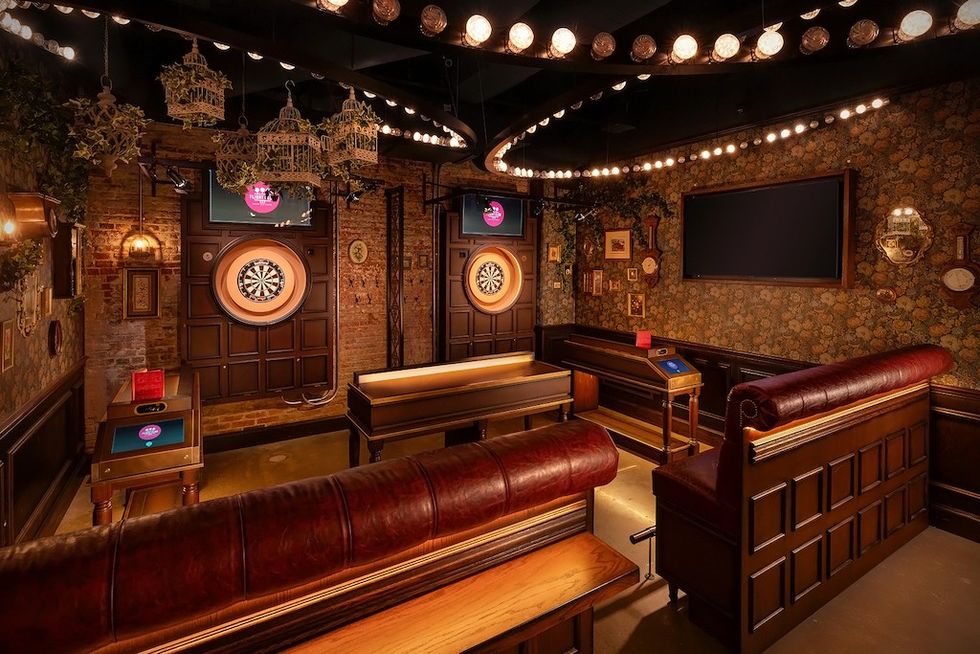 Flight Club, Washington D.C.
There are also the food and beverage programmes:
“We pride ourselves on being at the top end of the segment. Upscale, fast-casual, shareable, scratch-kitchen, which is consistent across concepts.”
Finally, all feature engaging gameplay powered by seamless technology.
“Technology elevates existing, well-loved games. Flight Club is the best example: darts is great anywhere, but the Flight Club version takes it to another level.
“We like to think all three concepts have an addictive quality.”
Finding the ideal location
When it comes to identifying the right market or location for a competitive socialising concept like this, Harris draws on Flight Club’s US growth to date.
“When we opened our first Flight Club in Chicago, the mandate was simply to make sure the first one worked and, if it did, open a second — always planned for a primary tier-one market like New York, Boston or DC.
“Now, with ten venues open, we’re still not in every tier-one market. There is a priority toward the largest tier-one and tier-two markets."
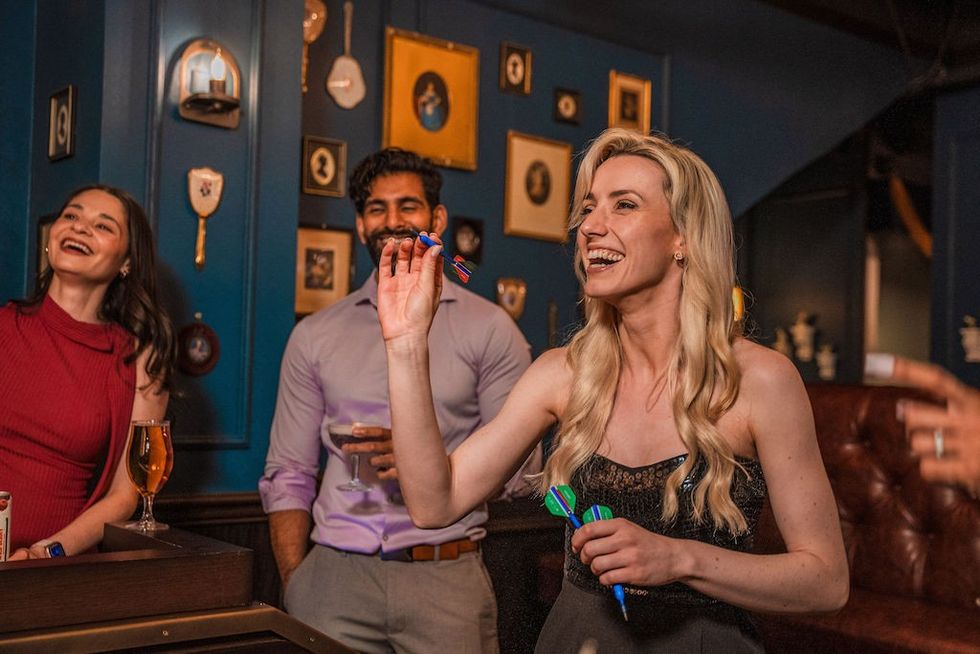
“We want to be where our two key segments are present: the social segment (late 20s to mid-40s) and the corporate segment. We also want to be close to the action, other bars, restaurants and nightlife, in the most popular urban trade areas.”
Finding the perfect spot isn’t always straightforward:
“In New York, for example, I probably saw more than 50 sites before we signed a lease, because we were so sure we wanted to be in Flatiron/Nomad/Union Square. Everyone else wants to be there too. Patience has been key.”
Localisation & authenticity
The intention is to create consistency and an authentic brand wherever guests experience a Flight Club, in North America or internationally.
“We work closely with the brand owner in the UK and maintain contact with the Australian and Irish franchisees. From a look-and-feel perspective, there is a common brand identity, but each venue also has its own unique elements.”
This means that guests who’ve been to other Flight Clubs, even transatlantically, can immediately recognise the venue while still appreciating its uniqueness.
“It would be easier to roll out an identikit modular version, but that’s not the founder group’s vision nor ours,” he adds.
 Flight Club Philadelphia
Localisation mainly comes through programming and food & beverage.
“For beer, our craft taps are selected locally, with just two national beers. Food is consistent nationwide, with minor happy-hour variations.
“We present dishes that undergo our central testing process—shareable, often eaten standing—and our executive chef in Las Vegas supports menu innovation to ensure quality and consistency.”
Keeping people coming back for more
With guest expectations constantly growing and evolving, a key challenge is keeping the experience fresh. Regarding innovations that he is excited about rolling out across the portfolio, Harris says:
“We’ve just launched our seventh game in Flight Club, called Limbo. This is timed with the brand’s 10th anniversary and our 10th US venue. It’s gone down very well, and we’re already discussing an eighth game.”
In programming, the team has worked hard over the last couple of years, he adds, especially for the social guest:
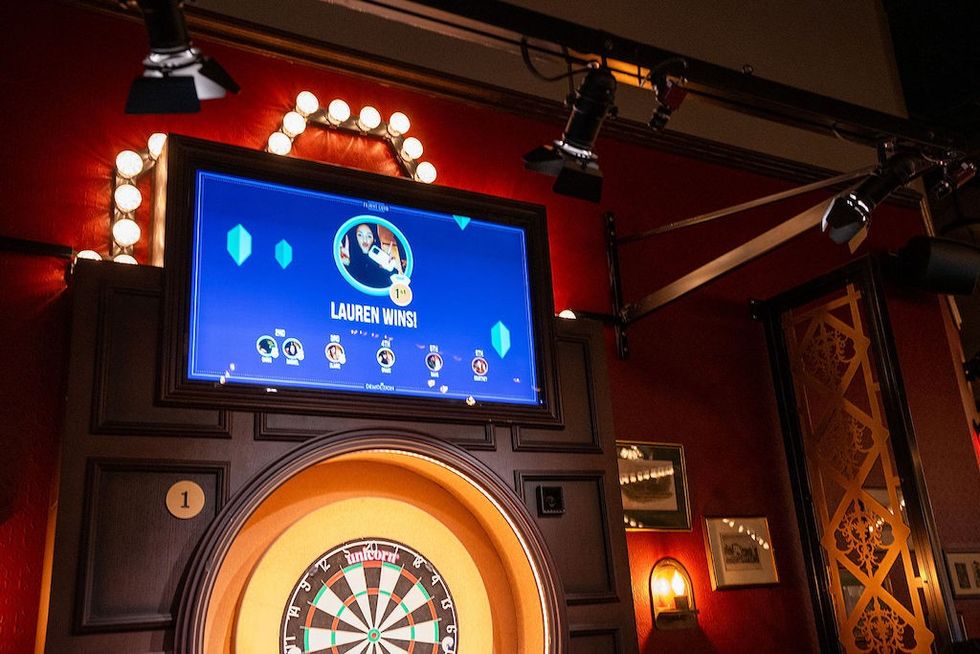
“We launched Flight Fridays in every Flight Club with DJs, gaming elements, and the Bullseye Challenge, where guests throw three darts and the closest aggregated score wins bar credit. It’s about building energy."
 Flight Club Philadelphia
“Plus, our brunch product is fantastic, and we’re tweaking and relaunching it in the new year.”
The tournament product is another draw. “It is already successful in the UK, and we’ve rolled it out to our US sales team this year. Corporate guests are giving very positive feedback.”
Meanwhile, Hijingo maintains a steady pace of innovation, releasing new shows every few months. “The 90s rewind was our most successful ever. We’ve got a Christmas show rolling now and are working on next year’s programming.”
The guest experience
While attendance is an essential success marker, one of the core things State of Play looks at is how visitors feel about their experiences.
“Guest feedback is the metric we obsess about most, from day one,” says Harris. “Alongside sales, of course. Early on, we invest more in the P&L, such as the team, opening offers, and promotions, and we’re less worried about profit in the first few months.”
By 6–12 months, the team starts looking to the bottom of the P&L. “Cash-on-cash returns are probably the most critical growth KPI, because without returns that make sense for investors or franchisees, it’s hard to grow.”
 Bounce
Repeat rates are also crucial.
“We only get the booker’s details, but we see very high repeat rates in Flight Club. That’s driven our ability to grow over the last eight years. Chicago is the best example: it opened in April 2018 and has never achieved higher sales or profits in any 12-month period than in the last 12 months.”
Some concepts emerge quickly and then drop off in years two or three.
“Fortunately, Flight Club has continued to grow over the medium and long term.”
Risks and opportunities
Based on his experience, Harris says the most significant risk for socialtainment operators is pursuing growth at the expense of guest experience.
“We’ve seen concepts grow quickly and struggle with consistency. In the US, it’s exponentially harder — huge distances, the senior team can’t be everywhere, and competition for prime sites is intense. The danger is taking secondary sites or committing to multiple locations before the concept is ready.”
 Hijingo
The opportunities, however, are enormous.
“For us, the runway for Flight Club in North America is 50+ venues. Generally, we think one per market, except maybe three or four in New York.
“The bigger opportunity as a platform is adding additional concepts. We have operating teams nationally, and running more than one venue per market would be more efficient. We’ve taken our time to reach 10–15 internationally, and I’m glad we did.
“Those who rush often miss the mark in one or two sites.” This can be costly in terms of investment and raise investor concerns.
What’s next for State of Play?
Looking ahead at what he hopes to achieve at the helm of State of Play Hospitality over the next five years, Harris says:
“I hope the business is a scale business. Right now, most growth is with Flight Club in North America. Within five years, I hope we’ve brought one or two more concepts onto the platform with growth prospects in North America and internationally.
He wants the business to grow significantly, with multiple growth paths. “I don’t see the platform having fewer than three or four concepts, each with its own growth journey.
“And I hope we have more than one Hijingo in North America because the concept deserves that audience. With gambling legislation loosening here, we hope the runway for Hijingo is far greater than just the casino market.”
 Bounce
State of Play Hospitality’s journey demonstrates how careful concept development, disciplined growth, and a steadfast focus on guest experience can build enduring success in the competitive socialising sector.
With Flight Club’s ongoing momentum in North America and Hijingo ready for wider international expansion, the company is entering its next phase with a clear strategy and solid foundations.
As new concepts are integrated into the platform in the coming years, State of Play aspires to develop a varied, scalable portfolio, continually redefining the potential of immersive, technology-driven leisure.