
Storyland Studios: building experiences around people, place and story
Storyland Studios began with a question about purpose.
In October 2001, as the US grappled with the aftermath of the 11 September terrorist attacks, brothers Peter and Mel McGowan met with Mike Foster in a Southern California coffee shop. A mutual friend challenged the three to look beyond professional success and consider how they could use their experience to contribute more broadly.
At the time, Peter McGowan had built technology businesses during the early-1990s boom and was positioned for early retirement. Mel had spent a decade at The Walt Disney Company, working across park operations and master planning before becoming an Imagineer.
"Basically, the challenge was about significance,” says Mel. “Pete and I were both happy in our careers and had achieved a measure of success. But a mutual friend challenged us to think beyond that and ask a deeper question: how do you move from success to significance and purpose?"
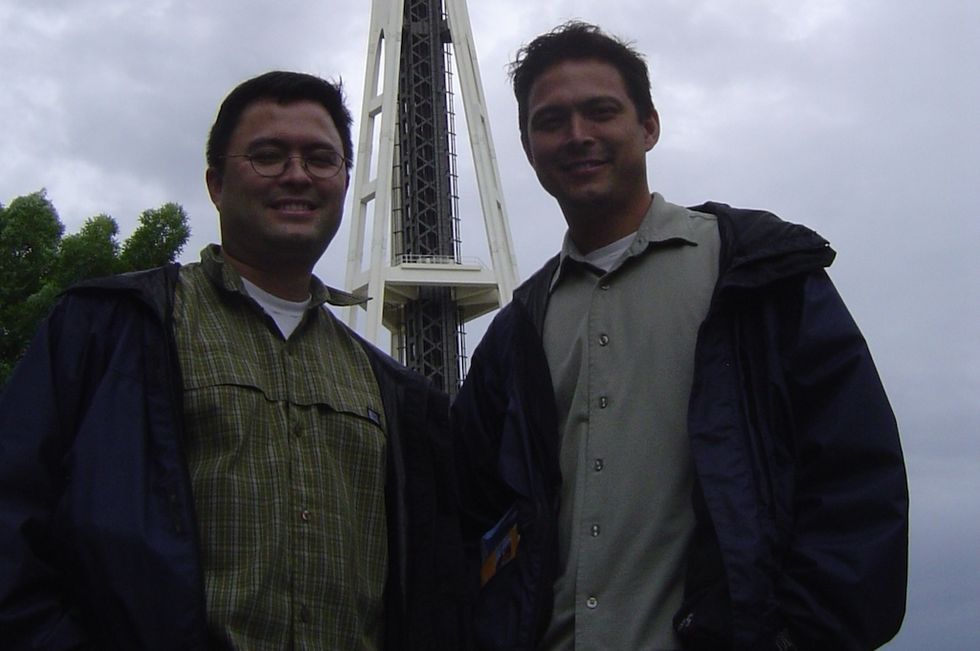
Peter and Mel in the early days of the studio on one of their first out of state projects
Image courtesy of Storyland Studios
The conversation led them to consider how their combined experience in design, technology and themed environments could help organisations communicate their purpose more effectively.
They saw an opportunity to work with cause-based organisations and nonprofits with important stories to tell, but without the resources or expertise to communicate them through the kinds of experiences larger companies could create.
"We recognised that there is a wide world out there that could use some help bringing story to life," Mel says.
Storyland Studios was founded in 2001 to help organisations tell their stories in ways that could engage audiences and strengthen their impact.
This initial focus on purpose-led organisations later expanded into a broader practice, applying the same principles of storytelling and human connection to themed entertainment, cultural attractions, destinations, healthcare, and more.
One project that reflects this original ambition is Poverty Encounter, an immersive experience designed to help visitors better understand the realities of poverty. The project brought Storyland's belief in storytelling as a means of creating empathy and encouraging positive change into a physical visitor experience.
It also marked an important milestone for the studio, earning Storyland its first Thea Award. For the founders, the recognition represented more than professional achievement: it reflected the ambition that brought them together in the first place, moving from "success to significance".
Today, Storyland works with international IP owners, governments, cultural institutions and other organisations. Its offices are in London, Los Angeles, Seattle, Denver, Nashville, Atlanta and Orlando.
As Storyland marks its 25th anniversary, blooloop speaks to co-founders Mel and Peter McGowan and CEO of Storyland Locations Ben Thompson about the company's evolution, its multidisciplinary approach and how it is applying that approach across an expanding range of projects.
Two different paths, one approach
The McGowan brothers brought very different experiences to the business.
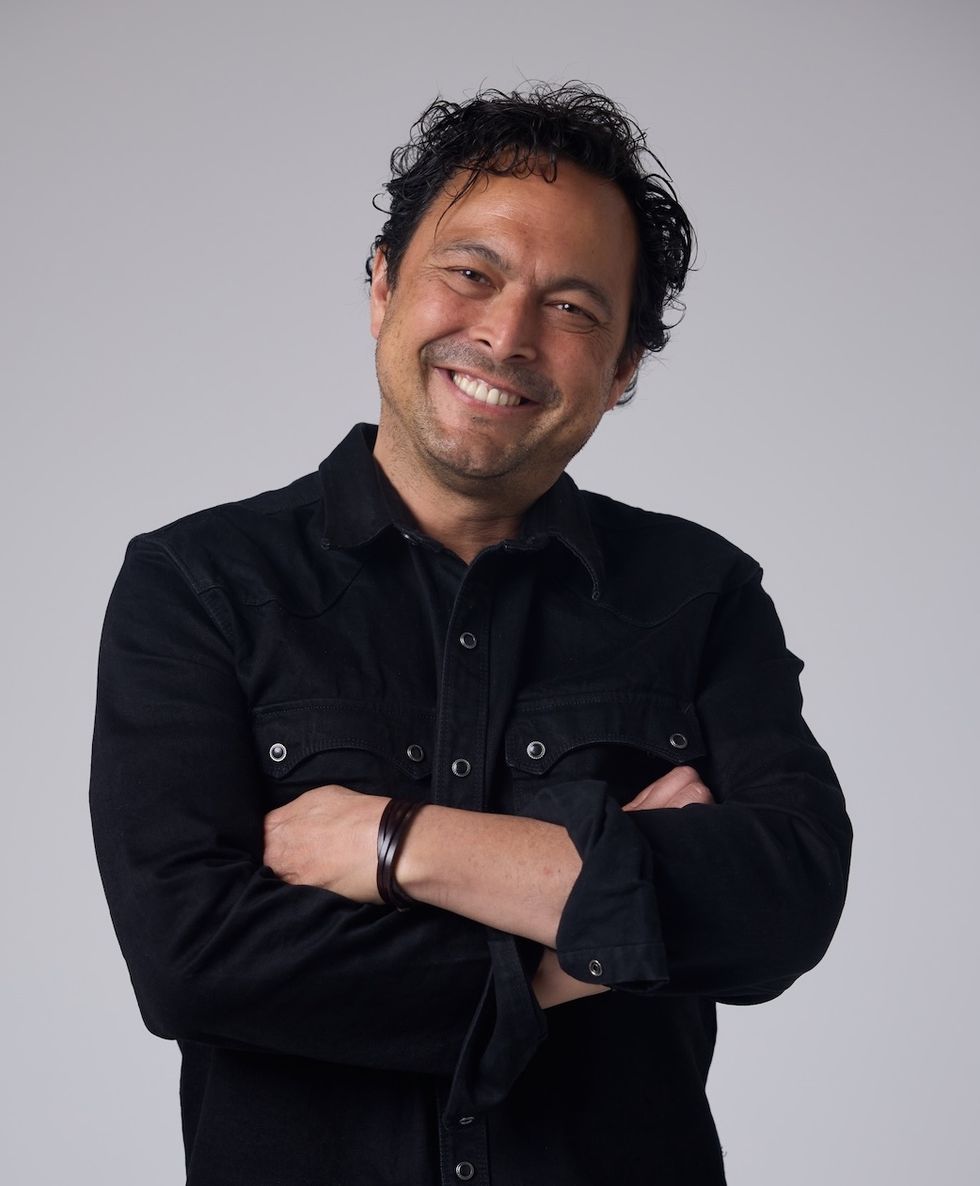
Mel McGowan, founder and chief creative officer
Image courtesy of Storyland Studios
Mel McGowan came to design through Disney. He began in park operations before moving into master planning and design, giving him an understanding of the visitor experience and how it is shaped by the built environment.
One of his early projects involved the redevelopment of Anaheim Resort District, the area around Disneyland. Working with Disney, the city, and local stakeholders, he helped develop a more coherent visitor environment, using design, signage, and improved pedestrian routes to connect the district and make it easier to navigate.
"The Anaheim Resort District had deteriorated into urban blight," Mel recalls. “It was not safe or pretty…to the point where Disney was even potentially considering revisiting their capitalisation, their ability to reinvest if the city wouldn't partner with them."
The work helped transform an area that had become disconnected from the wider resort experience into a more welcoming, navigable district, with a stronger relationship between Disneyland and the surrounding visitor economy.
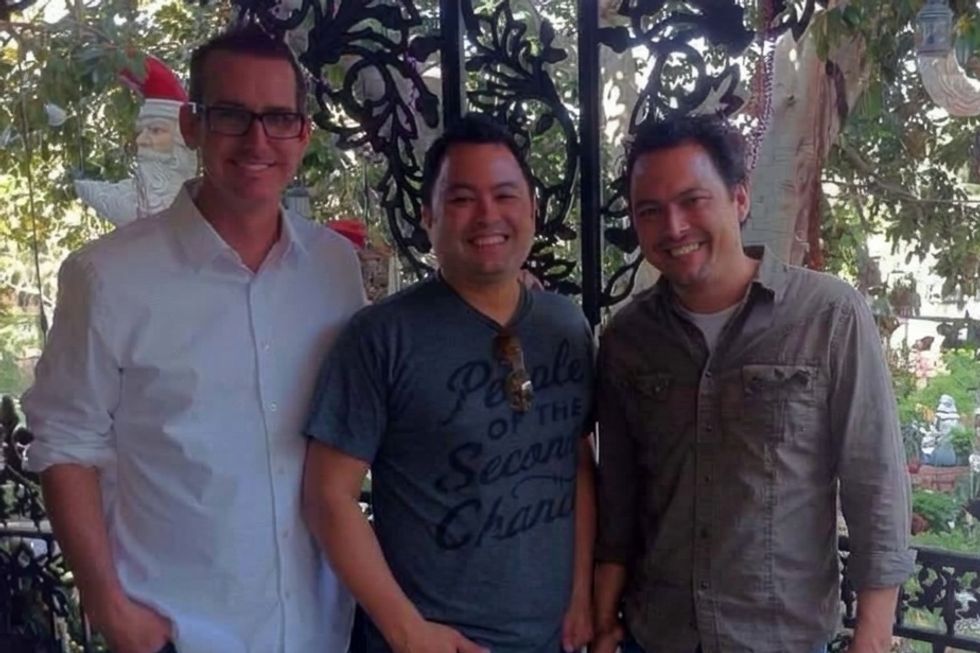
L to R: Mike Foster, Peter and Mel McGowan at Disneyland during the company's 10th anniversary celebrations
Image courtesy of Storyland Studios
The experience also helped shape Mel's thinking about the relationship between storytelling, design and place. His graduate thesis explored whether the principles used to create themed environments could be applied more broadly.
"In history, there was a time when form followed fiction, when you’re thinking about the cathedral builders and spaces that always told stories," Mel says.
"I asked the question: Does that idea of form following fiction rather than just function have relevance in today's world? And really, my conclusion is that not only is it relevant, but it's actually deeply desired. People are wired and hungry for it.
"They’re desperate for meaning, significance and transformation."
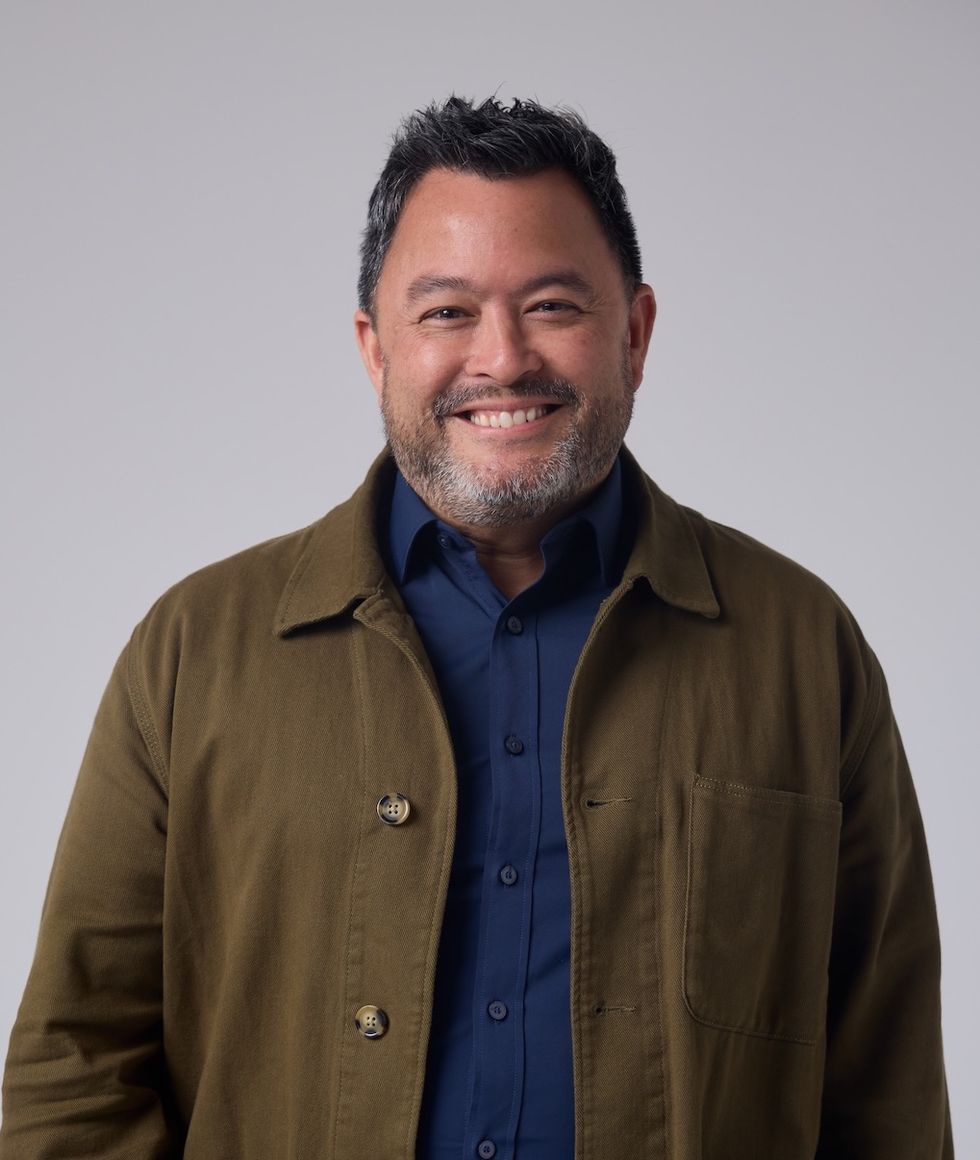
Peter McGowan, founder and chief executive officer
Image courtesy of Storyland Studios
Peter's background in architecture and technology brought a different perspective to the partnership. After studying architecture, he developed commercial and technological expertise that complemented Mel's experience in design, master planning and operations.
Together, they began exploring how these disciplines could be applied to organisations beyond traditional themed entertainment, helping them communicate their purpose not only through what they said, but also through the environments and experiences they created.
Peter saw an opportunity to help organisations communicate their purpose more effectively by drawing on lessons from the entertainment industry.
"Mel was the first out of the gate to say that many organisations had forgotten how to tell their story," Peter explains. "He saw this assembly-line process thinking that stories are only told orally or in written form, but Walt Disney understood this bigger picture: that everything speaks and actions speak louder than words."
For Storyland, that meant looking beyond the information an organisation communicated and considering how its buildings, spaces, interactions, and activities could express the same ideas. The aim was to make a story something people could experience, rather than simply hear or read about.
"Story isn't just an oral or written tradition for entertainment,” adds Peter. “It is about a greater opportunity to connect people."
That multidisciplinary approach would become central to Storyland.
From secret club to full-service studio
For its first decade, Storyland operated as a small, highly collaborative creative practice, or what Mel describes as a "secret underground club".
"We were really proud of that," Mel says. "We just loved being everybody's secret weapon, not really being available for public consumption, but having a roster of clients and friends who entrusted us with their favourite stories to steward."
Storyland's foundations were shaped by the experience Mel brought from The Walt Disney Company, where he worked across park operations, master planning and Imagineering. That heritage still influences the studio's approach today.
The company has increasingly become a home for former Imagineers and other creative professionals who are drawn to its collaborative approach.
Mel sees this as an important part of Storyland's identity: a culture in which people from different disciplines work together, share ideas and take collective responsibility for bringing a client's vision to life.
This parallels the original culture of WED Enterprises, Disney's creative development organisation, where multidisciplinary teams worked together to turn ambitious ideas into physical experiences.
Tony Baxter, former senior creative vice president at Walt Disney Imagineering, has also recognised this quality in the studio.
"To find a company like Storyland Studios with the right mix of talented people possessing the necessary skill sets to make things happen is a tremendous asset. Knowing Storyland’s top creative leadership personally, I can attest to their fostering a culture that is passionate about every project they produce."
As Storyland's client base and capabilities have grown, so too has its ability to contribute at different stages of a project, from early strategic thinking and master planning through to creative development and delivery.
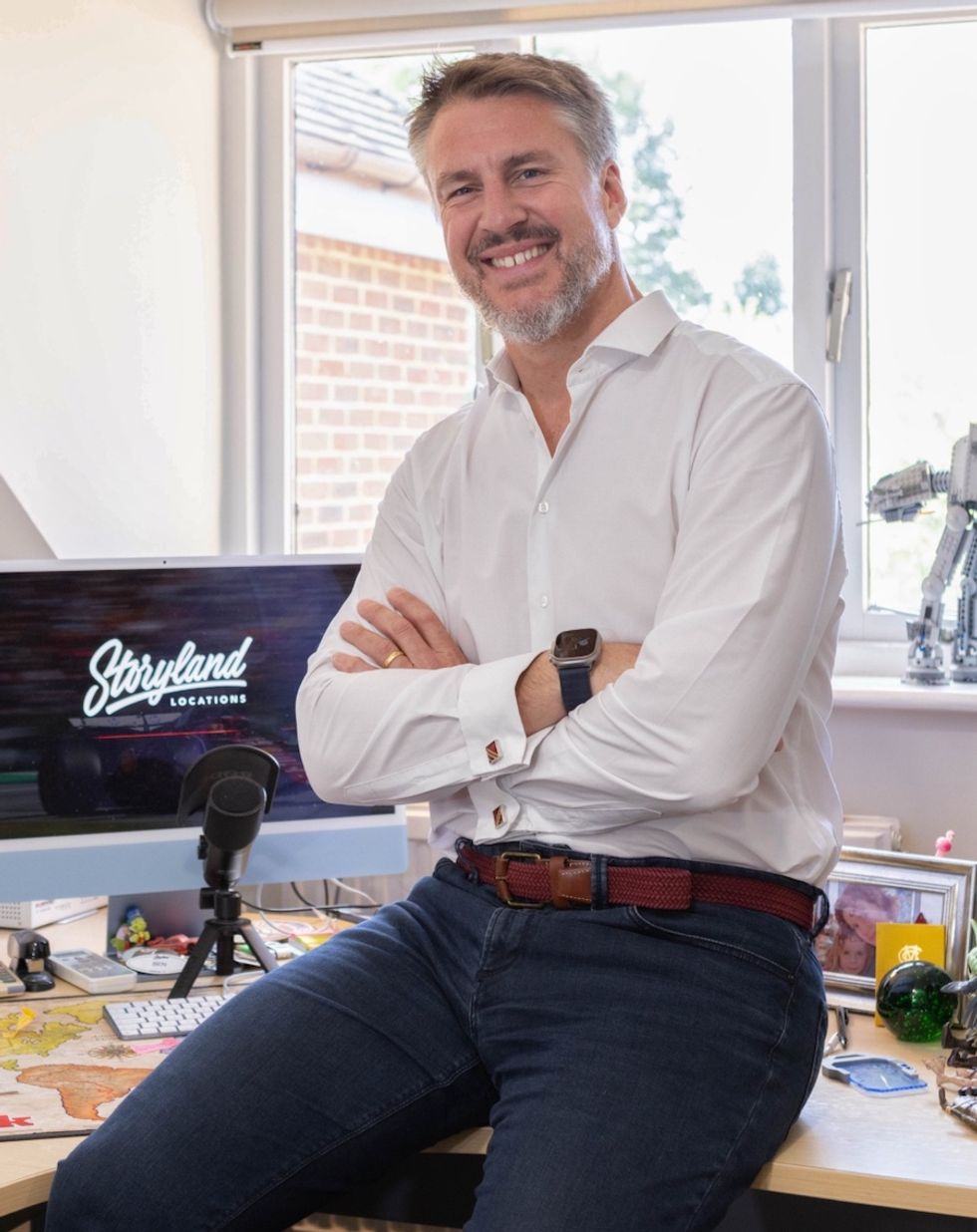
Ben Thompson, CEO of Storyland Locations
Image courtesy of Storyland Studios
As Storyland grew, its role expanded beyond creative development and design. Ben Thompson joined the business after senior roles at The Walt Disney Company and Merlin Entertainments, bringing experience in the commercial and development side of the attractions industry.
"What attracted me was the culture," Ben shares. "They had a way of involving the client in the process, talking to each other in a way that was incredibly respectful and inclusive. I was attracted to what it felt like to be in a Storyland creative process."
For Ben, a successful experience project starts well before design.
He describes those fundamentals as "Story, Soil and Silver": the IP, brand, artist, or narrative at its heart; the real estate and operations partners; and the capital required to make a project viable.
"I’ve always found myself at that early stage of a project, saying: 'Okay, how do we actually put this idea together in a way that investors will invest, operating partners will join, and real estate developers will want to put in incredibly attractive propositions to bring it to their locations?'" Ben explains.
That thinking led to the creation of Storyland Locations, a dedicated experiential development company focused exclusively on bringing together IP owners, real estate developers, operators, and investors to create deals that turn great stories into real-world destinations.
Its development engine assesses a project's commercial and operational fundamentals before significant design decisions are taken, bringing those considerations together with the creative vision from the outset.
“We have a three-stage process for development which we refer to as the Storyland Locations ENGINE”, says Ben.
“The three stages are Ignition, Powertrain and Performance. 'Ignition' lays the groundwork by gathering research and understanding our partners’ brand and goals, then studying the relevant market and competition.
"The 'Powertrain' is the deal-creation part of the Engine, securing the sites, setting up the businesses, and assembling the capital stack. 'Performance' is opening and running the experience at a world-class level."
From attractions to wider destinations
Storyland's work now spans destination development, theme parks, mixed-use communities and healthcare.
ADRENA, a 17-hectare coastal development delivered with Red Sea Global in Saudi Arabia, shows how that approach can be applied to destination development.
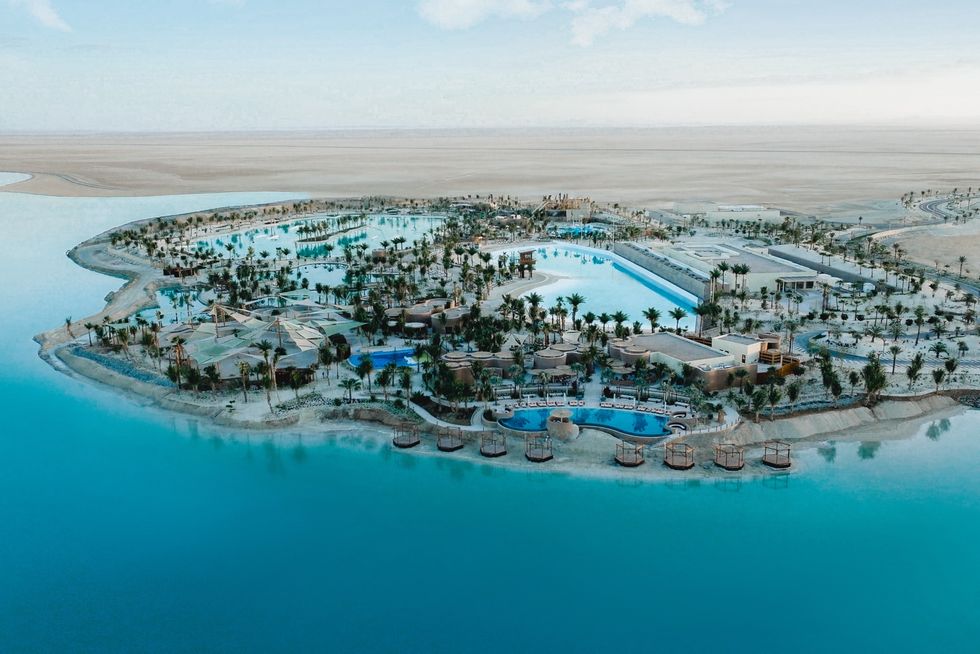
ADRENA, a new type of destination, created with Saudi Arabia's Red Sea Global
Image courtesy of Storyland Studios
Combining leisure, sport and wellness, the project forms part of a wider resort destination rather than following a conventional theme park or water park model.
"ADRENA is truly a new paradigm of destination," Mel McGowan explains.
"It’s not quite a water park, it’s not quite a theme park, it’s not even a normal visitor attraction that requires people to pay an admission price. It really is its own model as a central amenity to this entire ecosystem of resorts."
The development is organised around three experiences focused on mind, body and spirit, while its design also responds to the sensitivity of the coastal environment. Storyland worked alongside Foster + Partners on the master planning, using BIM to coordinate the landscape, water features, seawater processing and infrastructure.
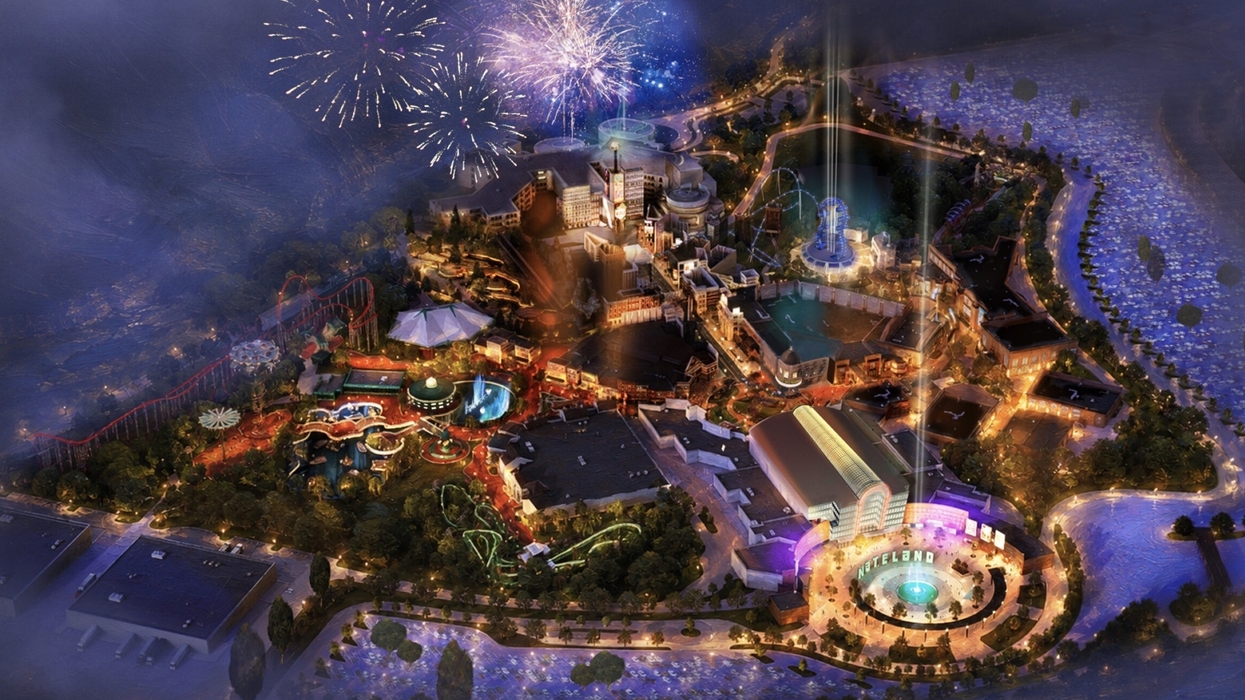
Nateland, a proposed family theme park in Tennessee being developed with comedian Nate Bargatze, presents a different creative challenge. Planned across more than 100 acres, the development is expected to combine attractions, dining, retail and a hotel.
The collaboration has also brought a different perspective to the design process. Bargatze's experience in comedy has informed conversations about pacing, clarity and what makes an idea memorable.
Peter McGowan says: "Nate is a creative himself... and going through the process with him has been so much fun. He took us through his creative process to make a joke.
"A joke can be made in 30 seconds. But will it be memorable? Will it be indelible? How do you deepen the layers? Nate doesn’t play down to kids, but he makes it safe for them... There is a simple sophistication that’s actually really hard to get to. You have to fight for simplicity.
“Brands are the same way. You have to fight for clarity, and Nate embraces that."
Storyland has also taken the approach beyond attractions.
At Bethany Children’s Health Center in Oklahoma, Storyland Studios applied its storytelling approach to a healthcare setting, developing a master plan and design concepts for a new campus.
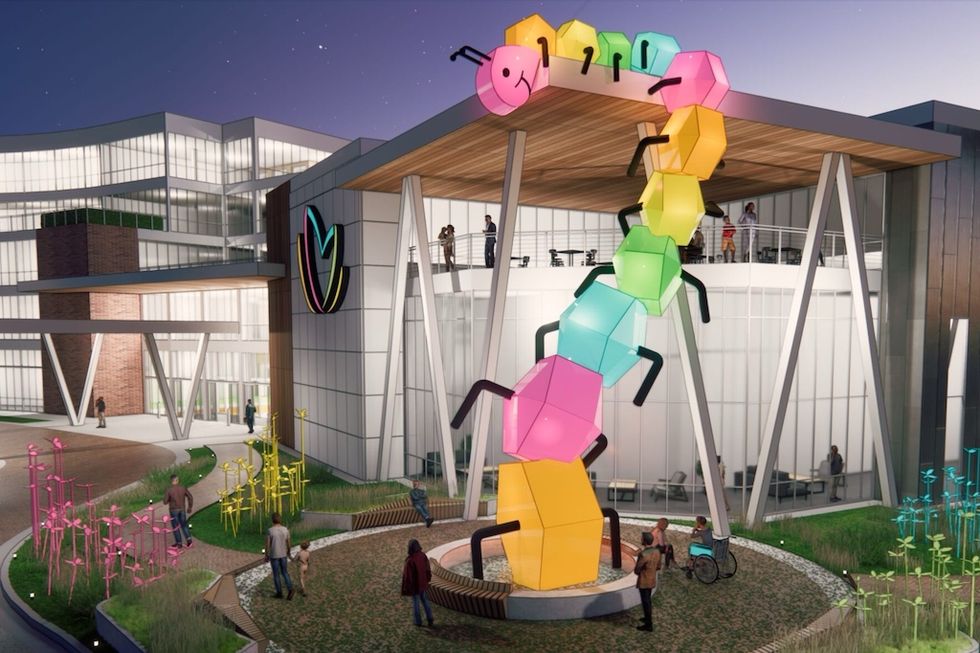
Designs for Bethany Children's Health Center in Oklahoma
Image courtesy of Storyland Studios
The design uses playful imagery, including a four-storey caterpillar and butterflies in the lobby, to help create a more welcoming environment for young patients and their families.
"We saw this alignment because we were helping them tell their story... so that their volunteers and families understand their greater mission and purpose," Peter McGowan says. "But then we realised how the physical architecture was influencing the experience."
The planned parking garage became one example. Storyland questioned the use of sloped parking decks, since many patients would arrive in wheelchairs. The discussion brought patients' and families' practical needs into the design process, showing how a project's principles can inform decisions about its physical layout and communications.
Meanwhile, Storyland's work with Los Angeles International Airport (LAX) shows how principles developed through themed entertainment can inform the design of complex, high-traffic environments. Here, the focus is on the experience of people moving through a space, and how design can make that journey more intuitive, engaging, and coherent.
Across these projects, Storyland applies the same underlying principles to very different briefs, from planning resort destinations to designing environments intended to serve specific communities.
Bringing new audiences to heritage
Storyland is also applying its approach to museums, cultural heritage and touring exhibitions. Through Storyland Locations, the company explores how spatial design, digital media, and interactive elements can offer new ways to engage with established subjects and collections.
Titanic: The Artifact Exhibition illustrates this. Owned by Experiential Media Group (EMG), the exhibition features more than 5,500 original artefacts recovered from the wreck site.
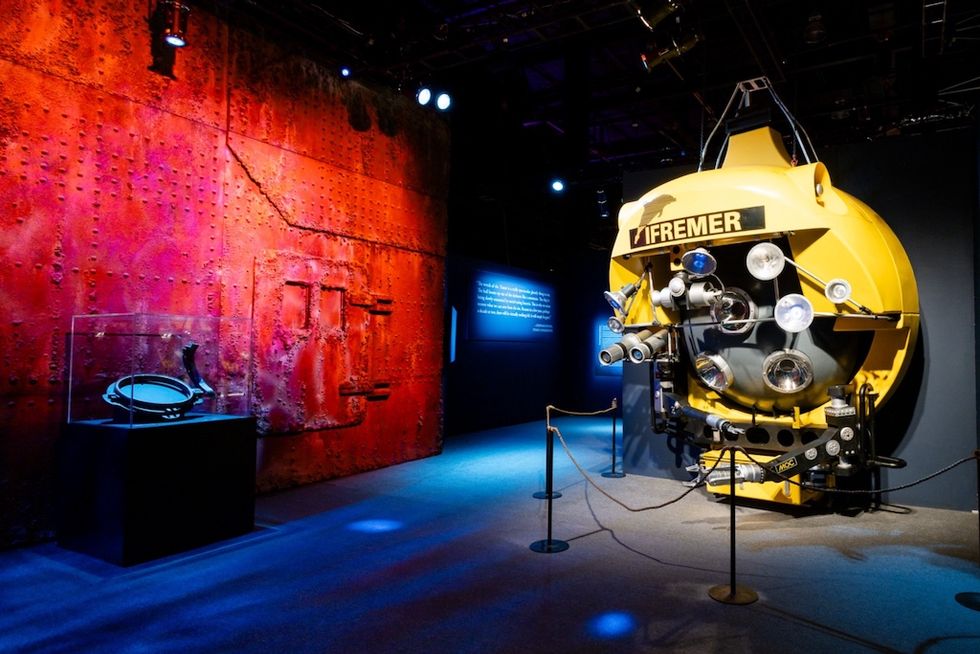
Titanic: The Artifact Exhibition brings together authentic objects and immersive storytelling
Image courtesy of Storyland Studios
Ben says the opportunity was to build on the exhibition's established appeal while introducing new ways for visitors to explore the story.
"My job was to secure and place the locations for those exhibition sites around the world," Ben Thompson explains.
"But we also recognised an opportunity to bring some modern storytelling methods to it. It had done so well for so long... but how can technology help us tell the same story in deeper, more visceral ways? How do we peek behind different curtains, go behind the scenes, and introduce side quests, similar to video game story architecture?"
Working with Vintage Digital Revival, formerly known as Titanic: Honor & Glory, Storyland has combined EMG's physical artefacts with digital and immersive elements. The exhibition includes redesigned gallery spaces, touchscreen interactives and a seated VR experience that lets visitors explore the ship.
Storyland is applying the same thinking to a touring exhibition about architect Frank Lloyd Wright.
Through Storyland Locations, the company is co-producing Frank Lloyd Wright: Shaping the Future with Imagine. Curated by the Taliesin Institute at the Frank Lloyd Wright Foundation, the exhibition will combine more than 100 original Wright artefacts with immersive and interactive elements.
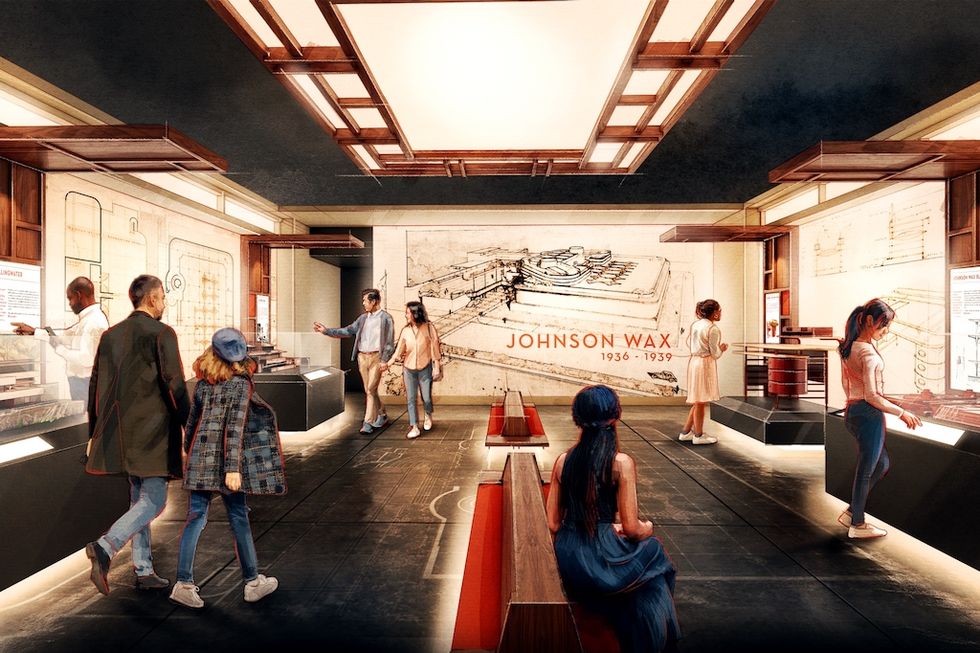
Frank Lloyd Wright: Shaping the Future combines artefacts with interactives
Image courtesy of Storyland Studios
The exhibition will explore Wright's ideas about architecture, place and the relationship between people and their surroundings, using the collection as a starting point for wider questions about design.
"Organic architecture means discovering the natural design that is absolutely right for a specific location and bringing it out of its environment,” explains Thompson.
“Today, the relationship between humans and nature has been torn apart; housing has become a pure commodity for the 'haves and have-nots.' Wright had powerful, revolutionary things to say about that."
The exhibition will also include an international design challenge, asking architecture, engineering, and art students to apply Wright's principles to real-world urban regeneration.
Together, the Titanic and Wright projects show how Storyland is applying its spatial storytelling experience to cultural subjects, combining physical collections with digital media and interactive experiences to give visitors more ways to engage with the material.
Looking ahead
As Storyland looks to its next 25 years, technology will continue to shape how it develops experiences.
One area of development is Ozone, which began as an in-house real-time character animation technology designed to make feature film-quality animated characters more emotionally engaging and easier to integrate into live experiences. It is now an independent venture backed by Epic Games, the makers of Unreal Engine
"Ozone is a revolution in terms of character animation," Mel explains. "It allows us to create feature film-quality animated characters that can interact with guests in real time, in a fraction of the time that normal workflows require."
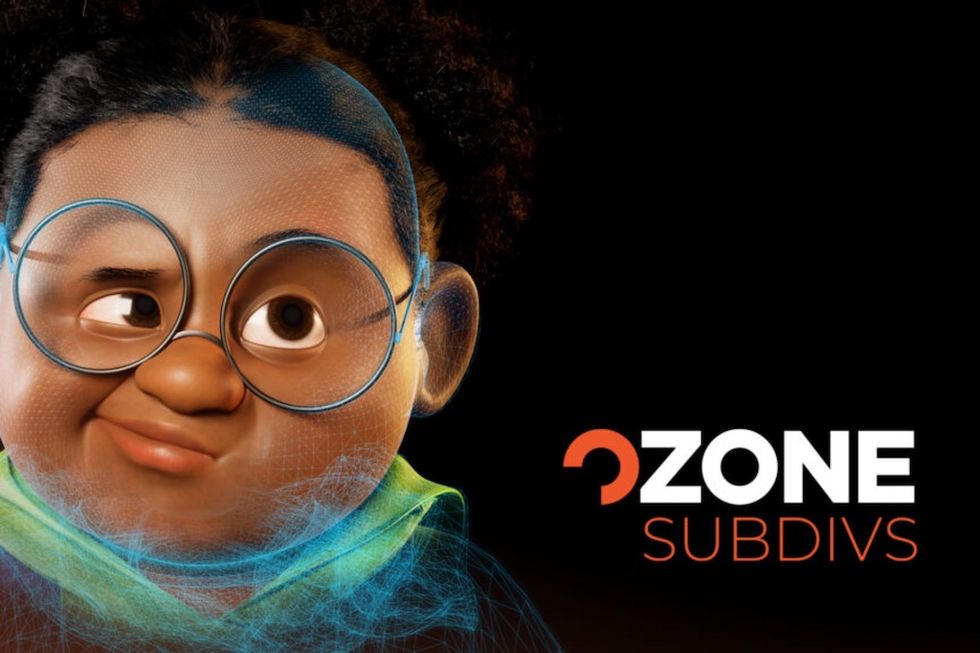
Ozone is Storyland's in-house real-time character animation technology
Image courtesy of Storyland Studios
More broadly, Storyland sees technologies such as AI as tools that augment, rather than replace, the creative process.
"AI is a force multiplier," Ben says. "It’s enabling human beings to dramatically increase speed, output, and quality.
“We will fully embrace technology and how it can transform our business and guest experiences, borrowing from Bob Iger's philosophy. But we will do it thoughtfully, carefully, and with an optimistic mindset.”
Despite the focus on technology, Storyland's thinking remains rooted in the same principle that shaped its founding: storytelling can help people connect with each other.
"Story is core to the human condition," Peter says. "It is not just an oral or written tradition for entertainment. Culture is shaped by the storytellers."
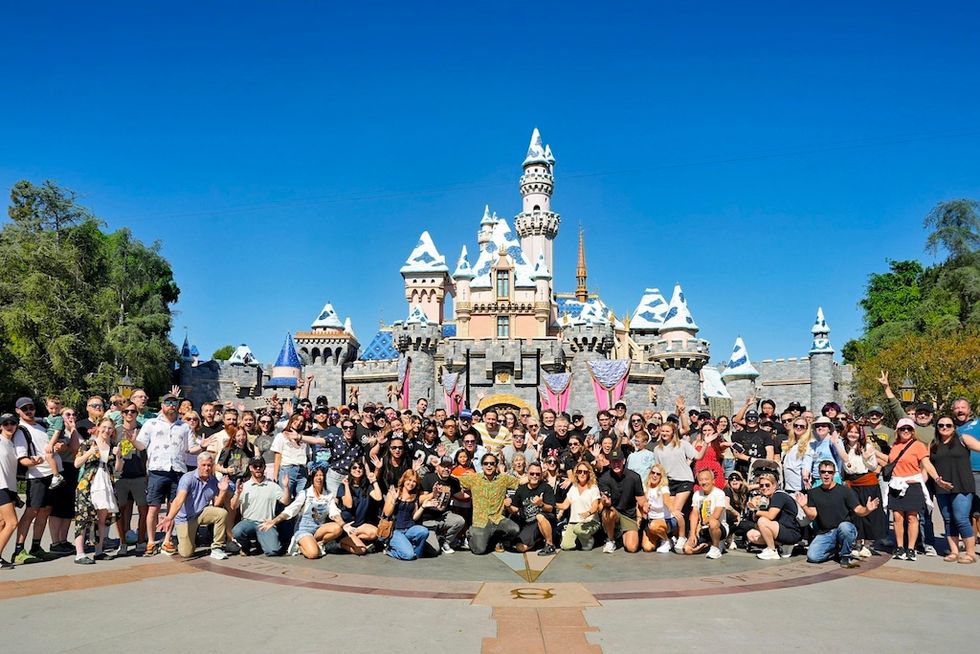
The Storyland Studios team at Disneyland, celebrating the company's 25th anniversay
Image courtesy of Storyland Studios
That belief underpins what Mel calls "redemptive storytelling": the idea that shared, physical experiences can offer something increasingly digital lives cannot.
"We live in today's digitally divided echo chambers," he says. "The web’s algorithms stoke fear and push people into dark corners of fear and hate. I believe there is an appetite, a hunger, and frankly a desperate need to get out there in physical spaces with redemptive storytelling.
“We are physical beings. As AI replaces digital dimensions, how will it replace the physical? How do you engage the human spirit, the senses? What you see, touch, smell, and taste? That is core to humanity."
It brings Storyland back to the question that brought its founders together in 2001: how creative expertise can do more than deliver commercially successful projects.
Twenty-five years after its founding, Storyland Studios is working across a much wider range of sectors than its founders initially envisaged. Its Disney roots and the creative principles of themed entertainment continue to inform its approach, but the studio has applied those ideas to an increasingly diverse range of environments, organisations and audiences.
The underlying question remains the same: how can the places people visit, and the experiences they have there, communicate something meaningful?
Peter says it has always been about more than creating successful projects: "Our mission is simply to help people tell their story better and to create stories that Lift the Spirit. We want to work with people who share that ambition to make a positive difference."
The team will be heading to IAAPA Expo 2026 in Orlando. To connect and to explore Storyland Studios’ work, get in touch here.

 Immersive environments bring together physical design, media and lighting to create experiences that go beyond the individual elements
 Mad's creative team can plan your next immersive attraction
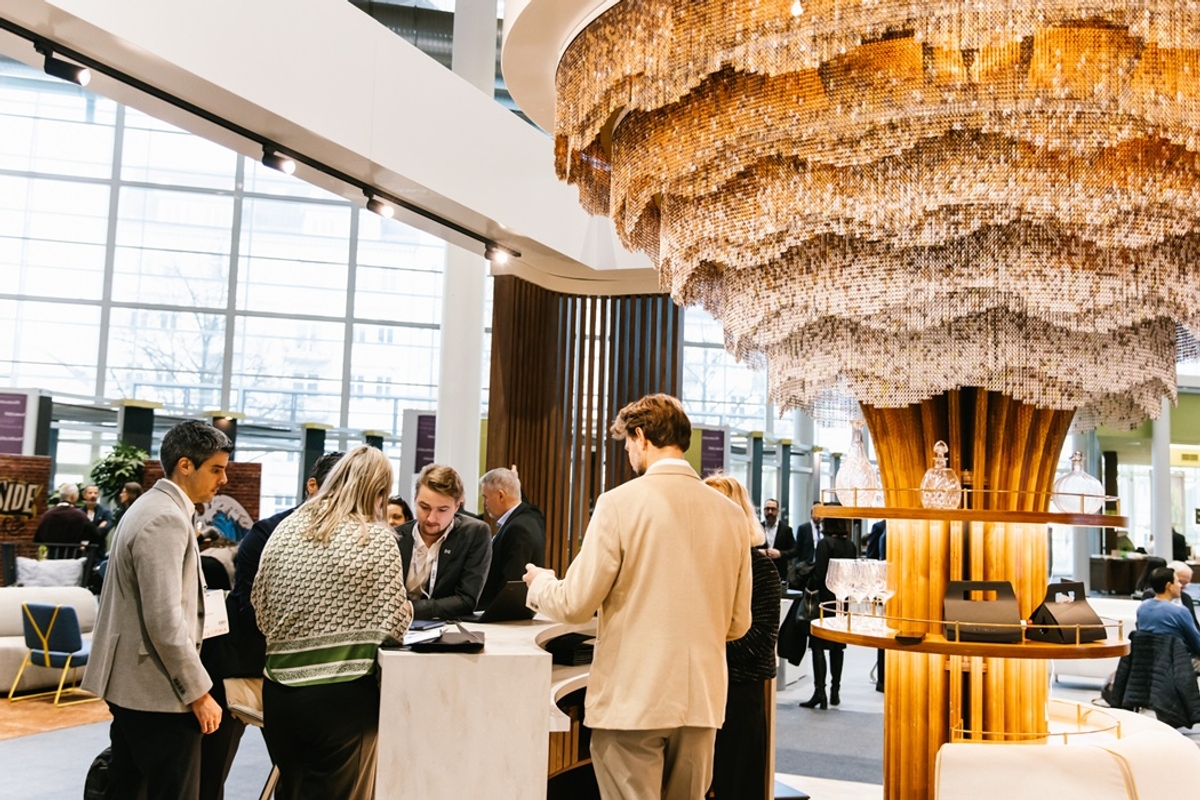

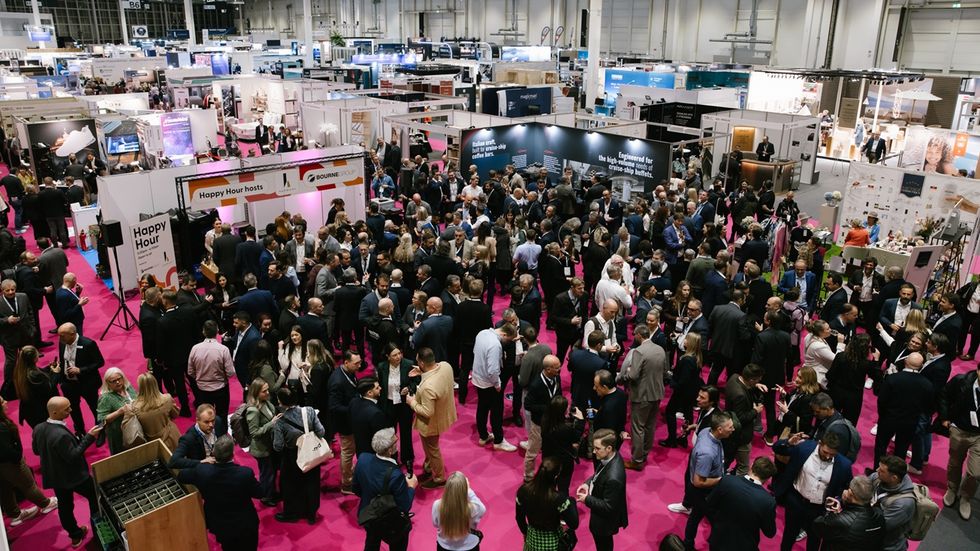 The show floor at CSI Europe 2026 will include more than 300 exhibitorsImage courtesy of Cruise Ship Interiors
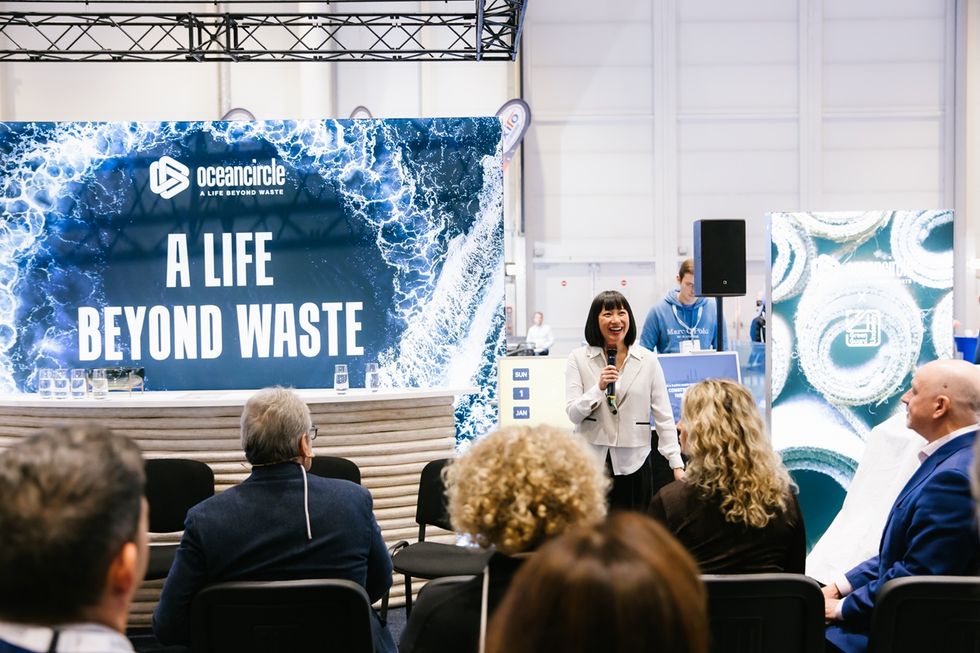 CSI Europe's progranme features the Sustainable Design Summit, with the 2026 event offering a working group on takeback schemesImage courtesy of Cruise Ship Interiors