Read in French: for local coverage and French museum news, visit our blooloop.fr French museum guide.
Paris may be home to one of the world's most visited museums, the Louvre, but France's top museums and cultural attractions can be found nationwide, not just in the capital.
From ancient caves and WWII sites to fine art and science exploration, the country has something to offer every museum fan.
In no particular order, here are some of our favourite museums and cultural attractions in France.
Musée National de Préhistoire, Les Eyzies
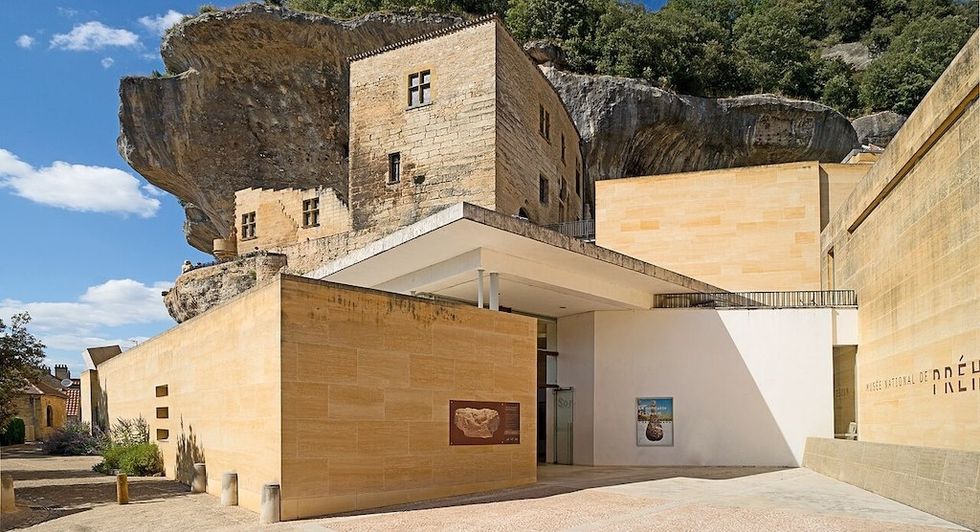
Musée National de Préhistoire is in the Vézère Valley UNESCO World Heritage Site, known for its Palaeolithic remains
Image credit Didier Descouens, CC BY-SA 3.0 via Wikimedia Commons
The Musée National de Préhistoire (National Museum of Prehistory) in Les Eyzies, Dordogne, was founded in 1918. Housed in the Château de Tayac, it added a new cliff-face extension in 2004, designed by Jean-Pierre Buffi.
It holds a collection of 6 million items.
It's located within the Vézère Valley museum site, a UNESCO World Heritage Site known for its Palaeolithic remains. The museum houses one of France's most important Palaeolithic collections, including the world's first collection of Palaeolithic art on engraved or sculpted blocks.
Exhibits feature stone tools, bone and ivory artefacts, life-size reconstructions of prehistoric man and extinct animals, and an understanding of human evolution over the last 400,000 years.
It is also close to some of the best-known cave art sites, Font-de-Gaume, Combarelles, and Lascaux.
Lascaux, home to 20,000-year-old cave art, had to be closed due to the damage human visitors were causing; visitors can see painstaking replicas of both the cave interior and the art at Lascaux II and Lascaux IV.
Musée du Louvre, Paris
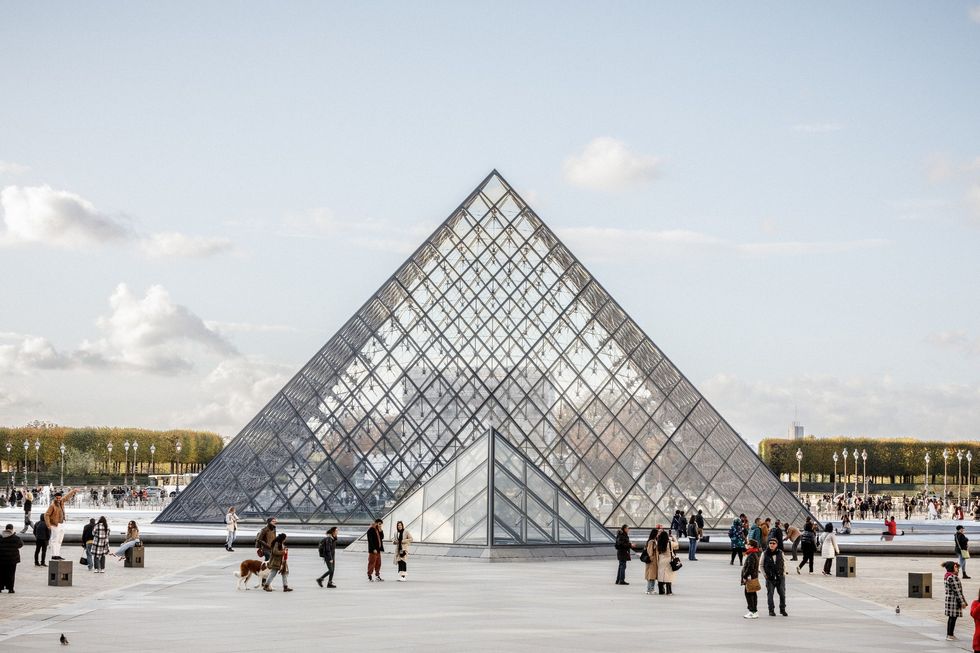
The Louvre in Paris is one of the word's most visited museums
One of the world's most popular museums, the Musée du Louvre is home to around 500,000 objects and displays 35,000 works of art in eight curatorial departments. The collection includes sculptures, objets d'art, paintings, drawings, and archaeological finds.
Famous highlights include the Mona Lisa and Venus de Milo.
The museum is housed in the Louvre Palace, originally built in the late 12th to 13th century, and a more recent addition, the iconic Louvre Pyramid, was designed by I. M. Pei.
The Louvre is designed to welcome around 4 million visitors annually, but hosted 8.7 million people in 2024. In 2026, the Louvre announced the architectural team for an expansion project, which includes a new entrance and a dedicated space for the 'Mona Lisa'.
The plan also involves refreshing the guest experience with new relaxation areas, restaurants and shops.
The museum faced challenges in 2025, including a high-profile jewellery theft, a water leak that damaged a 19th-century ceiling painting, a suspected ticket fraud plot, and staff strikes.
Musée d'Orsay, Paris
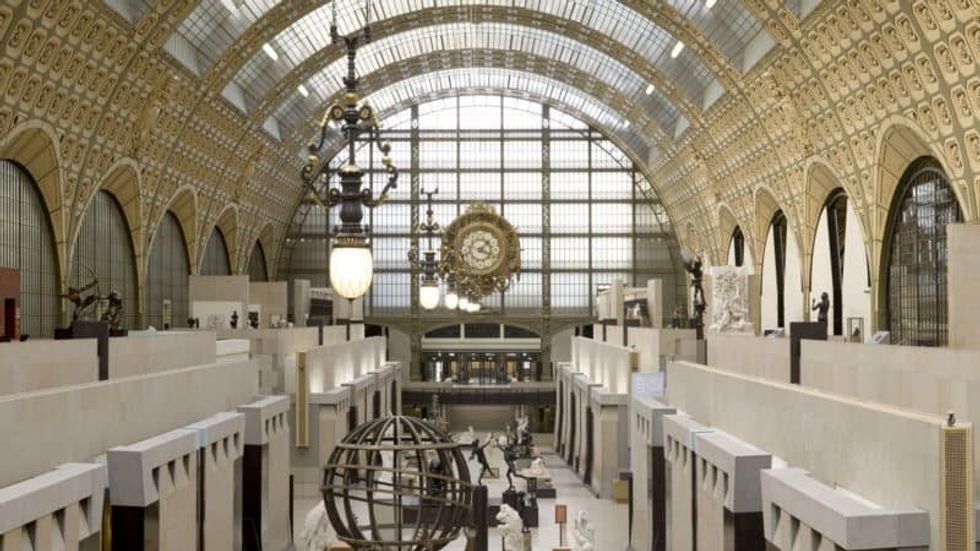
The Musée d'Orsay is located in a former railway station that dates back to 1898
Image credit Musée d’Orsay/Sophie Crépy
Another Paris-based museum on the list, the Musée d'Orsay is located in a Beaux-Arts railway station, the former Gare d'Orsay, which dates back to 1898.
The building, made of 12,000 tons of metal and covering 35,000 square metres, with glass roofs and glazed walls, was originally built for the 1900 Exposition Universelle. It was converted into a museum in 1977.
The museum's collection mostly consists of French art from 1848 to 1914. Visitors can find paintings, sculptures, furniture, and photography.
It holds the largest collection of Impressionist and post-Impressionist works, with artists such as Manet, Monet, Degas, Morisot, van Gogh, Renoir, Cézanne, Gauguin, Sisley, and Seurat. There are over 97,000 works in the collection, and the exhibition space spans 5,520 square metres.
In 2023, the Musée d'Orsay announced its first-ever virtual reality (VR) experience as part of a new Van Gogh exhibition. It partnered with Vive Arts on the VR experience, called 'La Palette de Van Gogh'.
Musée des Civilisations de l'Europe et de la Méditerranée (MUCEM), Marseille
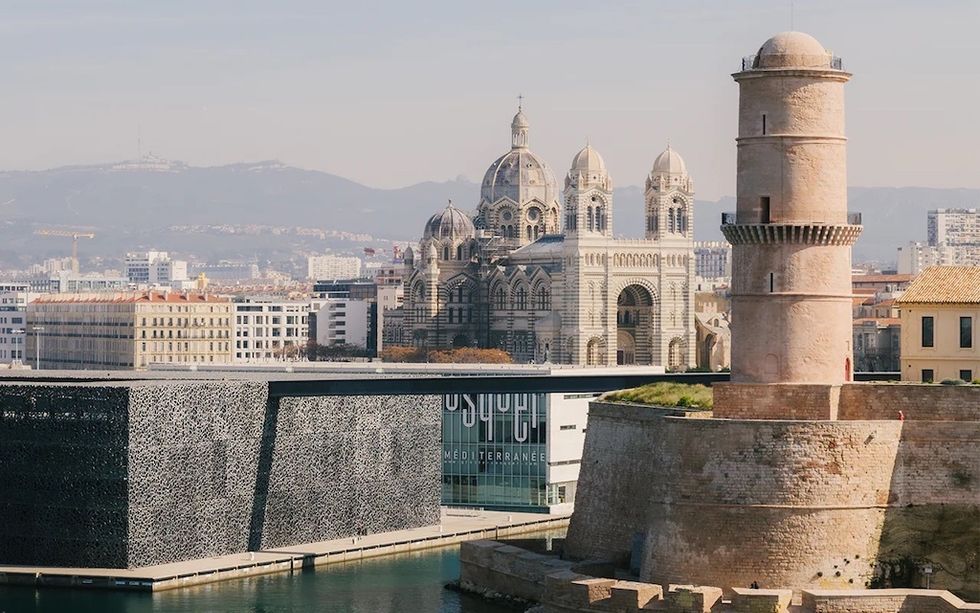
The Musée des Civilisations de l'Europe et de la Méditerranée (MUCEM) is housed in a cube, encased in a lattice shell of fibre-reinforced concrete
© Maxime Verret/Mucem
The Musée des Civilisations de l'Europe et de la Méditerranée (Museum of European and Mediterranean Civilisations) opened in 2013, coinciding with Marseille’s year as the designated European Capital of Culture.
Architects Rudy Ricciotti and Roland Carta designed the building.
This 15,000-square-metre (160,000 sq ft) cube is encased in a lattice shell of fibre-reinforced concrete. It features exhibits across two levels and includes an underground auditorium that seats 400. The ground floor houses the permanent collection and a bookshop, while the roof terrace hosts a restaurant.
The museum focuses on European and Mediterranean civilisations, and its permanent collection highlights historical and cultural exchanges across the Mediterranean basin.
It holds over 350,000 objects and a substantial documentary archive, totalling one million works, documents, and artefacts.
Through its exhibitions and cultural programmes, it presents a multidisciplinary perspective that integrates anthropology, history, archaeology, art history, and contemporary art.
Musée Christian Dior, Granville
Established in 1997 and located in the designer’s childhood home, the Christian Dior Museum offers insight into his personal history.
In 1987, to celebrate the brand’s 40th anniversary, Jean-Luc Dufresne, Christian Dior’s first cousin twice removed, organised the exhibition Christian Dior, the Other Himself at the Richard Anacréon Museum of Modern Art, where he served as curator.
This exhibition marked the beginning of efforts to establish the Christian Dior Museum.
The first pieces came from family and friends: Catherine Dior, the designer’s sister, donated photographs and documents, while Jacques Rouët, the House’s business manager, contributed “Monsieur Dior’s” good-luck star, last diary, and a watch.
Today, its public collections include approximately 3,000 objects and documents.
Each year, the museum hosts a themed exhibition offering a new perspective on Christian Dior’s universe. In 2026, the exhibit titled Christian Dior, Memories of Childhood examines how Dior’s childhood memories of Granville have influenced his fashion and perfume designs.
Château de Versailles, Versailles
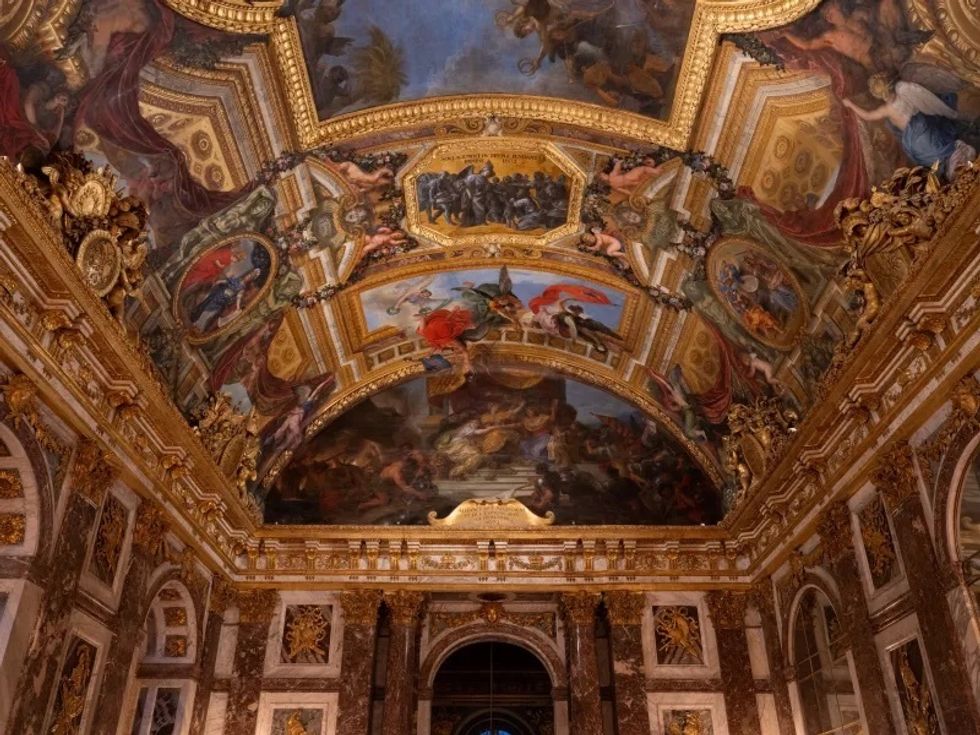
A project to restore elements of the iconic Hall of Mirrors at Château de Versailles concluded in 2026
© Château de Versailles / T. Garnier
One of the country's most well-known cultural sites, the Palace of Versailles was the residence of the French kings Louis XIV, Louis XV, and Louis XVI.
Originally built by Louis XIV to celebrate the French monarchy, the palace is regarded as a prime example of French classical architecture. It had a significant impact on European architecture and decorative arts throughout the 18th and 19th centuries.
It spans approximately 63,154 square meters and features around 2,300 rooms, roughly 1,000 of which belong to the National Museum of the History of France.
The Palace of Versailles' collections, with over 60,000 works, span a wide period and offer a chronological overview of French history from the Middle Ages to the late 19th century.
Designed to provide historical and iconographic insights into key figures and events shaping France's history, the collections mainly consist of sculptures and paintings from the 16th to 19th centuries. These include originals, copies, specially commissioned works, and regular acquisitions.
In 2023, a major exhibition, Louis XV, Passions of a King, used projection mapping to enhance the iconic Passemant astronomical clock.
Cité du Vin, Bordeaux
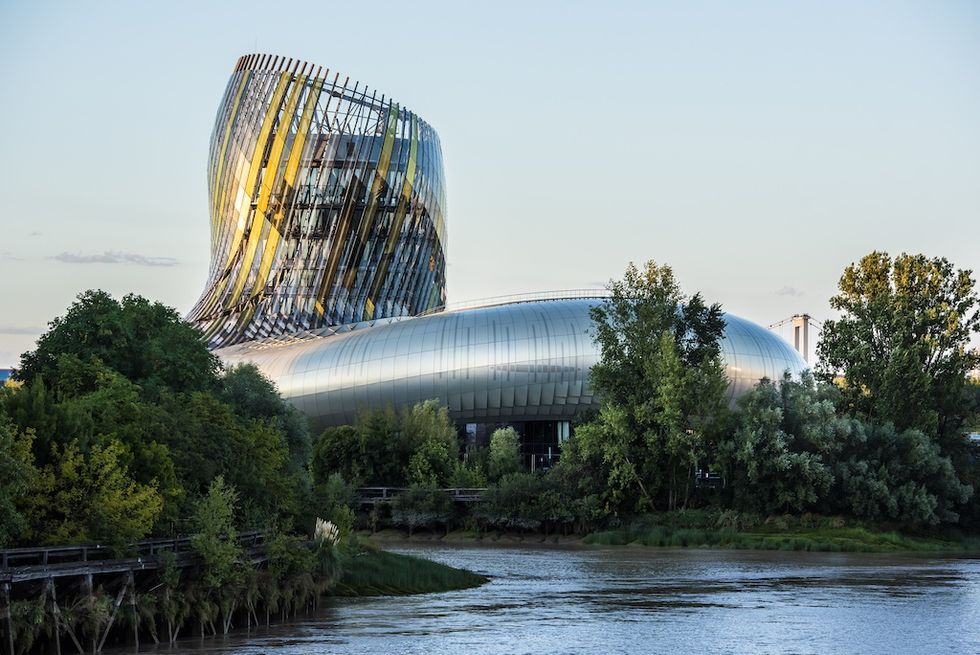
Cité du Vin hosts exhibitions, talks, film screenings and seminars all around the theme of wine, as well as running tastings
© Photo Anaka/Cité du Vin/XTU architects
Cité du Vin, opened in 2017, features exhibitions, shows, film screenings, and academic seminars focused on wine themes.
It is operated by the Foundation for Wine Culture and Civilisations, a charitable organisation dedicated to preserving, celebrating, and promoting wine heritage.
The permanent exhibition guides visitors through the global world of wine, spanning from antiquity to today across five continents, featuring interactive and multisensory displays.
A ticket also grants access to Belvédère on the 8th floor, offering a view of Bordeaux and its surroundings while guests sip a glass of wine from vineyards worldwide (from a regularly refreshed selection) or enjoy a glass of grape juice.
Open in 2026, Via Sensoria is a temporary sensory tasting experience. It offers a one-hour journey through pavilions themed around the four seasons, blending artistic displays with seasonal drink pairings.
In 2020, the museum announced plans to expand to Beijing.
Château de Chantilly, Chantilly
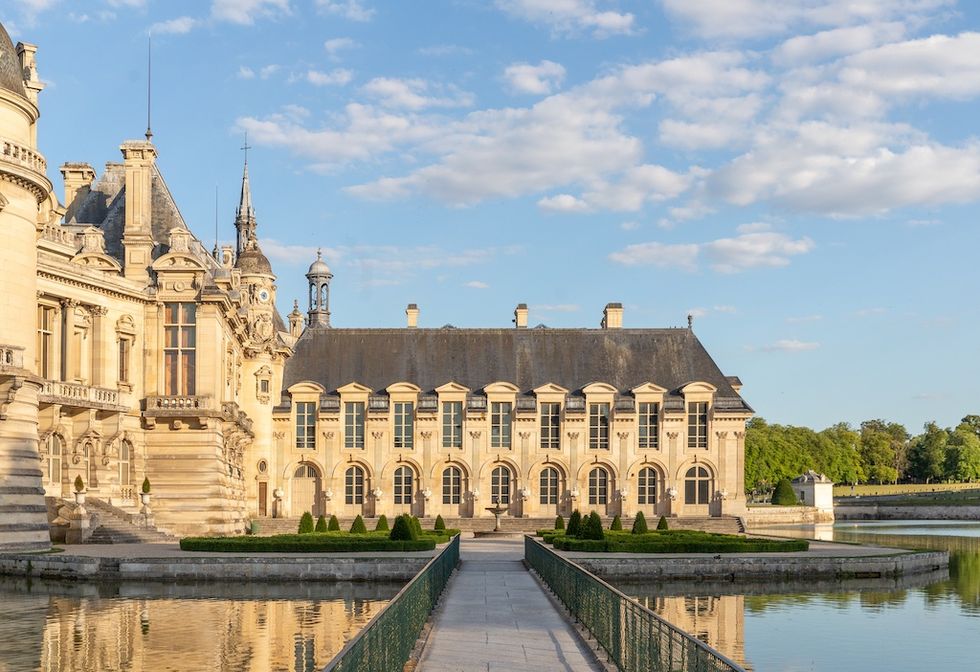
The Musée Condé at Château de Chantilly holds one of France's leading collections of paintings
© Thibault Charpentier
The Château de Chantilly is a historic French castle made up of two linked buildings: the Petit Château, built around 1560, and the Grand Château, which was destroyed during the French Revolution and rebuilt in the 1870s.
Its art gallery, the Musée Condé, hosts one of France's top collections of paintings, mainly featuring French art and illuminated manuscripts from the 15th and 16th centuries.
The collection includes works by Botticelli, Raphael, Guercino, Mignard, Fra Angelico, Van Dyck, Reynolds, and Delacroix, among others.
The Petit Château library houses over 1,500 manuscripts and 17,500 printed volumes, including more than 700 incunabula and approximately 300 medieval manuscripts.
Notable items in the museum's collection include the Chantilly codex, the primary manuscript of ars subtilior music, and the library of the Emirate of Abdelkader, a 19th-century Sufi emirate in Algeria.
Cité des sciences et de l'industrie, Paris
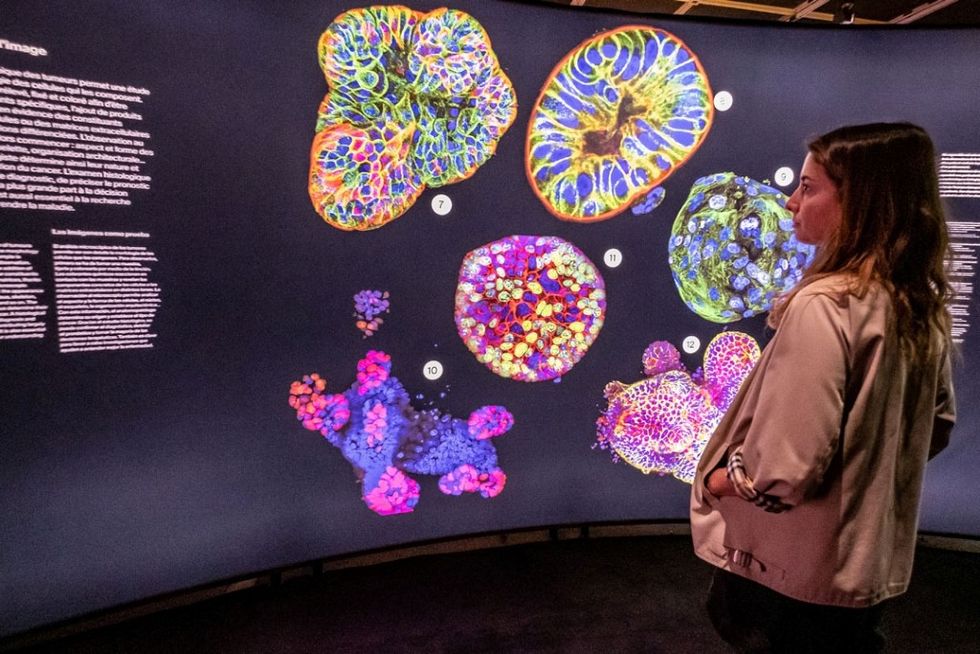
A previous exhibition, Cancer, at The Cité des Sciences et de l'Industrie
Image courtesy of Universcience
Cité des sciences et de l'industrie (City of Science and Industry) is a science museum in Paris featuring a planetarium, a submarine, an aquarium, an IMAX theatre, and dedicated areas for children and teenagers.
Its mission is to promote scientific and technological knowledge among the public, especially young people, and to encourage public interest in science, research, and industry.
The museum is operated by Universcience, established in 2010 when the Cité des sciences et de l'industrie merged with the Palais de la découverte, another Parisian science museum.
Beyond simply making science accessible, Universcience aims to communicate and share knowledge in a more innovative, engaging way. To achieve this, it brings all facets of scientific and technical culture to life, encompassing cultural, educational, and artistic elements. and About Love
Recent touring exhibitions from Universcience include Border, Dance, Crowdology and About Love
Château du Clos Lucé, Amboise
The Château du Clos Lucé was constructed in 1471 and has been owned by several notable figures, including French king Charles VIII and Leonardo da Vinci.
Da Vinci spent his final years here until his death on 2 May 1519. Since 1855, it has served as a museum dedicated to his life, work, and legacy.
Visitors can explore Leonardo da Vinci's bedroom, view a fresco of the Annunciation painted by his workshop students, and see an artist's workshop, which replicates the busy atmosphere of a 15th-century bottega, a traditional multidisciplinary workshop.
Additional attractions include a life-size hologram of Cardinal Louis of Aragon’s visit to Leonardo on October 10, 1517, at Clos Lucé, along with a collection of 40 models created with IBM based on da Vinci's sketches and 6 detailed 3D animations.
Outside, 20 life-sized models inspired by Leonardo's drawings are on display.
Visitors can climb onto the assault tank, spin the propeller of the aerial screw, turn the paddle wheel or Archimedes screw, and operate the squirrel wheel to learn how these inventions work.
Musée International de la Parfumerie, Grasse
Founded in 1989, the International Perfume Museum is situated in Grasse, an important location in the history of luxury perfumery. It showcases France's perfume-making tradition, offering visitors insights into the history of perfume craftsmanship and major perfume houses.
Exploring the global technical, aesthetic, social, and cultural evolution of scents, the museum adopts an anthropological perspective and presents fragrances in all their facets: raw ingredients, production, industry, innovation, trade, design, and uses.
The museum is divided into five sections, each covering a specific historical era and modern themes: elegance and classicism, magic and dynamism, frivolity and hygiene.
By exhibiting objects and demonstrating various industrial techniques, the museum chronicles the history of perfumes, soaps, makeup, and cosmetics over the last four thousand years.
See also: The smell of success: how scent became the must-have interpretative tool
Musée Narbo Via, Narbonne
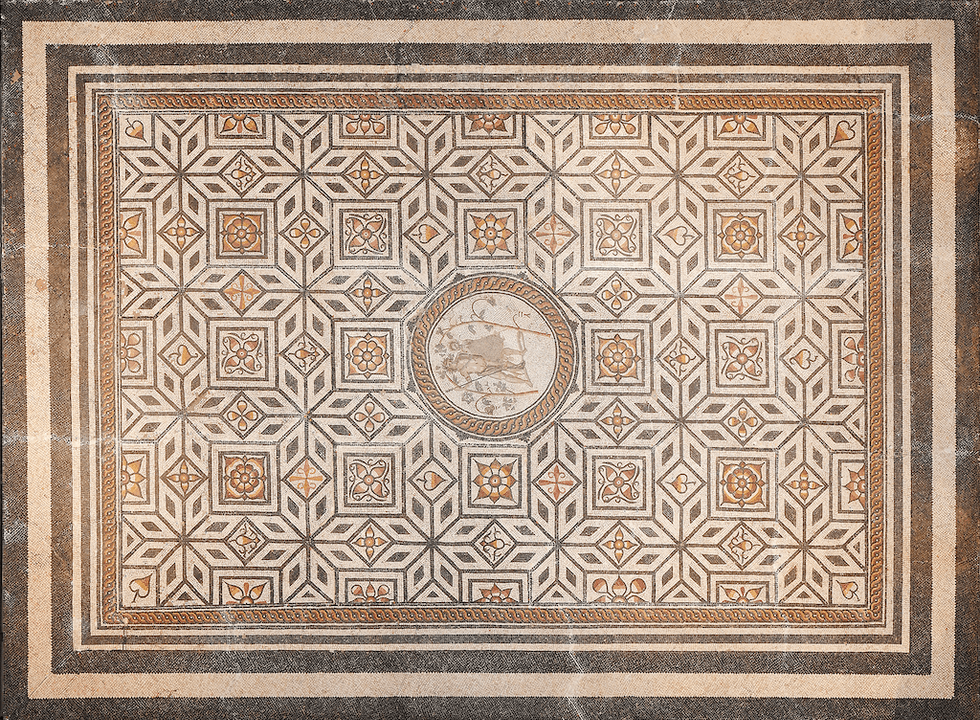
Narbo Via holds a collection of Roman antiquities, including objects excavated from Narbonne's ancient port sites
Image credit Arnaud Späni © Narbo Via
Narbo Via, a museum of Roman antiquities that opened in 2021, consolidates collections from two Narbonne museums: the Lapidary Museum in Notre-Dame de Lamourguier church and the Archaeological Museum in the Archbishop's Palace.
It also features works previously stored or recently excavated from Narbonne's ancient port sites. Exhibits cover the period from the city's founding as the colony of Narbo Martius in the late 2nd century BC to 462 AD, when the Visigoths took control.
Narbo Via provides a wide range of activities, including guided tours of its permanent collection with 950 works and objects, temporary exhibitions, workshops, film screenings, festive evening events, behind-the-scenes access to the museum's storage spaces, and visits to nearby archaeological sites.
It also functions as a centre for archaeological research, featuring a restoration workshop for ceramics, mosaics, painted plaster, and stone fragments; a study room for collections and artefacts; and a 192-seat auditorium used for conferences and symposia.
Musée des Beaux-Arts de Dijon, Dijon
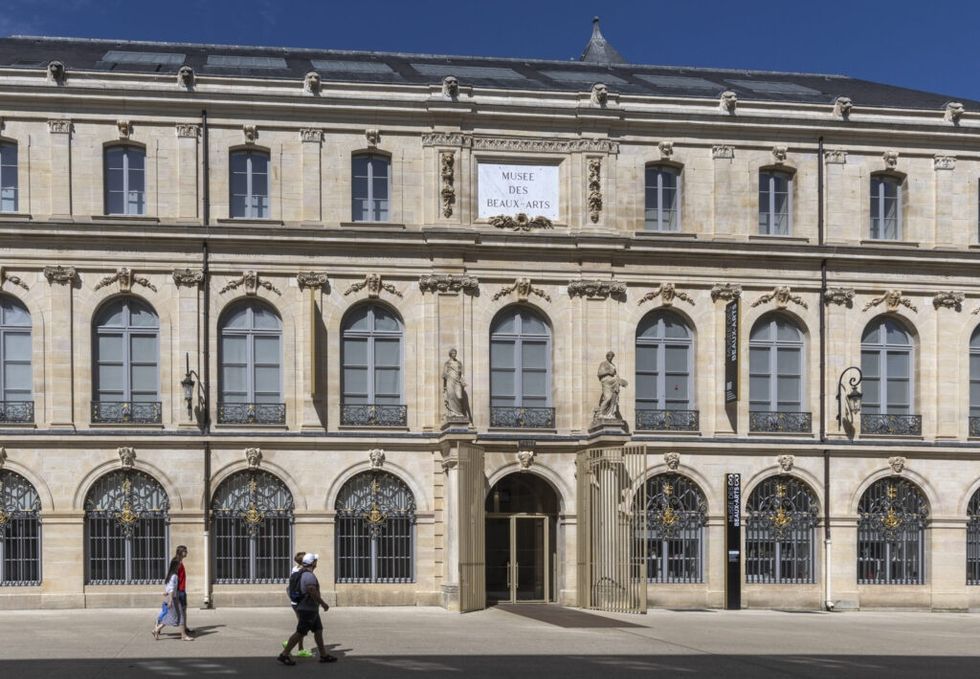
Musée des Beaux-Arts de Dijon is one of the oldest museums in France
Image courtesy of Musée des Beaux-Arts de Dijon
The Musée des Beaux-Arts de Dijon (Dijon Museum of Fine Arts) is among the oldest in France, as its official creation dates back to 1799. It holds a collection of over 140,000 artworks.
Housed in part of the Palace of the Dukes and Estates of Burgundy, a complex built from the 14th to the 19th century, the museum now offers nearly five thousand square meters of exhibition space.
In the mid-18th century, the east wing was converted into the museum's first home. Its core collection gradually expanded through revolutionary seizures.
Between 1804 and 1812, the collection grew further with the deposit of 72 paintings from the Central Museum of Arts, now known as the Louvre. Throughout the 19th century, the museum continued to expand through strategic acquisitions, donations, and bequests from art enthusiasts and artists.
Contemporary art was added only in the mid-20th century, when Pierre and Kathleen Granville donated over a thousand objects to the city. Today, the museum's holdings include works by prominent contemporary artists such as Yan Pei-Ming, Fabienne Verdier, and Claude Garache.
Musée des Confluences, Lyon
The Musée des Confluences is a science centre and anthropology museum. It opened in 2014 and holds collections spanning five centuries of history. Its 3.5 million artefacts are a significant part of French public collections, covering natural science, human science, and science and technology.
Its exhibitions narrate humanity's story and our role in a living world, exploring universal themes such as the origins of Earth and life. The museum hosts 3 or 4 temporary exhibitions annually, alongside permanent exhibitions spread across 4 rooms.
Designed by the Austrian agency CoopHimmelb(l)au, the museum lacks a traditional main façade. Instead, it features many facets that, from different angles, form a dynamic and constantly changing outline.
It is named for its location, at the confluence of the Rhône and the Saône.
Centre Pompidou-Metz, Metz
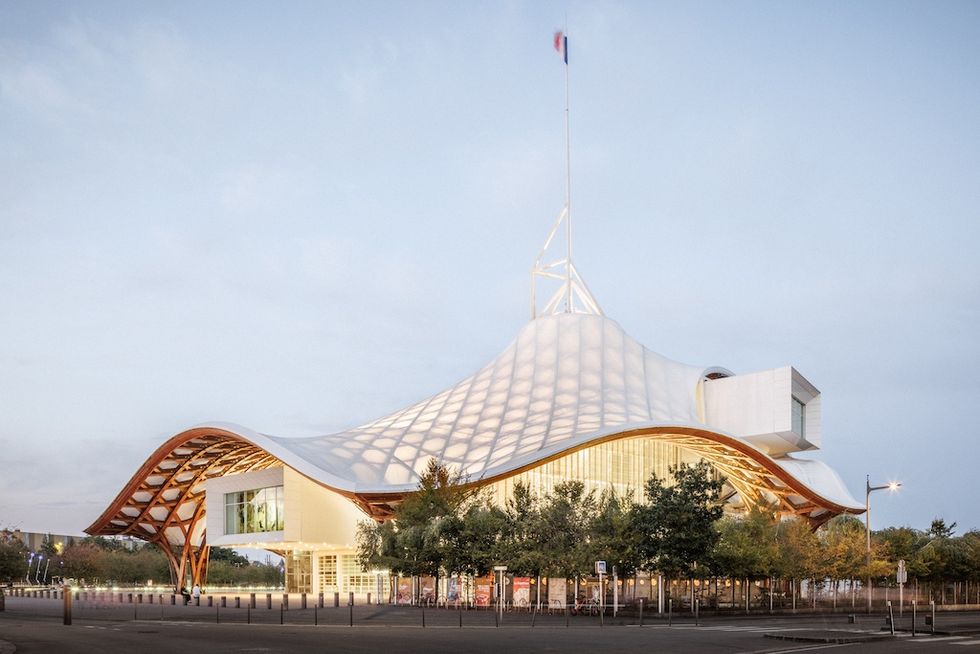
Centre Pompidou-Metz is a modern and contemporary art museum, and a branch of the Pompidou Centre in Paris
© Shigeru Ban Architects Europe et Jean de Gastines Architectes, avec Philip Gumuchdjian pour la conception du projet lauréat du concours / Metz Métropole / Centre Pompidou-Metz / Photo : 11H45 / Florent Michel
Opened in 2010, the Centre Pompidou-Metz is a modern and contemporary art museum.
It is a branch of the Pompidou Centre in Paris, showcasing both semi-permanent and temporary exhibitions drawn from France's National Museum of Modern Art, which houses the largest collection of 20th- and 21st-century art in France.
With 5,000 square metres of space, it is the biggest temporary exhibition venue outside Paris in France, comprising three galleries, a theatre, and an auditorium.
From architects Shigeru Ban and Jean de Gastines, the building features a large hexagonal layout intersected by three galleries. It centres around a 77-meter-high spire, commemorating the year of the Centre Pompidou's founding in Paris (1977).
Musée des Arts et Métiers, Paris
The Musée des Arts et Métiers (Museum of Arts and Crafts) is an industrial design museum located in Paris, housing the collection of the Conservatoire national des arts et métiers, established in 1794 to preserve scientific instruments and inventions.
It contains over 80,000 objects and 15,000 drawings, with around 2,500 on display in Paris. The remaining items are stored in Saint-Denis.
The museum's visitor route displays this collection in seven sections: scientific instruments, materials, construction, communication, energy, mechanics, and transportation.
It guides visitors through one of the most unique sites: the former priory of Saint-Martin-des-Champs, which was transformed during the French Revolution into a "temple" of technology.
Highlights include Jacques Alexandre Charles's physics cabinet, Antoine Laurent de Lavoisier's laboratory, Louis Ferdinand Berthoud's clock collection, Jacques Vaucanson's loom, the Chappe telegraph, Cugnot's steam carriage, and Clément Ader's Avion n° 3.
Memorial de Caen, Caen
The Mémorial de Caen is a museum and war memorial located in Caen, Normandy, dedicated to commemorating World War II and the Battle for Caen.
The museum provides an in-depth look at the Normandy Landing, D-Day, and World War II, covering both regional and global perspectives. Visitors will also examine the geopolitical changes of the 20th century and Europe’s strategies for restoring peace after the war.
The museum was opened in 1988, and its expertise and cultural, educational, and scientific standards are now recognised worldwide.
The façade is inscribed with lines by local poet Paul Dorey: “La douleur m’a brisée, la fraternité m’a relevée, de ma blessure a jailli un fleuve de liberté” (“Pain broke me, fraternity relieved me, from my wound sprang a river of freedom”).