As we enter the new year, we are seeing bleak reports about the effects of inflation and overall consumer sentiment in the US. At the same time, new data from Reuters indicates growth in Q3 retail spending and a spike in early holiday shopping (4.3% as reported by the AP and PBS NewsHour).
For those of us in the cultural attraction retail sector, the fact that in Q3, e-commerce sales accounted for about 15.8-16.4% of total retail sales, as reported by the US Census Bureau, suggests that a significant percentage still comes from traditional “brick and mortar stores.”
Additionally, the National Retail Federation’s 2025 outlook predicted that experiential retail spend would grow 6–8% faster than overall retail growth through 2027, particularly in outlets linked to culture, sustainability, and education.
Delivering experiential retail to our cultural institution partners is at the heart of Event Network’s operational strategy, and every store remodel is an opportunity to define, ignite, and extend an attraction’s experience.
With that in mind, here are five insights taken from our recent remodel of the store at The Franklin Institute (TFI) that might spark ideas to make your retail operation more experiential to capitalize on this exciting retail trend.
Designing for continuity
From the very beginning, the goal was to create a store experience that felt like a seamless extension of the reimagined exhibits and of the timeless mission of The Franklin Institute.
To extend a guest experience into a retail space, a store design team should begin by studying the attraction’s exhibits, aesthetic, color palette, materials, textures, and guest flow.
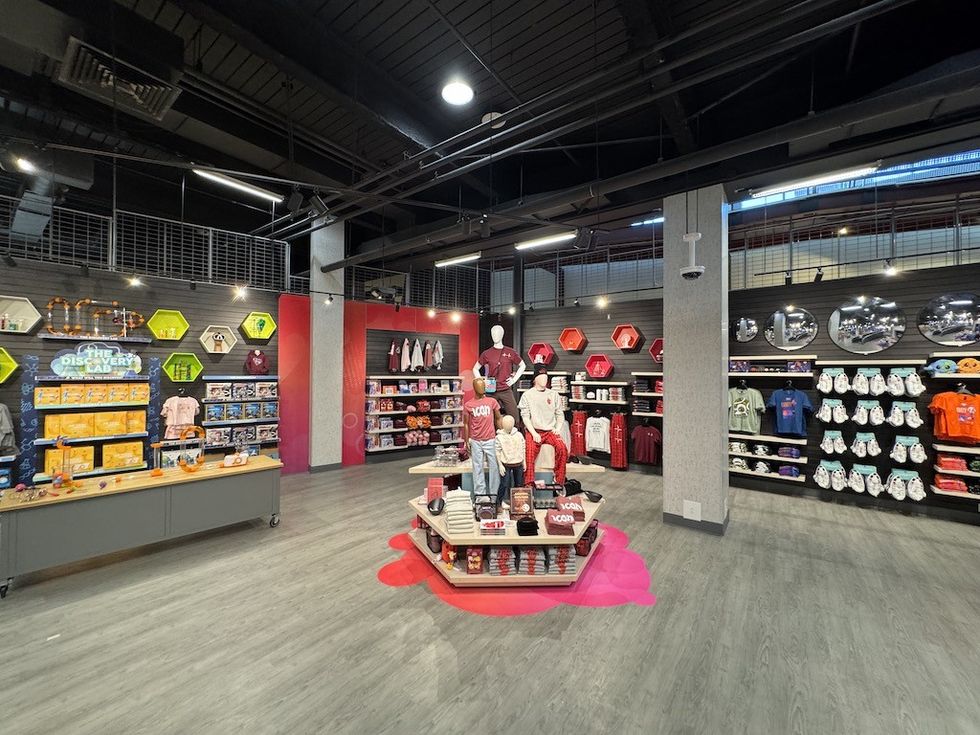
Try to experience your attraction as a guest would, from ticketing to exit. What are the iconic moments throughout the journey where guests connect? These are the places and themes that should be represented within the store.
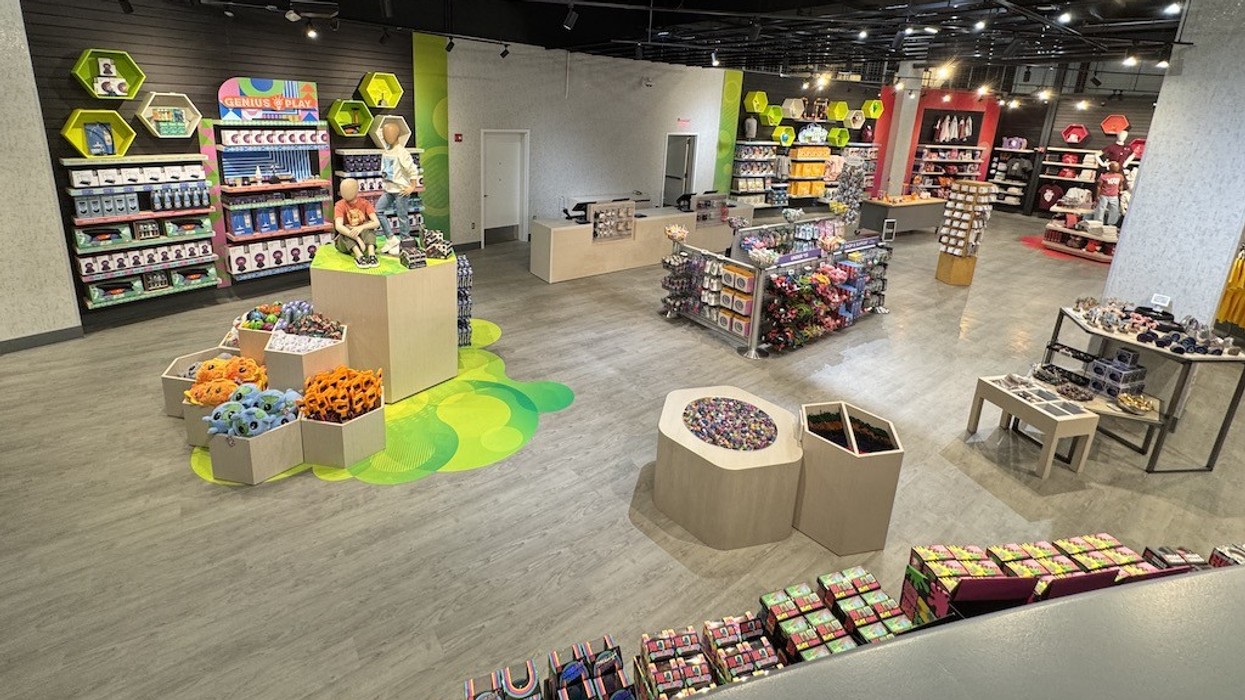
For The Franklin Institute, our team spent many days exploring the museum and hours collaborating with the TFI team to develop a plan to create specific zones within the store that mirrored key exhibit themes: space, the human body, the brain, and interactive science play.
Each area has its own color identity yet feels part of a unified visual language. These subtle cues guide guests through a progression of experiences, much like TFI’s galleries do.
Solving for space and sightlines
Designing a more experiential retail store can sometimes require significant structural changes. For The Franklin Institute project, our designers observed that the existing store layout included a large central wall concealing a staircase. This feature disrupted visibility and flow.
Removing it required extensive coordination with engineers and TFI’s facilities team, but doing so unlocked the potential for a fully open floor plan.
It's a key element of an immersive retail space to establish sightlines that extend as far back into the store as possible. This gives guests a wider field of view, allowing them to see which items might interest them.
Review your store’s layout to identify whether tables, mannequins, or even your cash wrap are interrupting the guest journey. Clear sightlines and a more natural circulation path support operational efficiency and guest engagement, increasing conversion rates.
Translating identity into retail
Some call it the “vibe,” others call it the “brand.” Either way, there is an identity behind each of the retail stores we operate.
Ensuring that your store reflects your brand begins with aligning your content to the icons featured within your attraction. Then the real fun begins - focusing on the details that truly bring the space to life and connect to the identity of your attraction and the community where it resides.
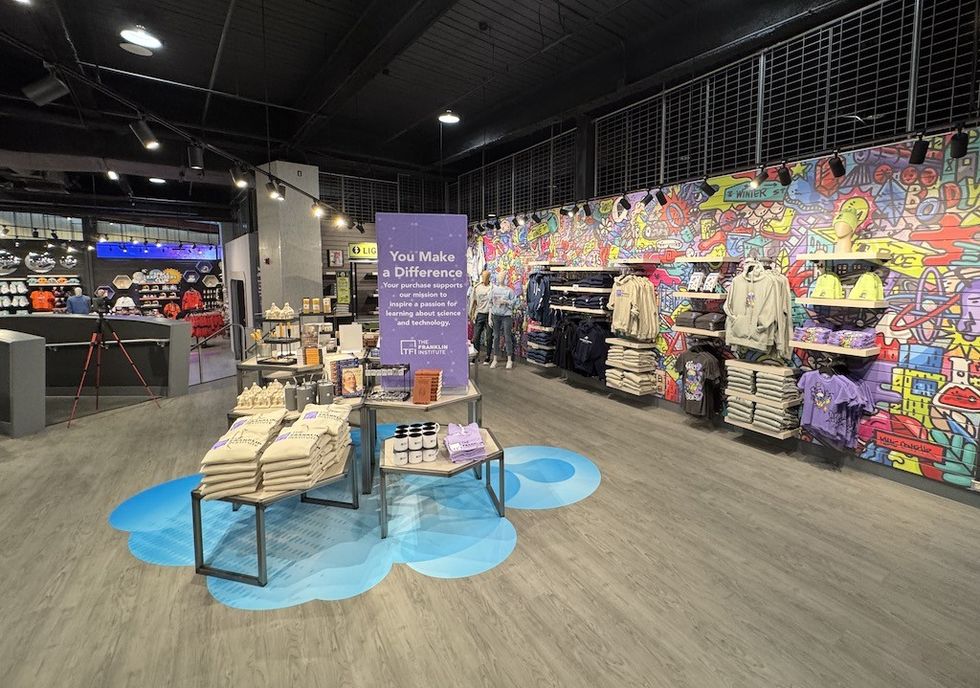
The Franklin Institute is located within a vibrant cultural and artistic community in Philadelphia, so as part of our remodel, we enlisted the help of local Philadelphia muralist Kyle Confehr to create an iconic piece to draw guests into the store.
It aligns beautifully with the color scheme of the store environment and provides a stunning backdrop for our merchandise.
Look at each fixture in your store, the color palette, and the visual elements. Do they align with the spirit of your attraction? Each element should serve both a narrative and a practical purpose, creating an atmosphere that feels cohesive, visually appealing, and distinctly on-mission.
Designing for flexibility and fllow
A key tenet of experiential retail is adaptability.
The Franklin Institute’s exhibits will evolve or change over time, so the store was designed to evolve with them. Modular fixtures, graphics that can be easily changed, and reconfigurable presentations allow future updates without disrupting the guest journey or requiring a large additional investment or remodel.
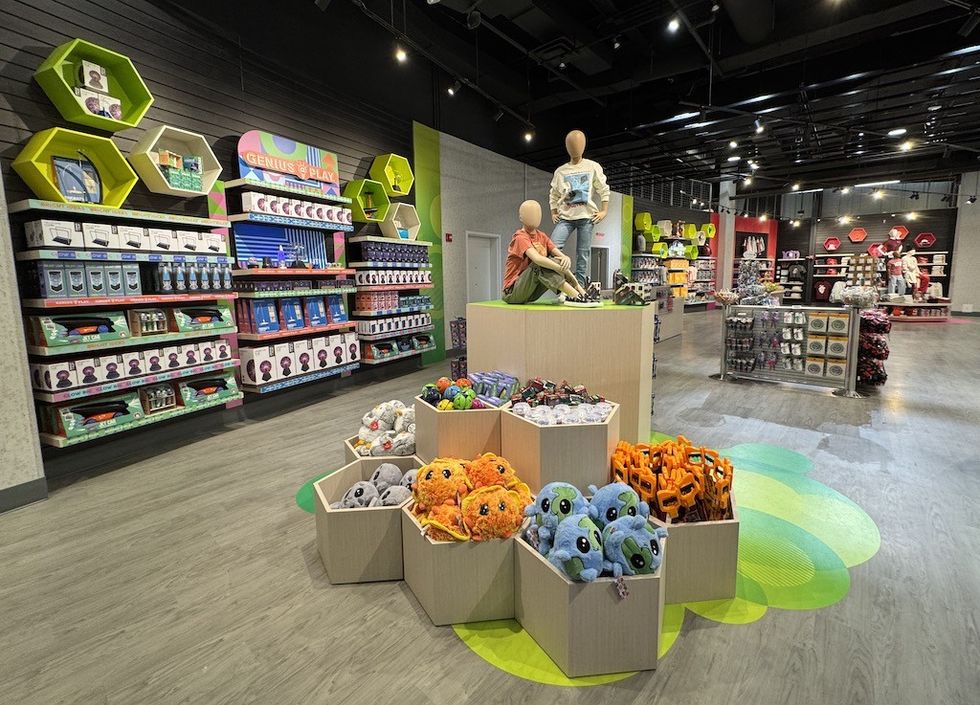
Changing an entire store layout is inefficient, so examine which areas offer the best opportunities for adaptability. Look at your wall displays and feature tables near the front of your store; these are prime locations for seasonal, local, or exhibit-specific products.
Some stores have large window displays that can generate interest, especially for museum members or frequent visitors who are always looking for something new.
The placement of the cash wrap is also key to delivering a guest-centric experience.
At The Franklin Institute, we repositioned the checkout area from the entrance to the end of the circulation path, where it now encourages a full tour of the store, inviting guests to explore freely before reaching the point of purchase.
Creating moments of connection
In trade and academic writing, “experiential retail” stores are defined as being designed for “memory and meaning.” Or, simply put, making a connection.
At The Franklin Institute, this means having fun with functionality. Within the store, signature product areas are designed not just to encourage purchases but to spark curiosity and delight.
For example, a “space station” installation featuring astronaut ice cream transforms a simple merchandise display into an immersive storytelling moment.
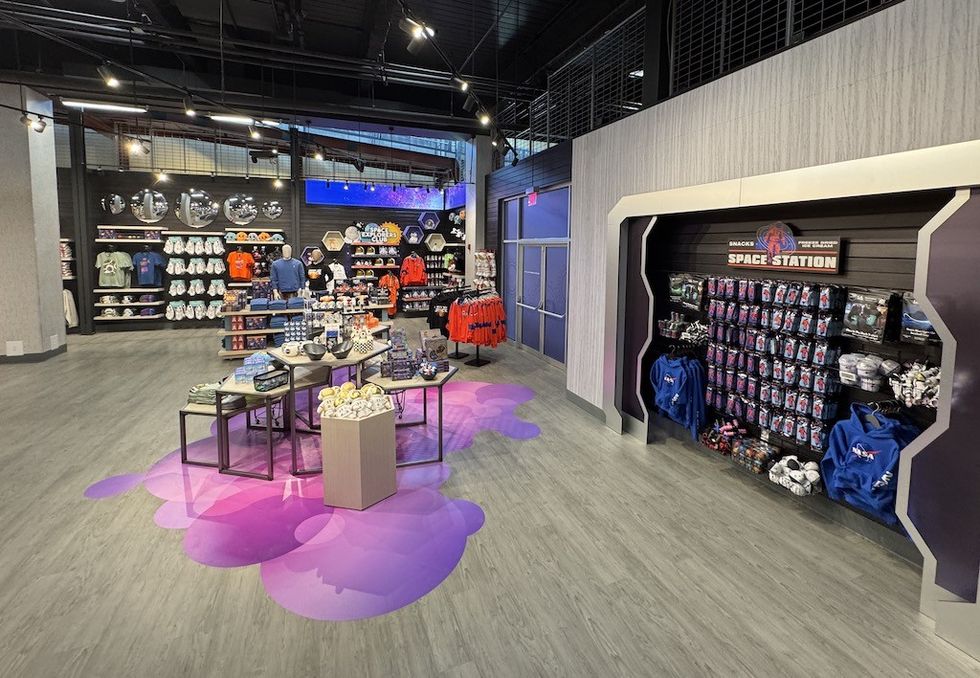
These moments of connection are core to Event Network’s design philosophy. They elevate retail beyond just a transaction, inviting guests to learn, play, and engage emotionally with a brand or mission.
For cultural institutions, this approach strengthens the link between commerce and cause. It makes every purchase part of the story of discovery.
Think about areas of your store that could spark joy, whether that’s how a mannequin is accessorized or what kind of vessel you use to display products. Moments of connection are created when you find an aspect of your merchandising that works well and amplify it with creativity.
By examining your store through the lens of an experiential retail designer, you can begin to tap into what consumers seek and can only get from the in-person “brick and mortar” shopping experience.