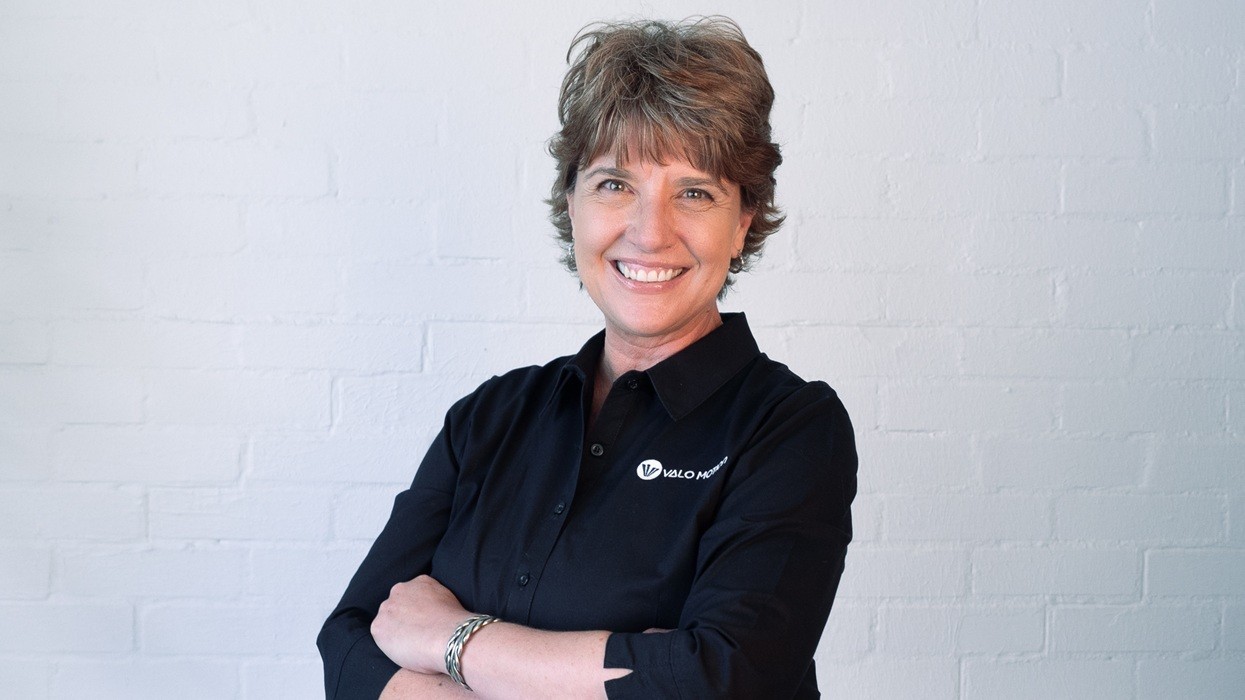
Maris Ensing, founder and CEO of Mad Systems Inc., the award-winning audiovisual and interactive system designer and integrator, has delivered a governance playbook as the attractions industry continues to deploy AI at unprecedented speed.
The World Model: Governed AI for Hyper-Personalized Venues is a vendor-neutral framework that any operator, designer, or consultant can adopt and adapt, regardless of their platform.
In AI research, the phrase “world model” refers to an internal model that helps an intelligent system represent its environment and predict what may happen next, which is central to planning and safe autonomy. Yann LeCun has argued for architectures that include predictive world models as a path toward more capable machine intelligence.
In this book, the concept is applied to physical venues: a continuously updated operational representation of spaces, flows, constraints, and policies, so AI-driven personalisation remains coherent, governable, and operable at scale.
Meeting an industry need
There are books on general AI governance and tourism AI, and one journal article on museum governance, but until now, no published book has specifically focused on AI governance in the visitor attractions sector, including theme parks, museums, cruise ships, experience centres, and the wider industry.
Every major operator in the sector is now experimenting with AI, from real-time visitor recognition and adaptive media to AI-powered tour guides and predictive crowd management.
The technology is advancing faster than anyone anticipated, yet the governance framework needed to deploy it responsibly, legally, and at scale has not been published as a sector-specific playbook.
On 10 February 2026, The World Model: Governed AI for Hyper-Personalized Venuesbecomes the first book to address that gap. It is written by Ensing, a 40-year tech veteran and CEO of Mad Systems, an Orange County company which has patented AI-driven personalisation technology.
Why now?
According to Ensing, three forces are converging that make governed AI an existential priority for the attractions sector.
Firstly, regulation is no longer impending – it is now in force. The EU AI Act officially applies and generally bans real-time biometric identification in public spaces. High-risk AI systems must undergo compliance assessments, human oversight, and incident reporting.
Saudi Arabia’s Personal Data Protection Law came into effect in September 2024. China’s AI rules are among the most detailed worldwide. All major markets in the industry are tightening regulations, with a clear trend towards mandatory transparency, consent, accountability, and human oversight.
In addition, mega-projects are currently being designed, such as Expo 2030 Riyadh, Disney’s multi-billion-dollar expansion programme, Universal’s Epic Universe, and the broader Saudi Vision 2030 investments in entertainment.
These projects will operate for decades, and their AI architectures will be extraordinarily difficult and expensive to retrofit. The governance decisions made in the next 18 months will define best practice for a generation.
Finally, visitor expectations have outpaced venue capabilities. Guests used to personalised streaming, adaptive smart homes, and AI assistants on their phones now see static, one-size-fits-all venue experiences as increasingly outdated.
However, offering personalisation without proper governance involves ethical and legal issues that are fundamentally different from a misguided product recommendation on a website.
A framework, not a product
Ensing explains that The World Model is not a manual for any specific vendor’s technology.
While his experience deploying Mad Systems’ patented AI stack provides the practical foundation for the book, the framework itself is described in patent-safe, vendor-neutral terms. It is designed to work with any technology platform, recognition modality, and existing AV and IT infrastructure.
The book’s main argument is that governed AI needs three layers working together as a single, integrated system, not as separate workstreams.
The physical layer includes the venue’s sensors, displays, audio systems, and network infrastructure, while the intelligence layer comprises the AI engines that interpret visitor data, adjust content, and provide personalised experiences in real time.
Lastly, the governance layer comprises consent protocols, data lifecycle policies, bias-detection mechanisms, human override procedures, and regulatory compliance frameworks that oversee and guide all AI activities.
Any organisation treating governance as separate from engineering is set up to fail, says Ensing. The World Model argues these layers must be integrated from the start and demonstrates how to do so.
The book covers the full lifecycle of a governed AI deployment in a physical venue. It starts with the World Model framework, explains how consent-based recognition differs from surveillance, and details how AI governance layers interact with venue infrastructure.
It then covers scoping AI projects, selecting and integrating recognition modalities, managing multilingual and accessibility needs at scale, and measuring outcomes beyond footfall metrics.
The book also covers what happens when things go wrong: bias detection, model drift, consent edge cases, human override protocols, and incident response procedures.
These chapters are unique in this industry because they require deep knowledge gained from managing the deployment of governed AI systems in live environments, with actual visitors and under real regulatory oversight.
The book distils this understanding into practical guidance that any operator or integrator can follow, regardless of which vendor’s technology is involved.
A complete toolkit
The World Model is the second of two companion volumes.
The first, Hyper-Personalized Venues: A CEO’s Guide to AI, Privacy, and World Models, published on 2 February 2026, targets the C-suite. It argues for governed AI as a competitive advantage, outlining risks, strategic opportunities, and key questions for boards and executives.
The World Model builds on the CEO’s Guide and targets CTOs, technical directors, experience designers, AV integrators, engineering consultants, and project managers who build and operate these systems.
The two books complement each other, addressing the gap between boardroom enthusiasm and operational reality. The CEO’s Guide secures the mandate, while the World Model provides the execution plan.
To mark the launch, the Kindle edition of The World Model will be available at the lowest price permitted by Amazon for the first 72 hours after publication on 10 February.
Ensing is clear about the reason: “This framework belongs to the industry. I want it in as many hands as possible, as fast as possible. We do not have the luxury of waiting.”
Both are available on Amazon in Kindle and paperback formats.
Available to all
Ensing says:
"The attractions industry has absorbed every previous wave of technology – from analogue AV to digital projection, from static exhibits to interactive media – by adopting capability first and governance later. Every time, the industry paid for the delay in costly retrofits, reputational damage, and lost opportunity.
"AI is different. The capability is more powerful, the data more sensitive, the regulatory environment more aggressive, and the consequences of failure more severe.
"With the EU AI Act already in force, mega-projects entering their design phases, and visitor expectations accelerating, the window to embed governed AI into the industry’s foundations is narrow and closing.
"The World Model offers the first vendor-neutral framework for doing exactly that. Whether you are a theme park operator, a museum director, a cruise line executive, an experience designer, or an engineering consultancy advising on the next landmark project, this is the governance architecture the industry has been waiting for.
"And it is available to everyone."

Charlotte Coates is blooloop's editor. She is from Brighton, UK and previously worked as a librarian. She has a strong interest in arts, culture and information and graduated from the University of Sussex with a degree in English Literature. Charlotte can usually be found either with her head in a book or planning her next travel adventure.